MGH Center for Translational Pain Research, Department of Anesthesia, Critical Care and Pain Medicine, Massachusetts General Hospital, Harvard Medical School, Boston, MA 02114, USA.
Pain Med. 2012 Dec;13(12):1590-600. doi: 10.1111/j.1526-4637.2012.01511.x. Epub 2012 Oct 30.
To examine the hypothesis that glial activation would regulate the expression of the N-methyl-D-aspartate receptor subunit 1 (NR1) in the trigeminal subnucleus caudalis (Sp5C) after temporomandibular joint (TMJ) inflammation.
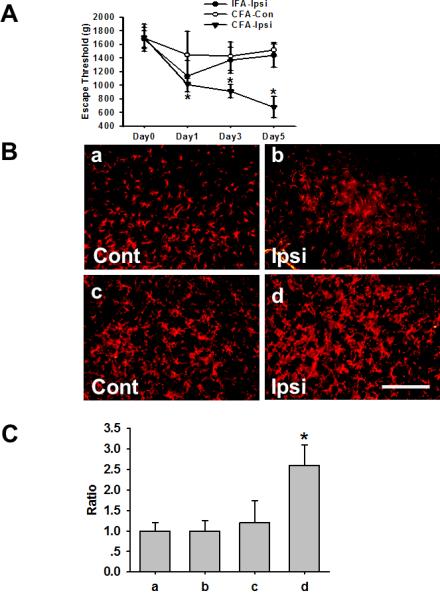
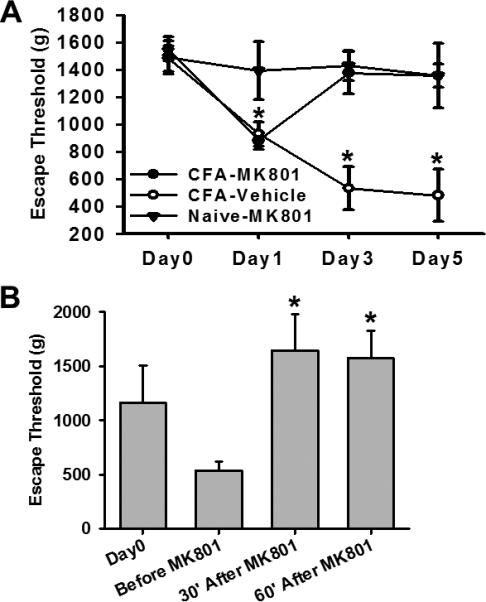
Inflammation of TMJ was produced in rats by injecting 50 μL complete Freund's adjuvant (CFA) into unilateral TMJ space. Sham control rats received incomplete Freund's adjuvant injection. Mechanical nociception in the affected and non-affected TMJ site was tested by using a digital algometer. Fractalkine, fluorocitrate, and/or MK801 were intracisternally administrated to examine the relationship between astroglial activation and NR1 upregulation.
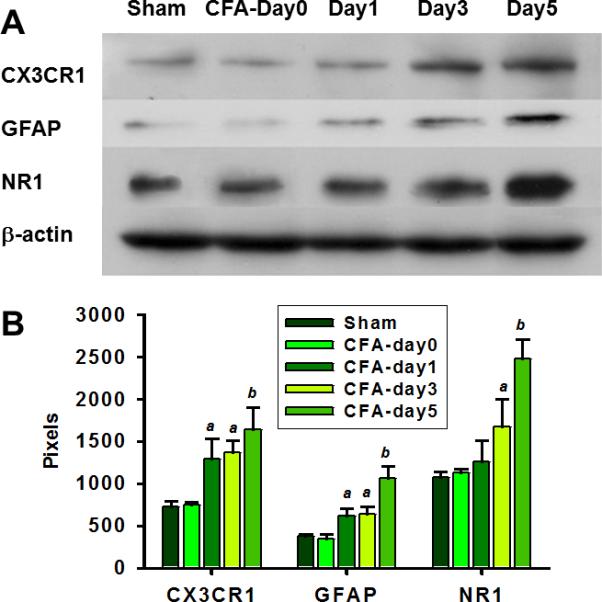
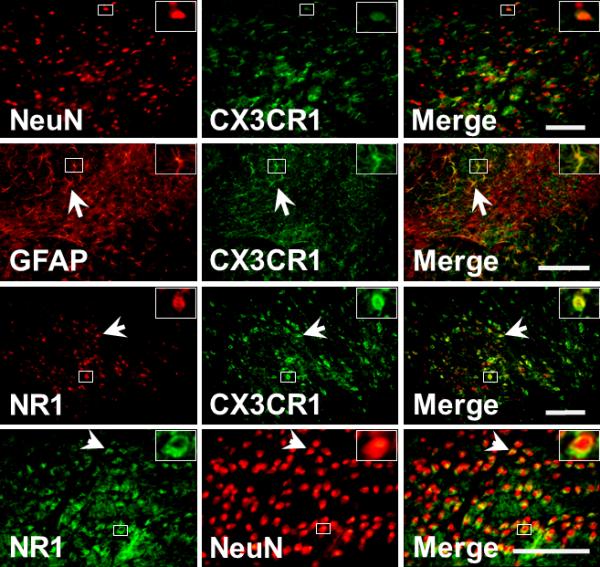
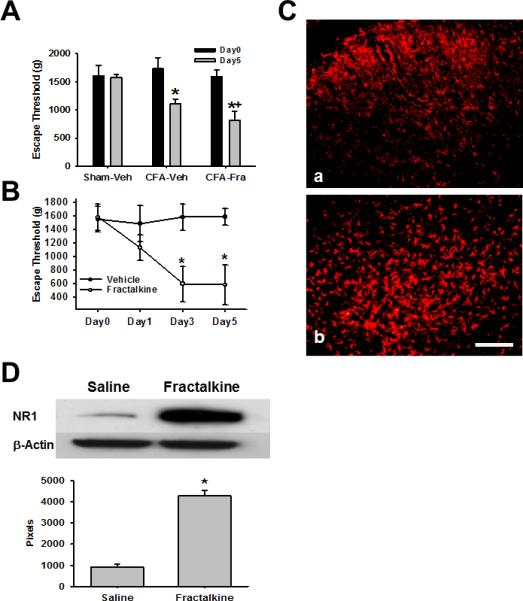
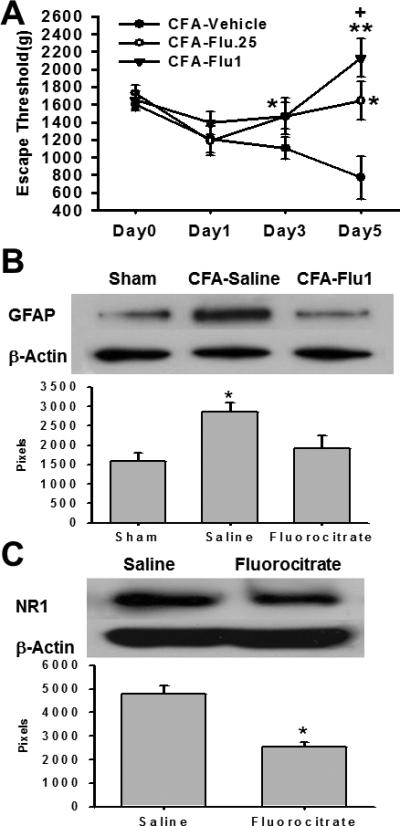
CFA TMJ injection resulted in persistent ipsilateral mechanical hyperalgesia 1, 3, and 5 days after CFA injection. The inflammation also induced significant upregulation of CX3C chemokine receptor 1 and glial fibrillary acidic protein (GFAP) beginning on day 1 and of NR1 beginning on day 3 within the ipsilateral Sp5C. Intracisternal administration of fluorocitrate for 5 days blocked the development of mechanical hyperalgesia as well as the upregulation of GFAP and NR1 in the Sp5C. Conversely, intracisternal injection of fractalkine for 5 days exacerbated the expression of NR1 in Sp5C and mechanical hyperalgesia induced by TMJ inflammation. Moreover, once daily intracisternal fractalkine administration for 5 days in naïve rats induced the upregulation of NR1 and mechanical hyperalgesia.
These results suggest that astroglial activation contributes to the mechanism of TMJ pain through the regulation of NR1 expression in Sp5C.
检验假说,即神经胶质细胞激活会调节三叉神经脊核尾侧亚核(Sp5C)中 N-甲基-D-天冬氨酸受体亚单位 1(NR1)的表达,该假说涉及颞下颌关节(TMJ)炎症。
通过向单侧 TMJ 腔内注射 50 μL 完全弗氏佐剂(CFA),在大鼠中产生 TMJ 炎症。假手术对照大鼠接受不完全弗氏佐剂注射。使用数字压痛计测试受影响和未受影响 TMJ 部位的机械痛觉。通过脑室内给予 fractalkine、氟柠檬酸和/或 MK801,来检验星型胶质细胞激活与 NR1 上调之间的关系。
CFA TMJ 注射导致 CFA 注射后 1、3 和 5 天同侧机械性痛觉过敏持续存在。炎症还导致 CX3C 趋化因子受体 1 和神经胶质原纤维酸性蛋白(GFAP)从第 1 天开始在同侧 Sp5C 中显著上调,NR1 从第 3 天开始上调。5 天脑室内给予氟柠檬酸可阻断机械性痛觉过敏的发展,以及 Sp5C 中 GFAP 和 NR1 的上调。相反,5 天脑室内注射 fractalkine 加剧了 TMJ 炎症引起的 Sp5C 中 NR1 表达和机械性痛觉过敏。此外,在正常大鼠中,每日一次脑室内 fractalkine 给药 5 天可诱导 NR1 上调和机械性痛觉过敏。
这些结果表明,通过调节 Sp5C 中 NR1 的表达,神经胶质细胞激活有助于 TMJ 疼痛的机制。