Department of Molecular and Medical Pharmacology, University of California, Los Angeles, Los Angeles, CA, USA.
J Exp Med. 2012 Nov 19;209(12):2215-28. doi: 10.1084/jem.20121061. Epub 2012 Nov 12.
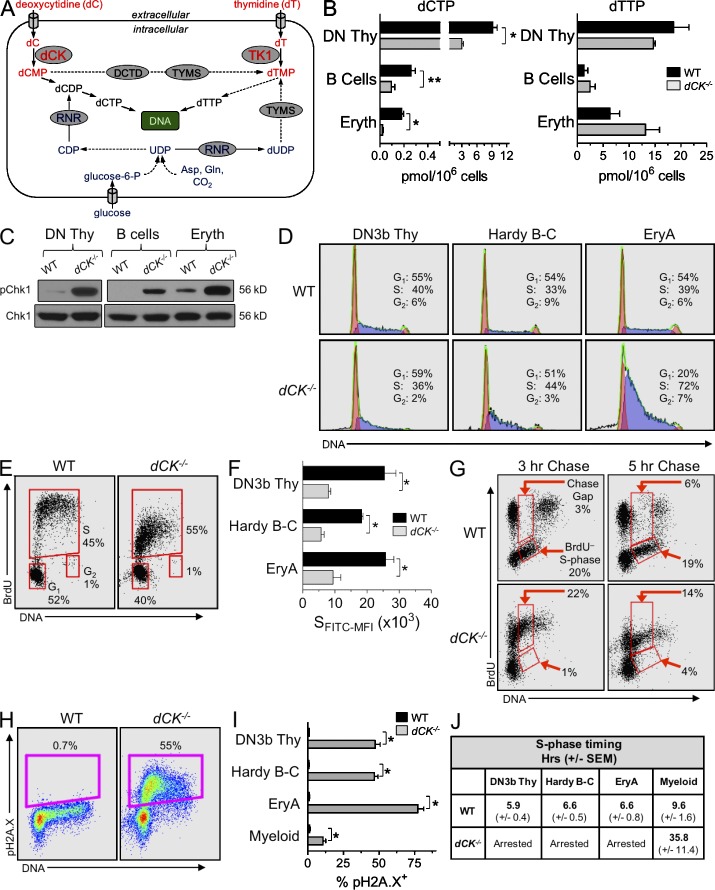
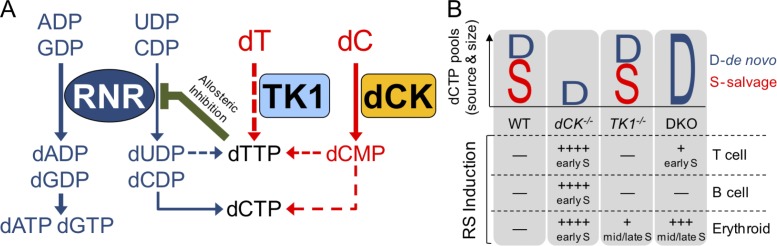
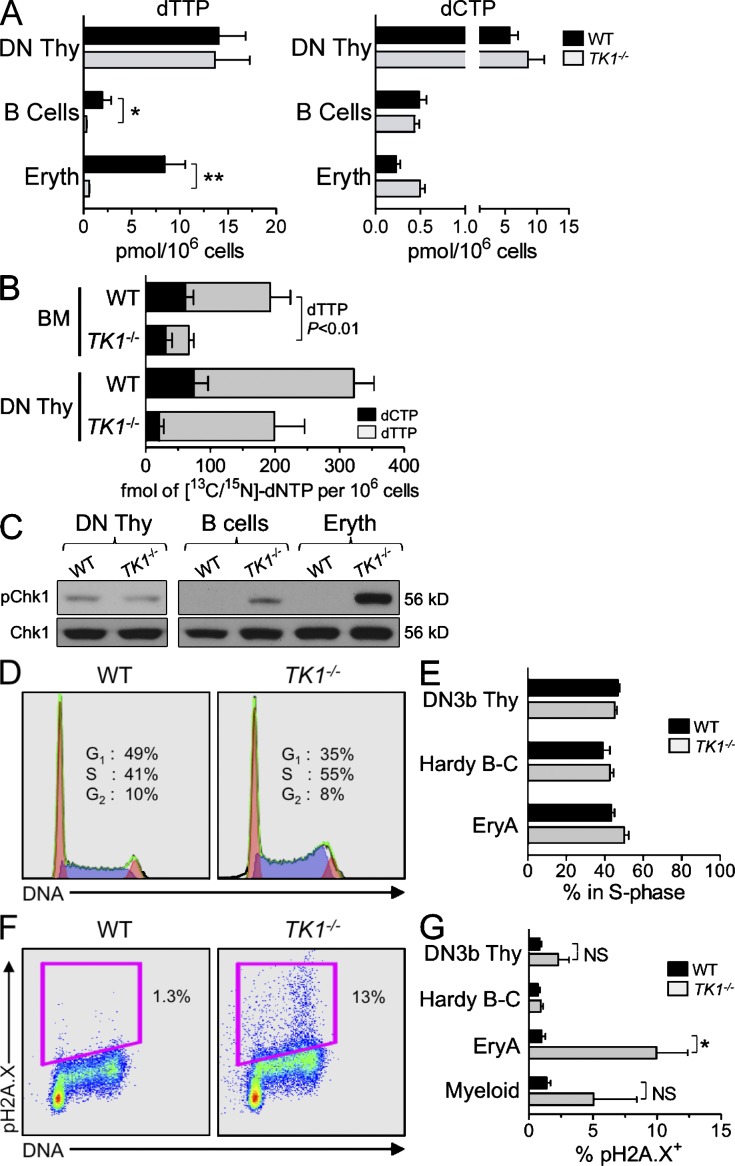
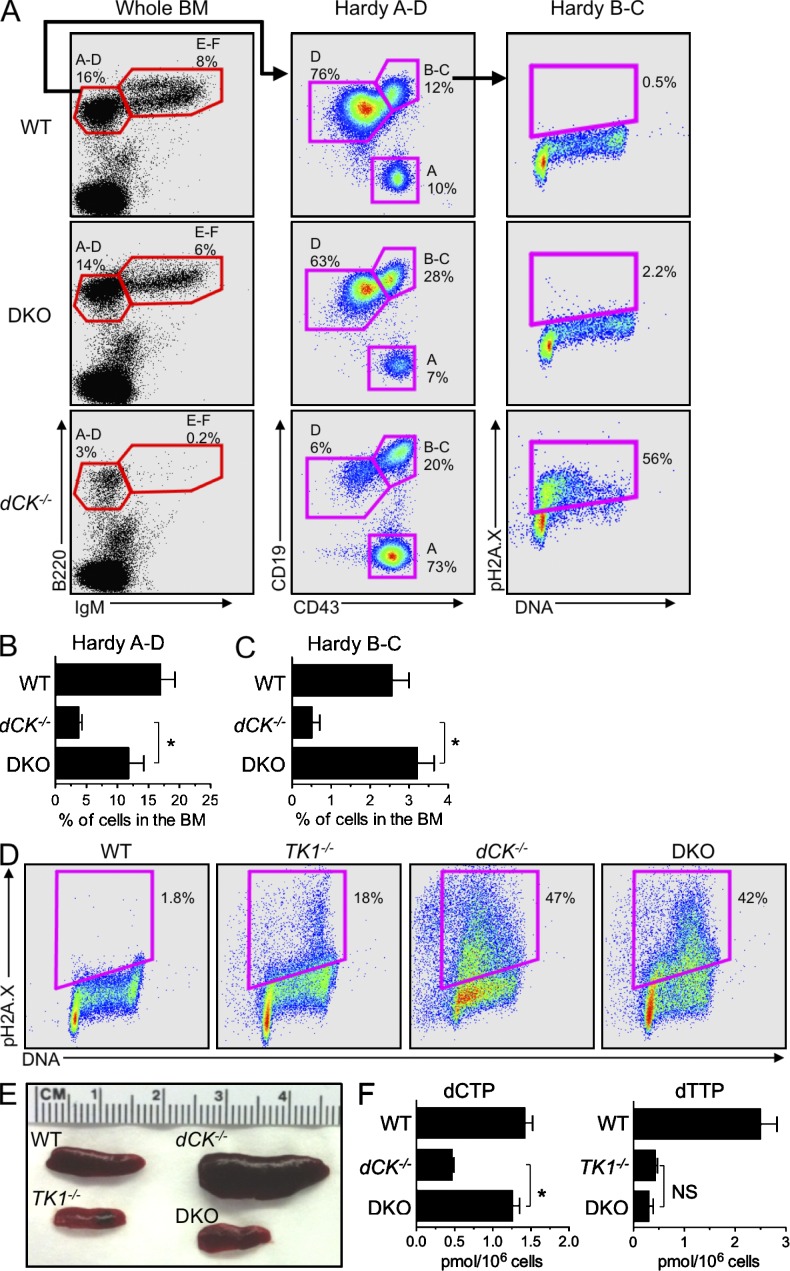
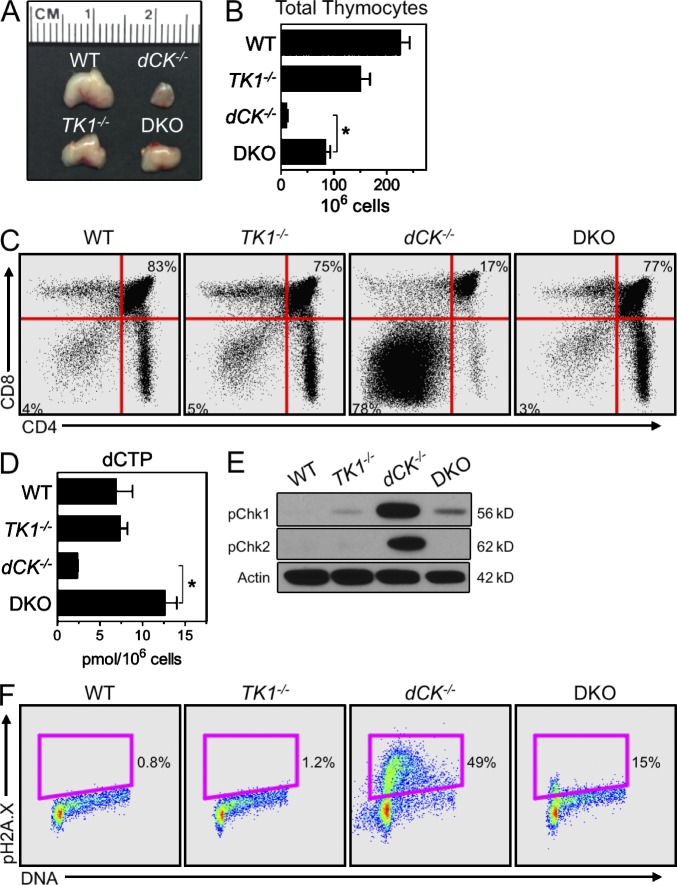
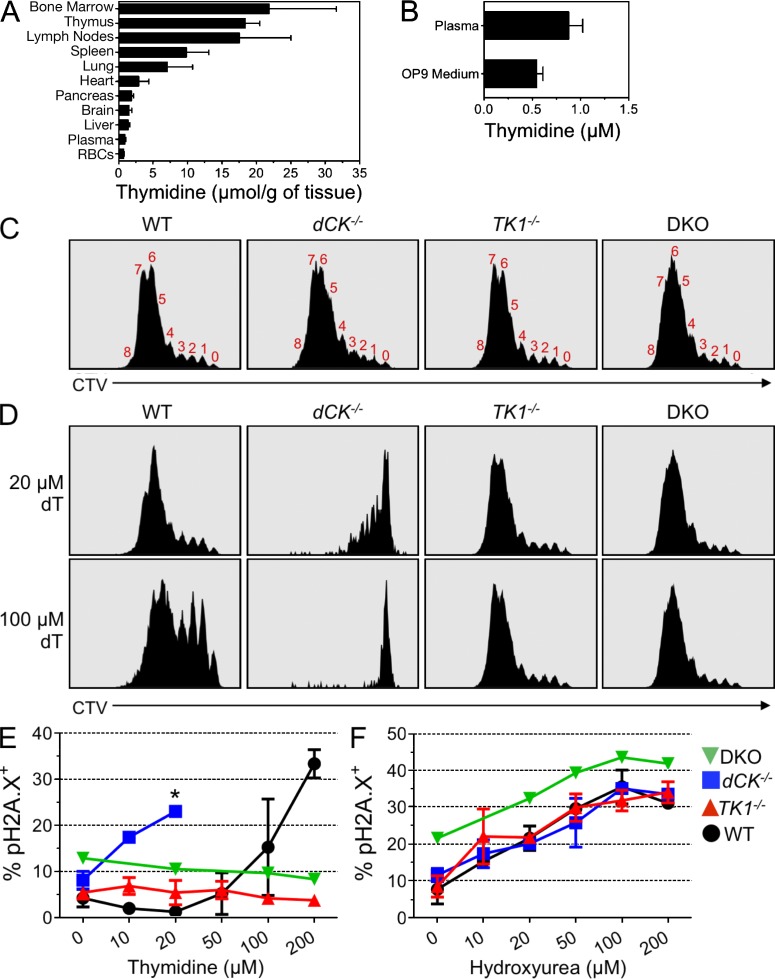
Nucleotide deficiency causes replication stress (RS) and DNA damage in dividing cells. How nucleotide metabolism is regulated in vivo to prevent these deleterious effects remains unknown. In this study, we investigate a functional link between nucleotide deficiency, RS, and the nucleoside salvage pathway (NSP) enzymes deoxycytidine kinase (dCK) and thymidine kinase (TK1). We show that inactivation of dCK in mice depletes deoxycytidine triphosphate (dCTP) pools and induces RS, early S-phase arrest, and DNA damage in erythroid, B lymphoid, and T lymphoid lineages. TK1(-/-) erythroid and B lymphoid lineages also experience nucleotide deficiency but, unlike their dCK(-/-) counterparts, they still sustain DNA replication. Intriguingly, dCTP pool depletion, RS, and hematopoietic defects induced by dCK inactivation are almost completely reversed in a newly generated dCK/TK1 double-knockout (DKO) mouse model. Using NSP-deficient DKO hematopoietic cells, we identify a previously unrecognized biological activity of endogenous thymidine as a strong inducer of RS in vivo through TK1-mediated dCTP pool depletion. We propose a model that explains how TK1 and dCK "tune" dCTP pools to both trigger and resolve RS in vivo. This new model may be exploited therapeutically to induce synthetic sickness/lethality in hematological malignancies, and possibly in other cancers.
核苷酸缺乏会导致有丝分裂细胞中的复制应激 (RS) 和 DNA 损伤。核苷酸代谢在体内是如何被调节以防止这些有害影响的,目前尚不清楚。在这项研究中,我们研究了核苷酸缺乏、RS 和核苷补救途径 (NSP) 酶脱氧胞苷激酶 (dCK) 和胸苷激酶 (TK1) 之间的功能联系。我们发现,在小鼠中失活 dCK 会耗尽脱氧胞苷三磷酸 (dCTP) 池,并诱导红细胞、B 淋巴细胞和 T 淋巴细胞谱系中的 RS、早期 S 期停滞和 DNA 损伤。TK1(-/-) 红细胞和 B 淋巴细胞谱系也经历核苷酸缺乏,但与它们的 dCK(-/-) 对应物不同,它们仍然能够维持 DNA 复制。有趣的是,dCK 失活引起的 dCTP 池耗竭、RS 和造血缺陷在新产生的 dCK/TK1 双敲除 (DKO) 小鼠模型中几乎完全逆转。使用 NSP 缺陷的 DKO 造血细胞,我们确定了内源性胸苷作为通过 TK1 介导的 dCTP 池耗竭在体内强烈诱导 RS 的先前未被认识的生物学活性。我们提出了一个模型,解释了 TK1 和 dCK 如何“调节”dCTP 池,以在体内引发和解决 RS。这个新模型可以被用来在血液恶性肿瘤中诱导合成性疾病/致死性,并且可能在其他癌症中也有应用。