Department Genetics and Biometry, Bioinformatics and Biomathematics Group, Leibniz Institute for Farm Animal Biology, FBN, Dummerstorf, Germany.
PLoS One. 2012;7(11):e49951. doi: 10.1371/journal.pone.0049951. Epub 2012 Nov 16.
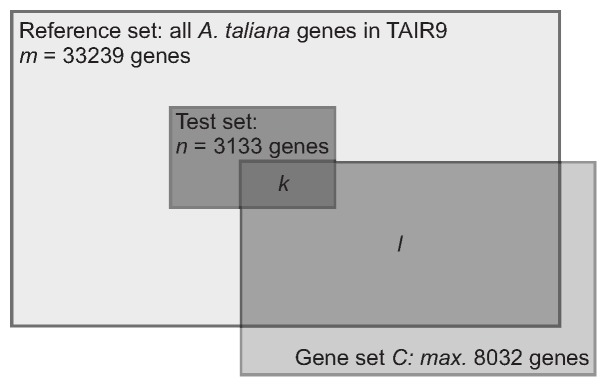
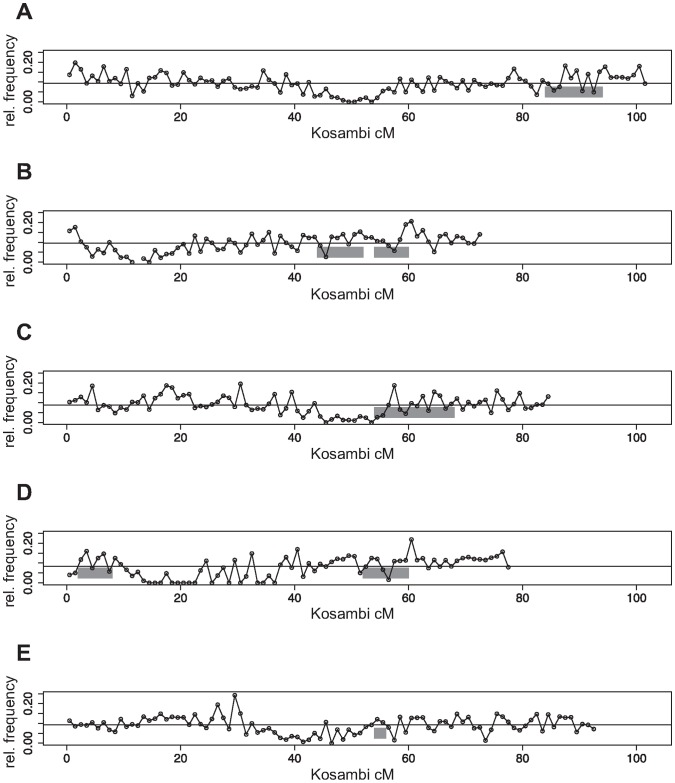
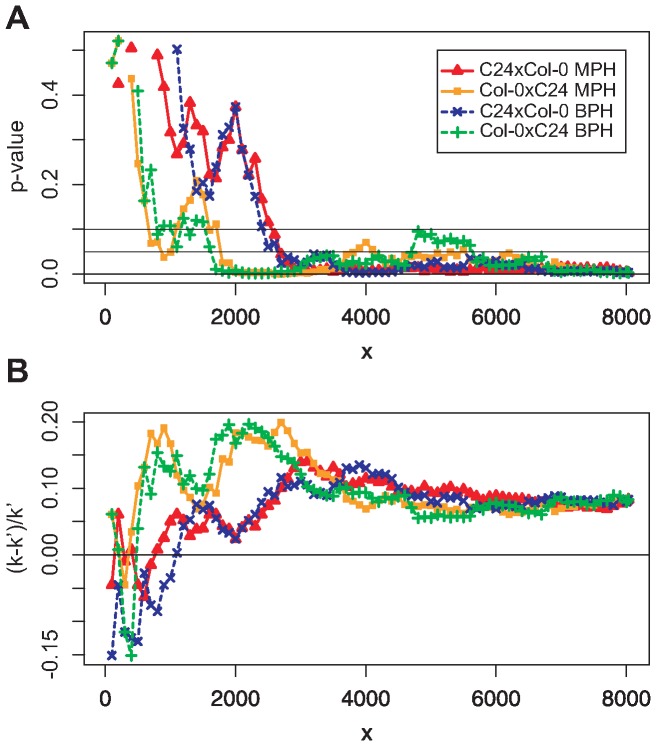
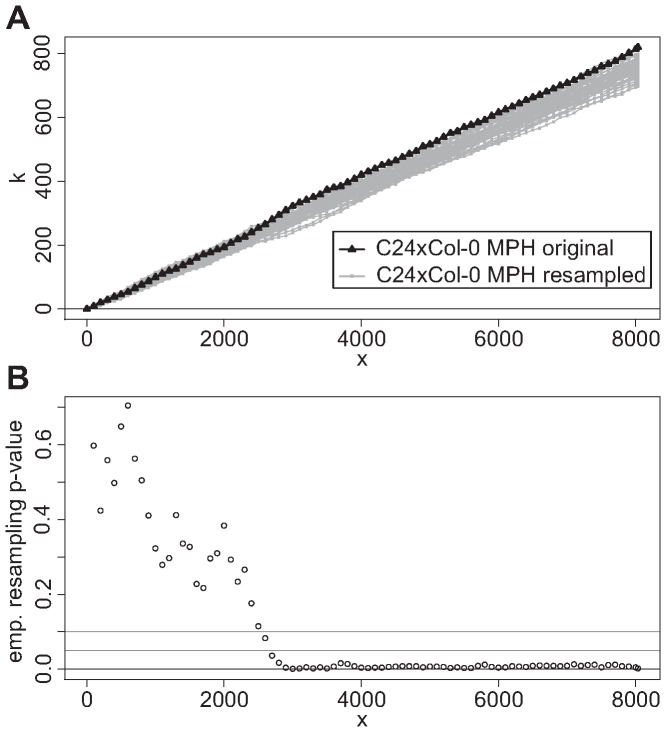
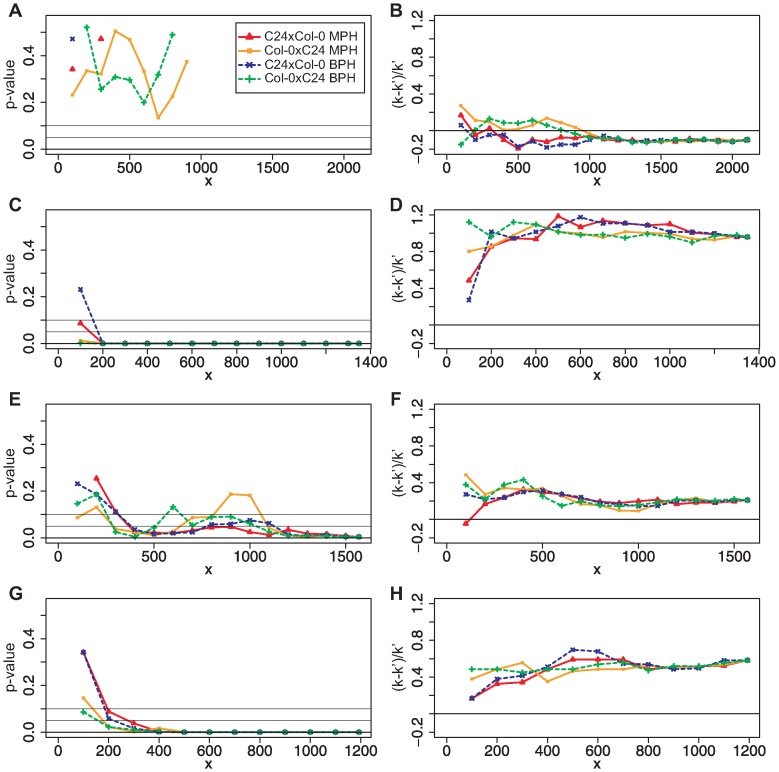
To contribute to a further insight into heterosis we applied an integrative analysis to a systems biological network approach and a quantitative genetics analysis towards biomass heterosis in early Arabidopsis thaliana development. The study was performed on the parental accessions C24 and Col-0 and the reciprocal crosses. In an over-representation analysis it was tested if the overlap between the resulting gene lists of the two approaches is significantly larger than expected by chance. Top ranked genes in the results list of the systems biological analysis were significantly over-represented in the heterotic QTL candidate regions for either hybrid as well as regarding mid-parent and best-parent heterosis. This suggests that not only a few but rather several genes that influence biomass heterosis are located within each heterotic QTL region. Furthermore, the overlapping resulting genes of the two integrated approaches were particularly enriched in biomass related pathways. A chromosome-wise over-representation analysis gave rise to the hypothesis that chromosomes number 2 and 4 probably carry a majority of the genes involved in biomass heterosis in the early development of Arabidopsis thaliana.
为了深入了解杂种优势,我们将系统生物学网络方法和数量遗传学分析应用于拟南芥早期发育中生物量杂种优势的研究。该研究在亲本品系 C24 和 Col-0 及其正反交中进行。在过表达分析中,测试了两种方法的基因列表之间的重叠是否显著大于预期的随机重叠。系统生物学分析结果列表中排名靠前的基因在杂种优势 QTL 候选区域中显著过表达,无论是杂种还是中亲杂种和最优亲杂种都是如此。这表明,影响生物量杂种优势的基因不仅有几个,而是位于每个杂种优势 QTL 区域内的多个基因。此外,两种综合方法的重叠基因特别富集在与生物量相关的途径中。染色体水平的过表达分析提出了一个假设,即染色体 2 和 4 可能携带大多数参与拟南芥早期发育中生物量杂种优势的基因。