Metin Cigdem O, Baran Jimmie R, Nguyen Quoc P
Department of Petroleum and Geosystems Engineering, The University of Texas at Austin, 200 E. Dean Keeton, Stop C300, Austin, TX 78712 USA.
J Nanopart Res. 2012 Nov;14(11):1246. doi: 10.1007/s11051-012-1246-1. Epub 2012 Oct 30.
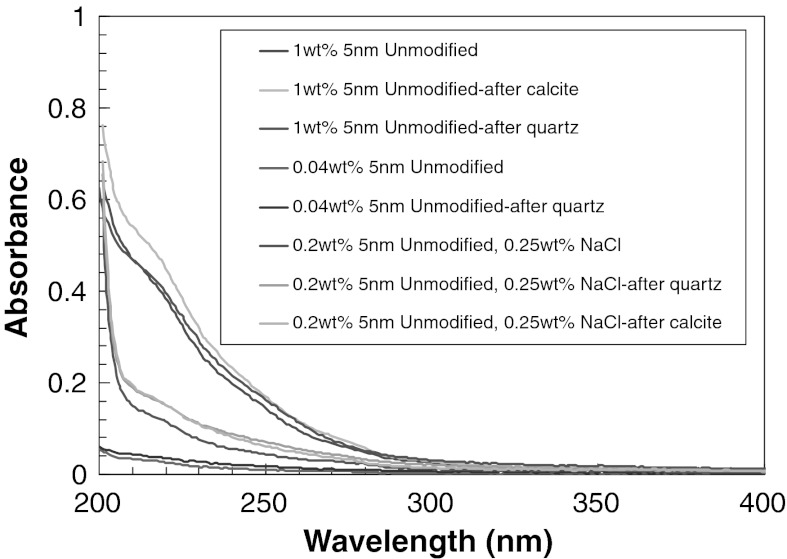
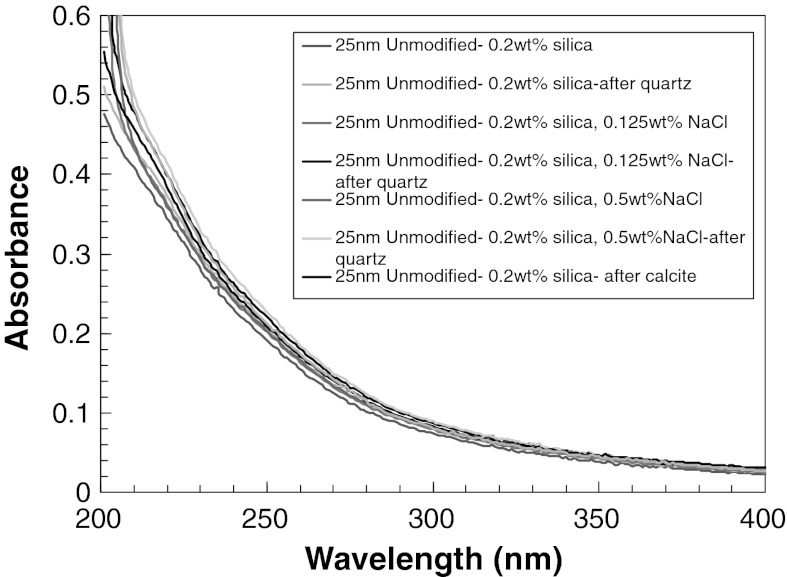
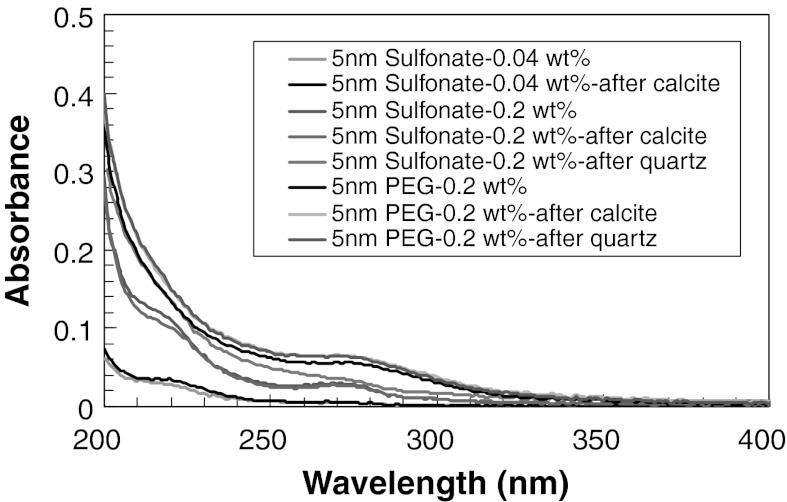
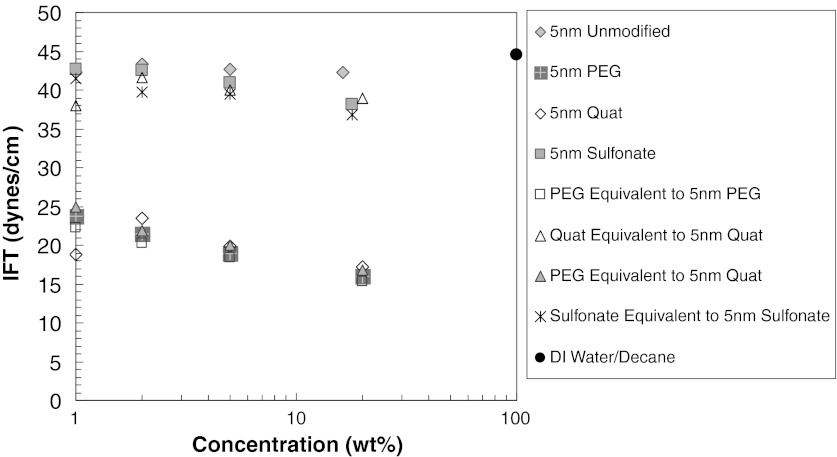
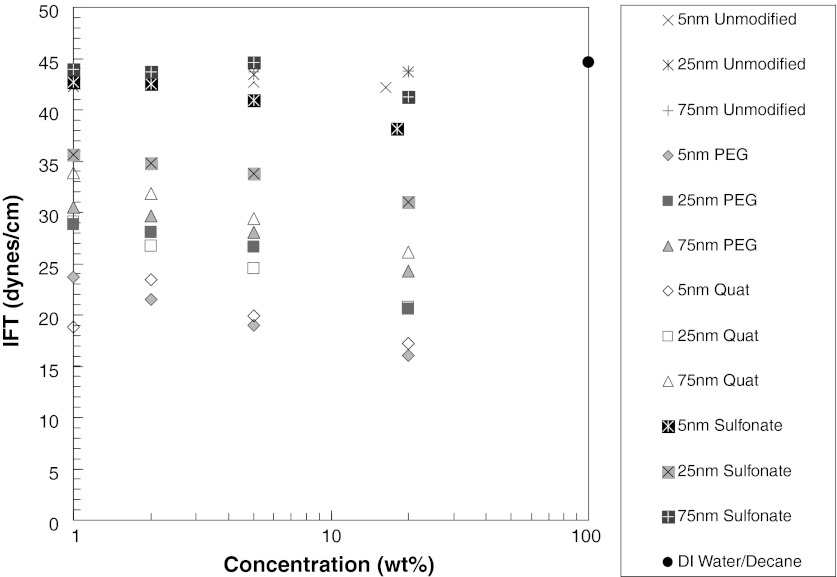
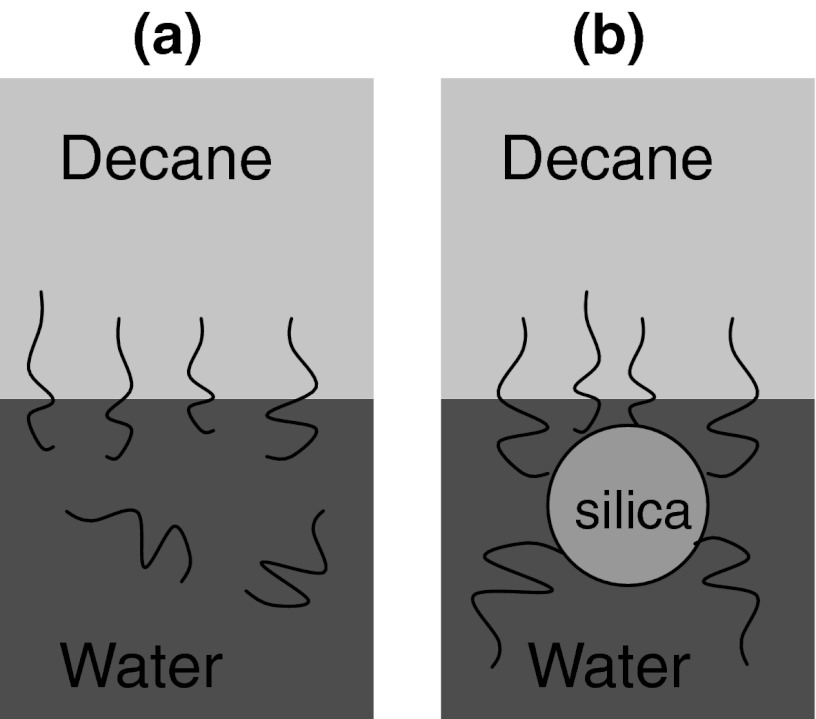
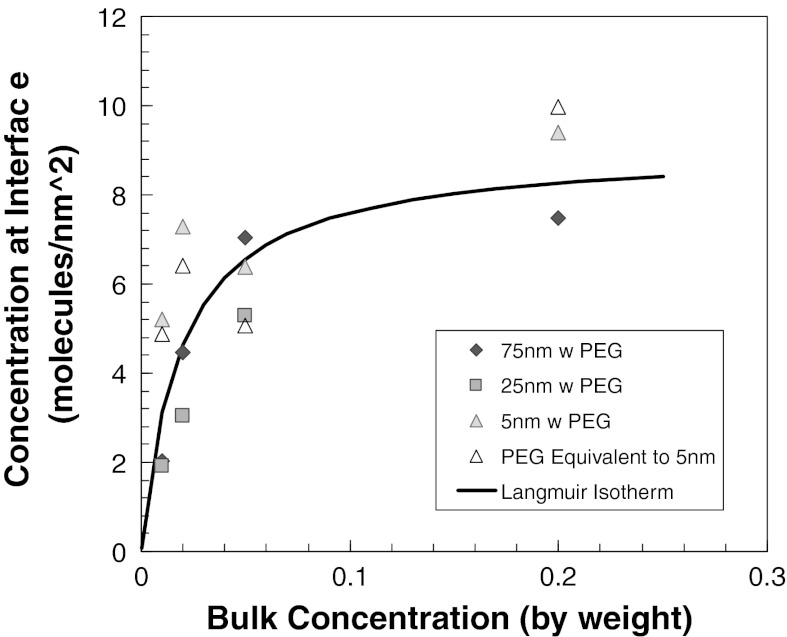
The adsorption of silica nanoparticles onto representative mineral surfaces and at the decane/water interface was studied. The effects of particle size (the mean diameters from 5 to 75 nm), concentration and surface type on the adsorption were studied in detail. Silica nanoparticles with four different surfaces [unmodified, surface modified with anionic (sulfonate), cationic (quaternary ammonium (quat)) or nonionic (polyethylene glycol (PEG)) surfactant] were used. The zeta potential of these silica nanoparticles ranges from -79.8 to 15.3 mV. The shape of silica particles examined by a Hitachi-S5500 scanning transmission electron microscope (STEM) is quite spherical. The adsorption of all the nanoparticles (unmodified or surface modified) on quartz and calcite surfaces was found to be insignificant. We used interfacial tension (IFT) measurements to investigate the adsorption of silica nanoparticles at the decane/water interface. Unmodified nanoparticles or surface modified ones with sulfonate or quat do not significantly affect the IFT of the decane/water interface. It also does not appear that the particle size or concentration influences the IFT. However, the presence of PEG as a surface modifying material significantly reduces the IFT. The PEG surface modifier alone in an aqueous solution, without the nanoparticles, yields the same IFT reduction for an equivalent PEG concentration as that used for modifying the surface of nanoparticles. Contact angle measurements of a decane droplet on quartz or calcite plate immersed in water (or aqueous nanoparticle dispersion) showed a slight change in the contact angle in the presence of the studied nanoparticles. The results of contact angle measurements are in good agreement with experiments of adsorption of nanoparticles on mineral surfaces or decane/water interface. This study brings new insights into the understanding and modeling of the adsorption of surface-modified silica nanoparticles onto mineral surfaces and water/decane interface.
研究了二氧化硅纳米颗粒在代表性矿物表面以及癸烷/水界面上的吸附情况。详细研究了粒径(平均直径为5至75纳米)、浓度和表面类型对吸附的影响。使用了具有四种不同表面的二氧化硅纳米颗粒[未改性、用阴离子(磺酸盐)、阳离子(季铵盐)或非离子(聚乙二醇(PEG))表面活性剂改性的表面]。这些二氧化硅纳米颗粒的zeta电位范围为-79.8至15.3毫伏。通过日立S5500扫描透射电子显微镜(STEM)检测的二氧化硅颗粒形状相当呈球形。发现所有纳米颗粒(未改性或表面改性)在石英和方解石表面上的吸附都不显著。我们使用界面张力(IFT)测量来研究二氧化硅纳米颗粒在癸烷/水界面上的吸附。未改性的纳米颗粒或用磺酸盐或季铵盐表面改性的纳米颗粒不会显著影响癸烷/水界面的IFT。似乎粒径或浓度也不会影响IFT。然而,作为表面改性材料的PEG的存在会显著降低IFT。在没有纳米颗粒的情况下,仅PEG表面改性剂在水溶液中,对于与用于改性纳米颗粒表面相同的PEG浓度,会产生相同的IFT降低。在浸入水(或水性纳米颗粒分散体)中的石英或方解石板上的癸烷液滴的接触角测量表明,在所研究的纳米颗粒存在下接触角有轻微变化。接触角测量结果与纳米颗粒在矿物表面或癸烷/水界面上的吸附实验结果非常吻合。这项研究为理解和模拟表面改性二氧化硅纳米颗粒在矿物表面和水/癸烷界面上的吸附带来了新的见解。