Dept, of Biology, Laurentian University, Sudbury, ON, P3E2C6, Canada.
J Ovarian Res. 2012 Nov 30;5(1):40. doi: 10.1186/1757-2215-5-40.
Current protocols for the treatment of ovarian cancer include combination chemotherapy with a platinating agent and a taxane. However, many patients experience relapse of their cancer and the development of drug resistance is not uncommon, making successful second line therapy difficult to achieve. The objective of this study was to develop and characterize a cell line resistant to both carboplatin and docetaxel (dual drug resistant ovarian cell line) and to compare this cell line to cells resistant to either carboplatin or docetaxel.
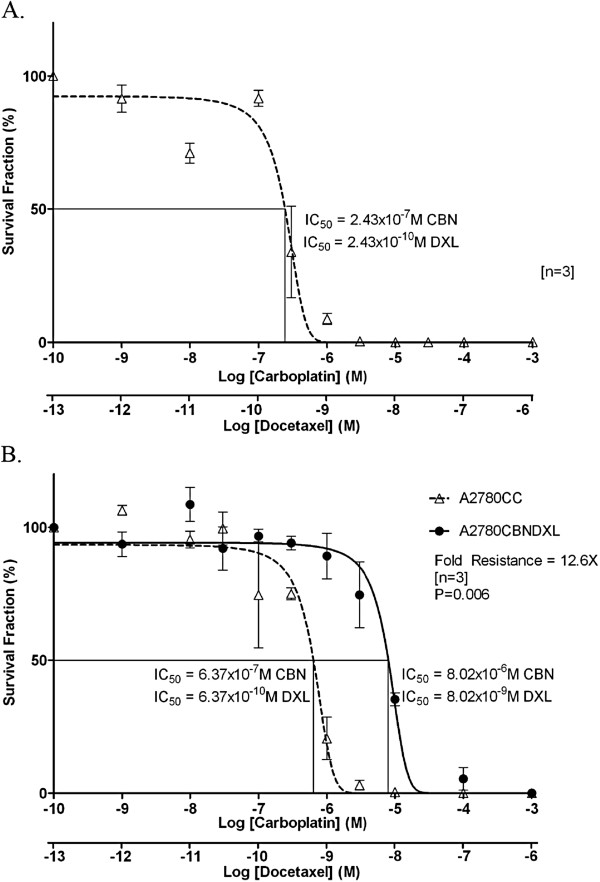
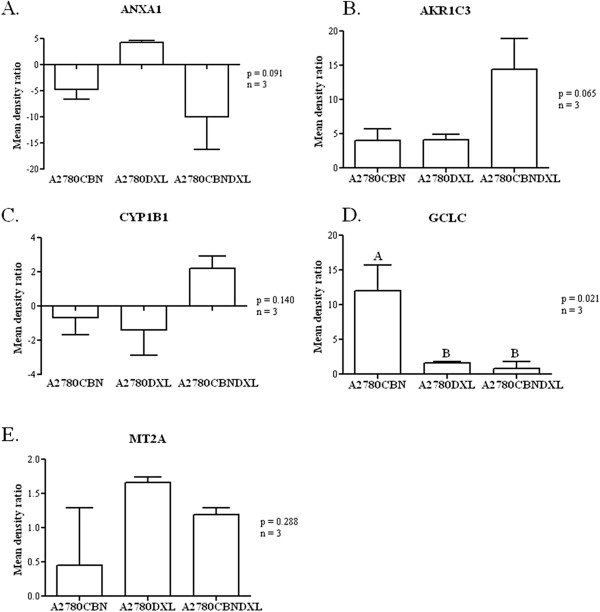
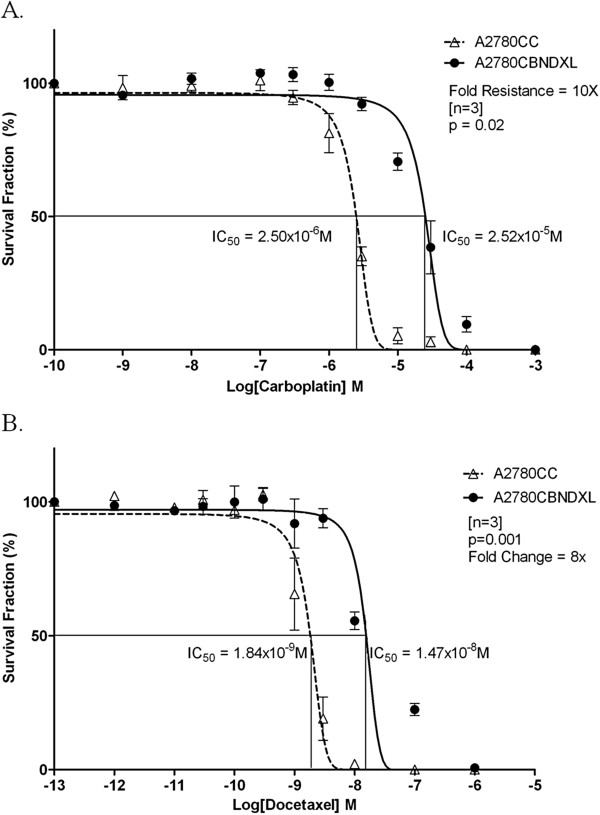
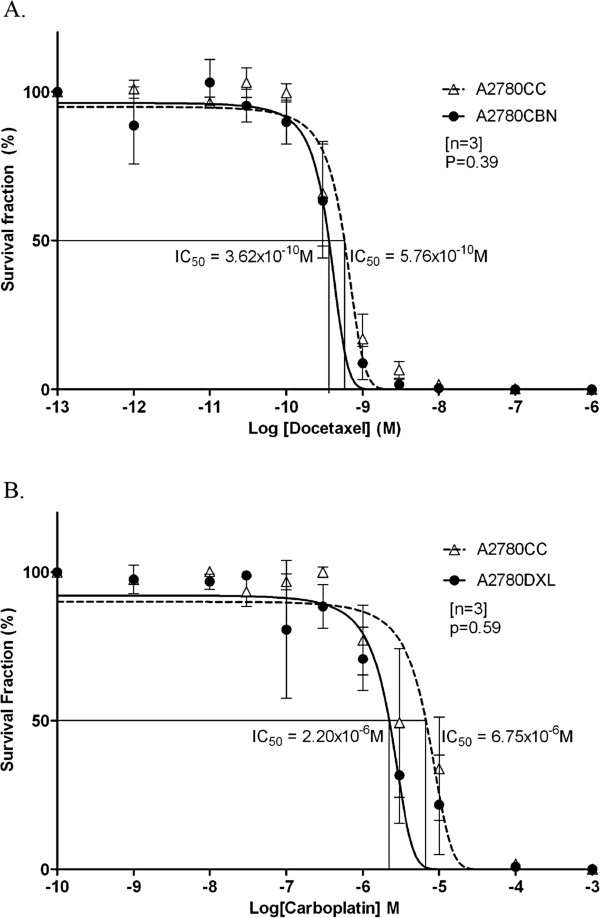
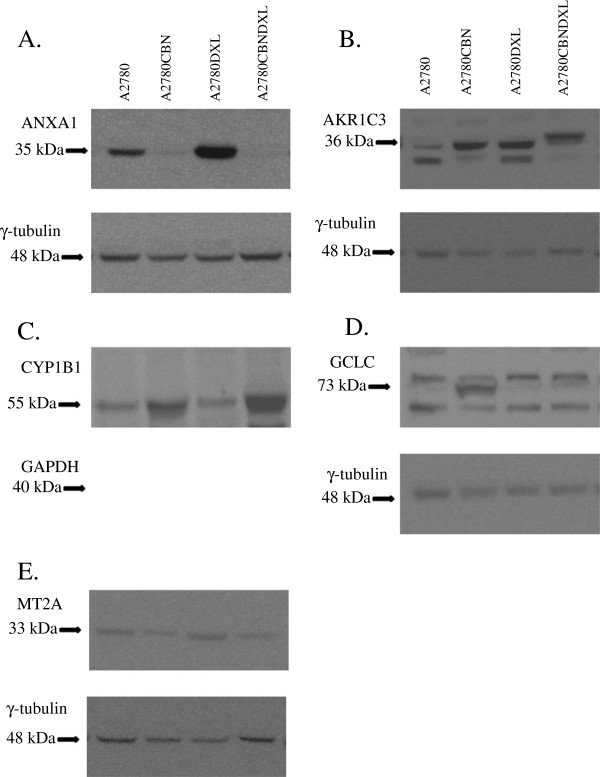
The A2780 epithelial endometrioid ovarian cancer cell line was used to select for isogenic carboplatin, docetaxel and dual drug resistant cell lines. A selection method of gradually increasing drug doses was implemented to avoid clonal selection. Resistance was confirmed using a clonogenic assay. Changes in gene expression associated with the development of drug resistance were determined by microarray analysis. Changes in the expression of selected genes were validated by Quantitative Real-Time Polymerase Chain Reaction (QPCR) and immunoblotting.
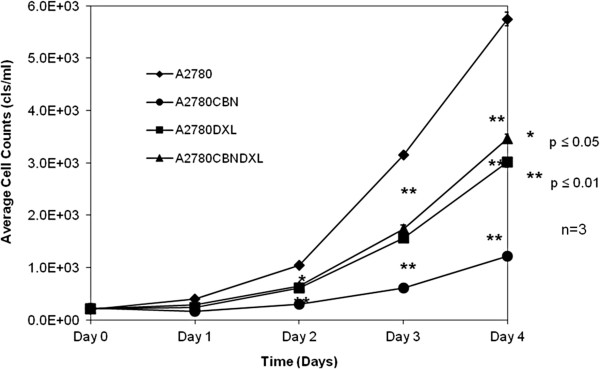
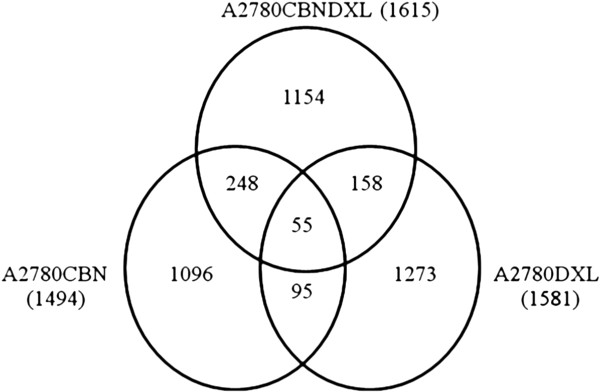
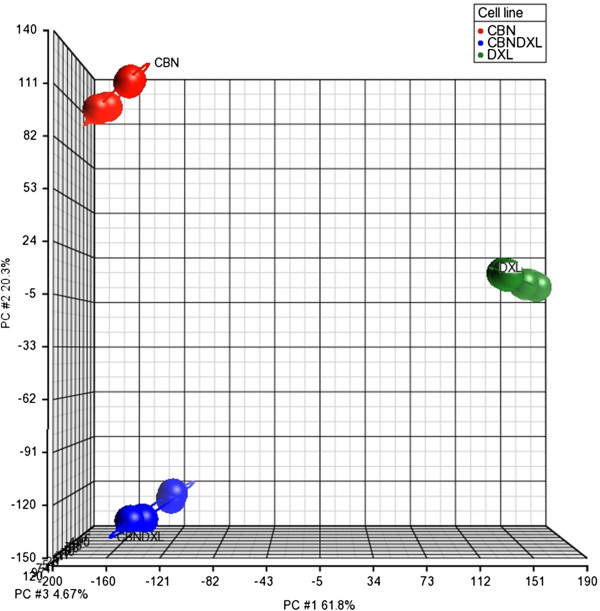
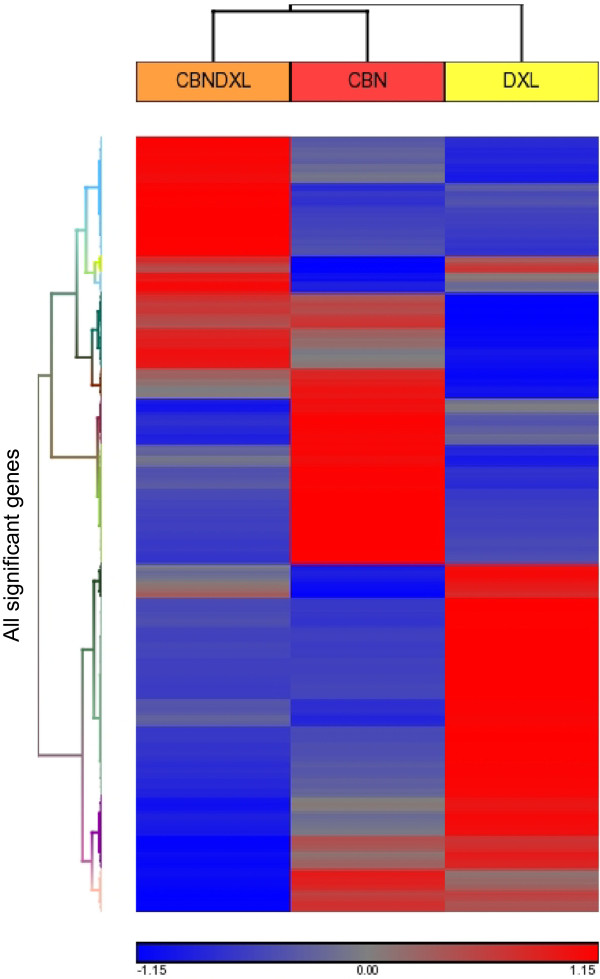
Three isogenic cell lines were developed and resistance to each drug or the combination of drugs was confirmed. Development of resistance was accompanied by a reduced growth rate. The microarray and QPCR analyses showed that unique changes in gene expression occurred in the dual drug resistant cell line and that genes known to be involved in resistance could be identified in all cell lines.
Ovarian tumor cells can acquire resistance to both carboplatin and docetaxel when selected in the presence of both agents. Distinct changes in gene expression occur in the dual resistant cell line indicating that dual resistance is not a simple combination of the changes observed in cell lines exhibiting single agent resistance.
目前卵巢癌的治疗方案包括铂类药物和紫杉烷类药物的联合化疗。然而,许多患者的癌症会复发,并且耐药性的发展也并不罕见,这使得成功进行二线治疗变得困难。本研究的目的是开发并鉴定对卡铂和多西他赛均耐药的细胞系(双重耐药卵巢细胞系),并将该细胞系与仅对卡铂或多西他赛耐药的细胞系进行比较。
使用 A2780 上皮型子宫内膜样卵巢癌细胞系选择同源性卡铂、多西他赛和双重耐药细胞系。采用逐渐增加药物剂量的选择方法避免克隆选择。采用集落形成实验确认耐药性。通过微阵列分析确定与耐药性发展相关的基因表达变化。通过定量实时聚合酶链反应(QPCR)和免疫印迹验证选定基因的表达变化。
开发了三种同源性细胞系,并证实了每种药物或药物组合的耐药性。耐药性的发展伴随着生长速度的降低。微阵列和 QPCR 分析表明,双重耐药细胞系中发生了独特的基因表达变化,并且可以在所有细胞系中鉴定出已知与耐药性相关的基因。
当在存在两种药物的情况下选择时,卵巢肿瘤细胞可以获得对卡铂和多西他赛的双重耐药性。在双重耐药细胞系中发生了明显的基因表达变化,表明双重耐药性不是对仅对单药耐药的细胞系中观察到的变化的简单组合。