Feasterville Family Health Care Center, Feasterville, PA 19053, USA.
Clin Interv Aging. 2012;7:517-23. doi: 10.2147/CIA.S35416. Epub 2012 Nov 20.
Adverse events associated with nonsteroidal anti-inflammatory drugs (NSAIDs) used to treat knee and hand osteoarthritis may be more frequent in certain patient populations. Topical NSAIDs, such as diclofenac sodium 1% gel (DSG), have equivalent efficacy and fewer adverse events compared with oral NSAIDs. This post hoc analysis assessed the long-term tolerability of DSG in elderly patients and patients with an elevated risk of gastrointestinal, cardiovascular, and renal adverse events.
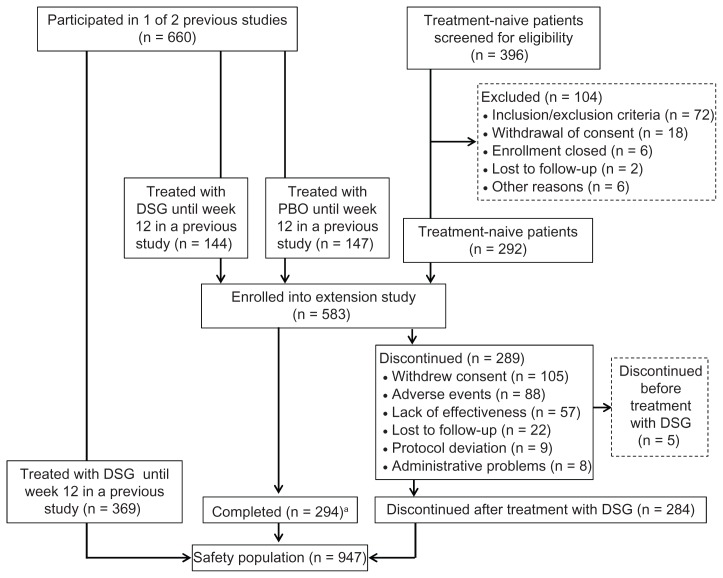
Patients ≥ 35 years of age with knee osteoarthritis applied DSG (4 g) to one or both knees for 12 weeks during either of two primary studies and for 9 months during a long-term extension study. Other patients entered the long-term extension study directly and applied DSG for 12 months. Safety was assessed by reported adverse events. Subpopulations were defined based on age, or the comorbidities of hypertension, type 2 diabetes mellitus, and cerebrovascular or cardiovascular disease.
The safety population consisted of 947 patients who received at least one dose of DSG during the primary or extension study. Patients aged < 65 years (68.2%) and ≥65 years (67.2%) experienced any adverse event at similar rates. The percentage of patients who experienced any adverse event was similar between patients with and without hypertension (65.5% versus 69.7%, respectively), type 2 diabetes mellitus (64.0% versus 68.2%), or cerebrovascular or cardiovascular disease (61.9% versus 68.5%). Among the 15 patients with all three comorbidities, the percentage of patients with any adverse event (53.3%) was less than that of patients who did not have all three comorbidities (68.0%).
These results suggest that long-term DSG treatment is safe in patient subpopulations with an elevated risk of NSAID-related adverse events, such as the elderly and those with the comorbidities of hypertension, type 2 diabetes mellitus, and cerebrovascular or cardiovascular disease.
用于治疗膝关节炎和手关节炎的非甾体抗炎药(NSAIDs)相关的不良反应在某些特定患者人群中可能更为常见。与口服 NSAIDs 相比,局部 NSAIDs,如双氯芬酸钠 1%凝胶(DSG),具有等效的疗效和更少的不良反应。本事后分析评估了 DSG 在老年患者和胃肠道、心血管和肾脏不良反应风险升高的患者中的长期耐受性。
在两项主要研究中,年龄≥35 岁的膝骨关节炎患者在 12 周内将 DSG(4 g)应用于一个或两个膝盖,在一项长期扩展研究中应用 9 个月。其他患者直接进入长期扩展研究,应用 DSG 12 个月。安全性通过报告的不良反应进行评估。亚组根据年龄或合并症(高血压、2 型糖尿病和脑血管或心血管疾病)定义。
安全性人群包括 947 名在主要或扩展研究期间至少接受过一次 DSG 治疗的患者。年龄<65 岁(68.2%)和≥65 岁(67.2%)的患者出现任何不良反应的比例相似。有或无高血压(分别为 65.5%和 69.7%)、2 型糖尿病(64.0%和 68.2%)或脑血管或心血管疾病(61.9%和 68.5%)的患者出现任何不良反应的比例相似。在所有三种合并症的 15 名患者中,有任何不良反应的患者比例(53.3%)低于没有所有三种合并症的患者比例(68.0%)。
这些结果表明,长期 DSG 治疗在 NSAID 相关不良反应风险升高的患者亚群中是安全的,如老年人和合并高血压、2 型糖尿病和脑血管或心血管疾病的患者。