Diabetes Research Unit, Department of Clinical Science and Education, Södersjukhuset, Karolinska Institutet, Stockholm, Sweden.
Diabetes. 2013 Apr;62(4):1289-96. doi: 10.2337/db12-0988. Epub 2012 Dec 3.
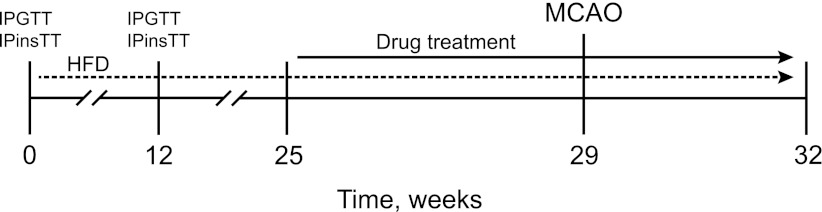
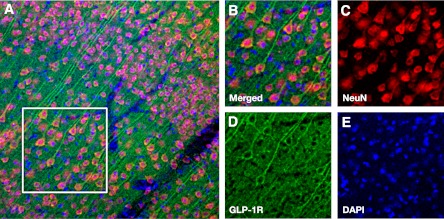
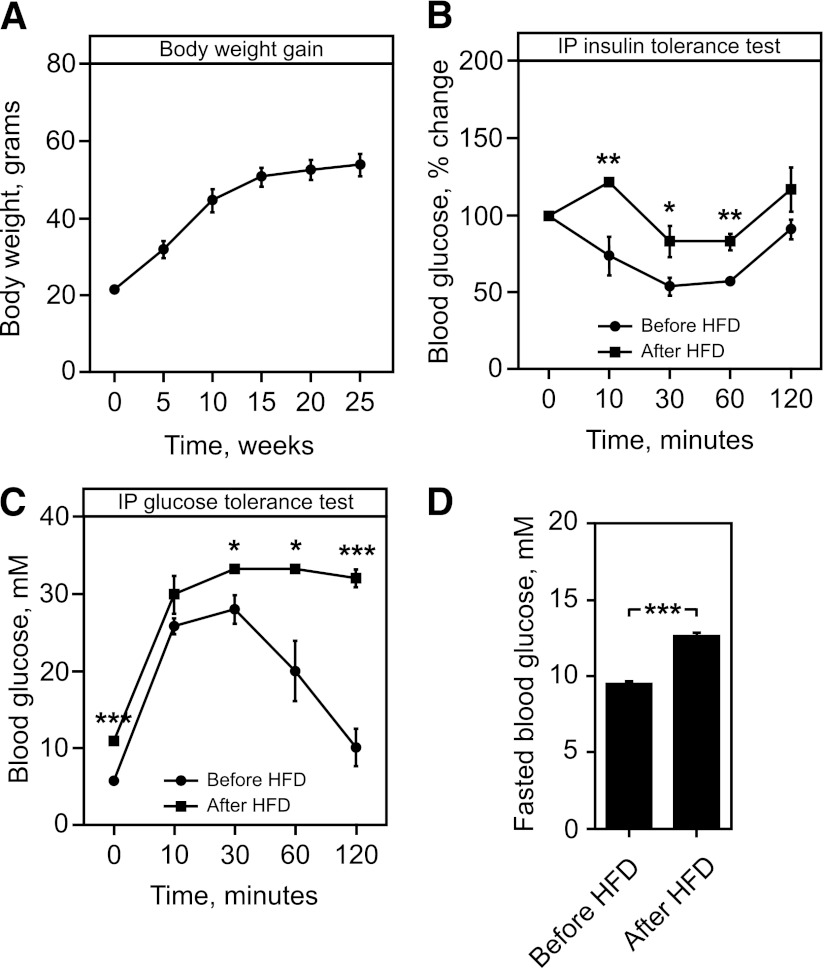
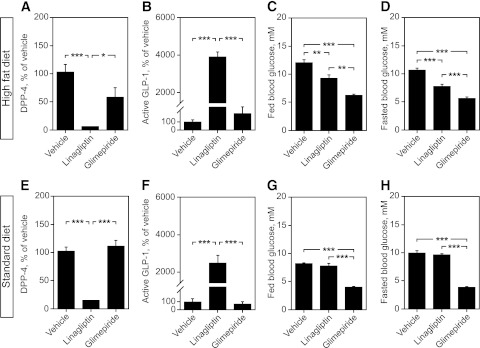
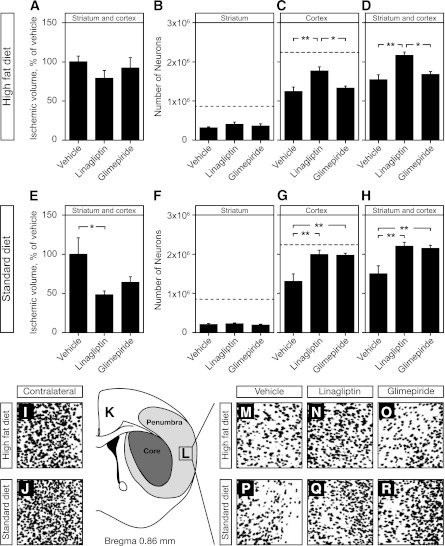
Type 2 diabetes is a strong risk factor for stroke. Linagliptin is a dipeptidyl peptidase-4 (DPP-4) inhibitor in clinical use against type 2 diabetes. The aim of this study was to determine the potential antistroke efficacy of linagliptin in type 2 diabetic mice. To understand whether efficacy was mediated by glycemia regulation, a comparison with the sulfonylurea glimepiride was done. To determine whether linagliptin-mediated efficacy was dependent on a diabetic background, experiments in nondiabetic mice were performed. Type 2 diabetes was induced by feeding the mice a high-fat diet for 32 weeks. Mice were treated with linagliptin/glimepiride for 7 weeks. Stroke was induced at 4 weeks into the treatment by transient middle cerebral artery occlusion. Blood DPP-4 activity, glucagon-like peptide-1 (GLP-1) levels, glucose, body weight, and food intake were assessed throughout the experiments. Ischemic brain damage was measured by determining stroke volume and by stereologic quantifications of surviving neurons in the striatum/cortex. We show pronounced antistroke efficacy of linagliptin in type 2 diabetic and normal mice, whereas glimepiride proved efficacious against stroke in normal mice only. These results indicate a linagliptin-mediated neuroprotection that is glucose-independent and likely involves GLP-1. The findings may provide an impetus for the development of DPP-4 inhibitors for the prevention and treatment of stroke in diabetic patients.
2 型糖尿病是中风的一个强烈危险因素。利拉利汀是一种临床用于治疗 2 型糖尿病的二肽基肽酶-4(DPP-4)抑制剂。本研究旨在确定利拉利汀在 2 型糖尿病小鼠中的潜在抗中风疗效。为了了解疗效是否通过血糖调节介导,与磺酰脲类格列美脲进行了比较。为了确定利拉利汀介导的疗效是否依赖于糖尿病背景,在非糖尿病小鼠中进行了实验。通过用高脂肪饮食喂养小鼠 32 周来诱导 2 型糖尿病。用利拉利汀/格列美脲治疗小鼠 7 周。在治疗的第 4 周,通过短暂性大脑中动脉闭塞诱导中风。在整个实验过程中,评估了血液 DPP-4 活性、胰高血糖素样肽-1(GLP-1)水平、血糖、体重和食物摄入量。通过测量中风体积和纹状体/皮质中存活神经元的立体学定量来评估缺血性脑损伤。我们显示利拉利汀在 2 型糖尿病和正常小鼠中具有明显的抗中风疗效,而格列美脲仅在正常小鼠中对中风有效。这些结果表明利拉利汀介导的神经保护作用与血糖无关,可能涉及 GLP-1。这些发现可能为开发 DPP-4 抑制剂以预防和治疗糖尿病患者的中风提供动力。