DFG Membrane/Cytoskeleton Interaction Group, Institute of Pharmacology and Toxicology & Rudolf Virchow Centre for Experimental Biomedical Science, University of Würzburg, Versbacherstr. 9, 97078 Würzburg, Germany.
J Mol Biol. 2013 Feb 8;425(3):636-46. doi: 10.1016/j.jmb.2012.11.034. Epub 2012 Dec 3.
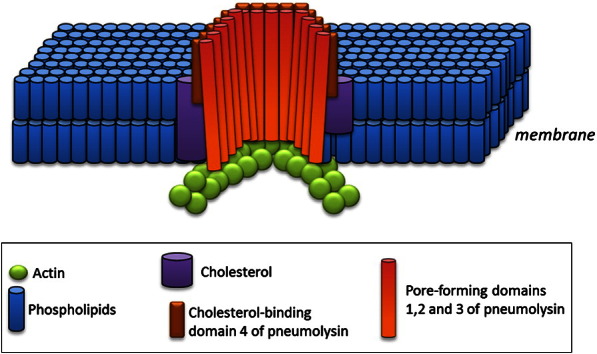
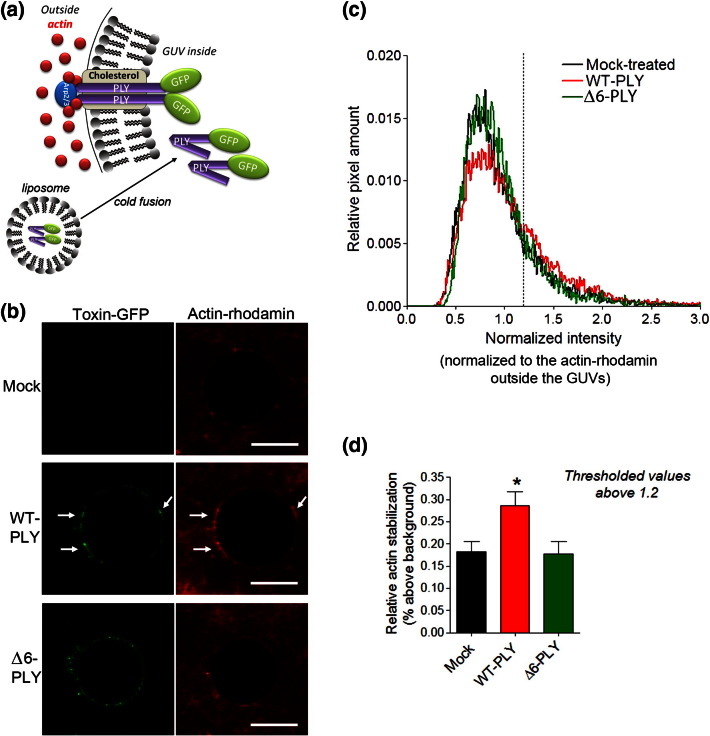
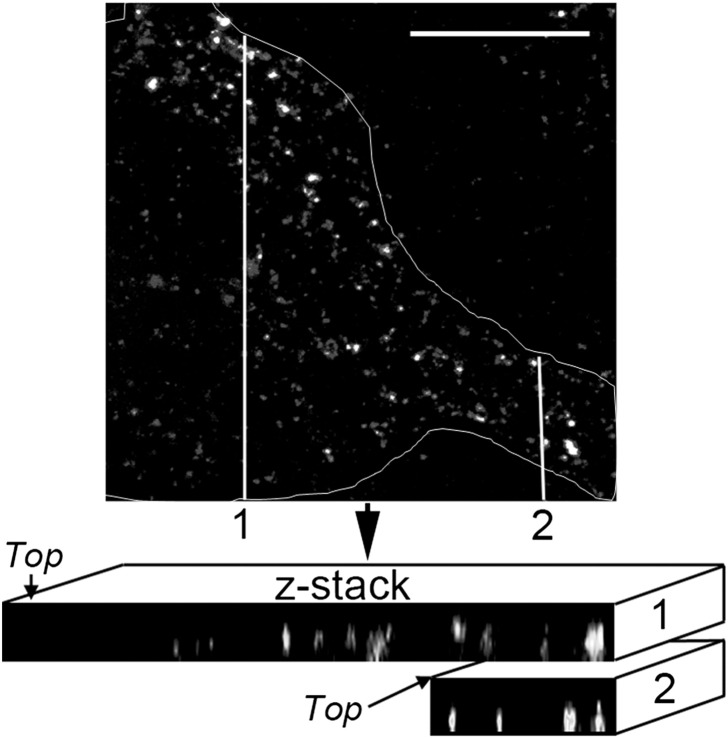
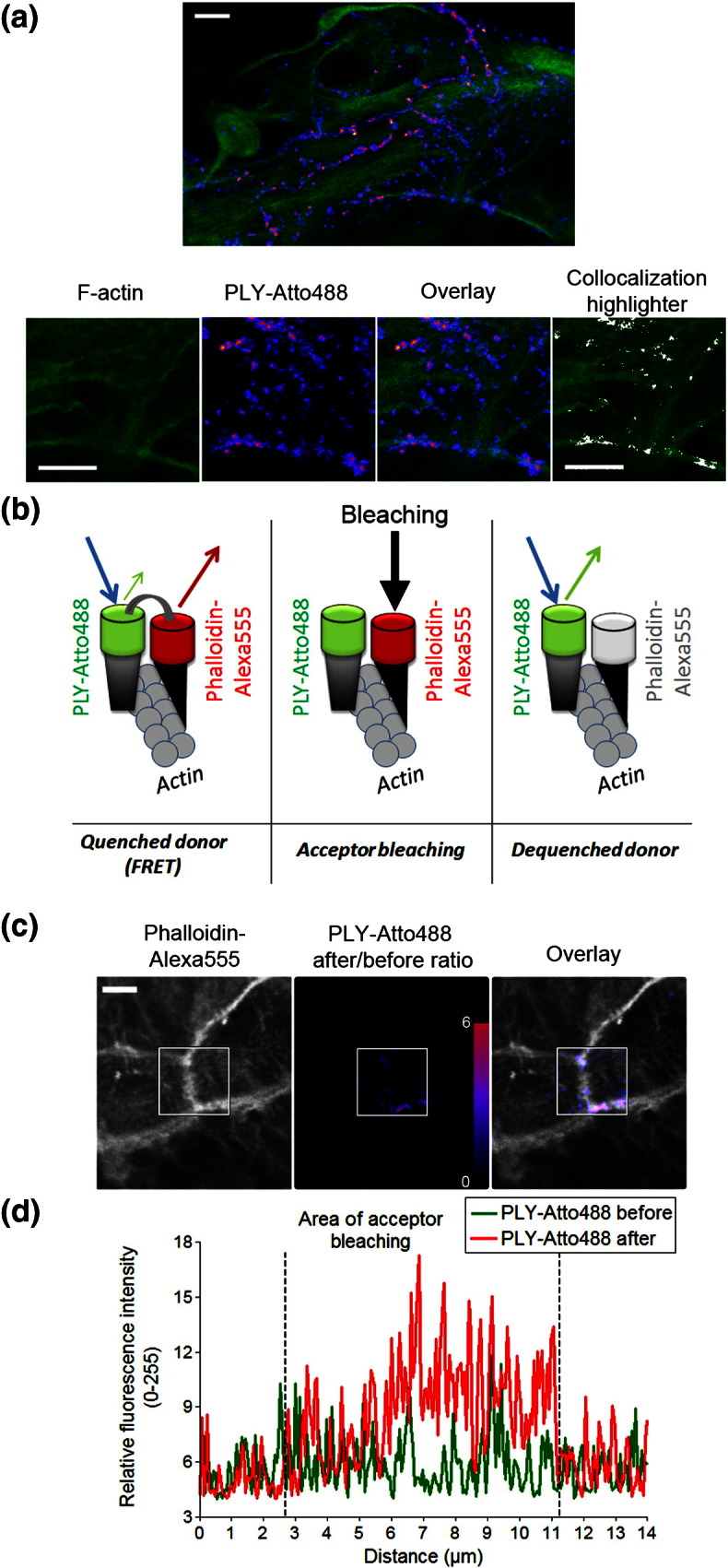
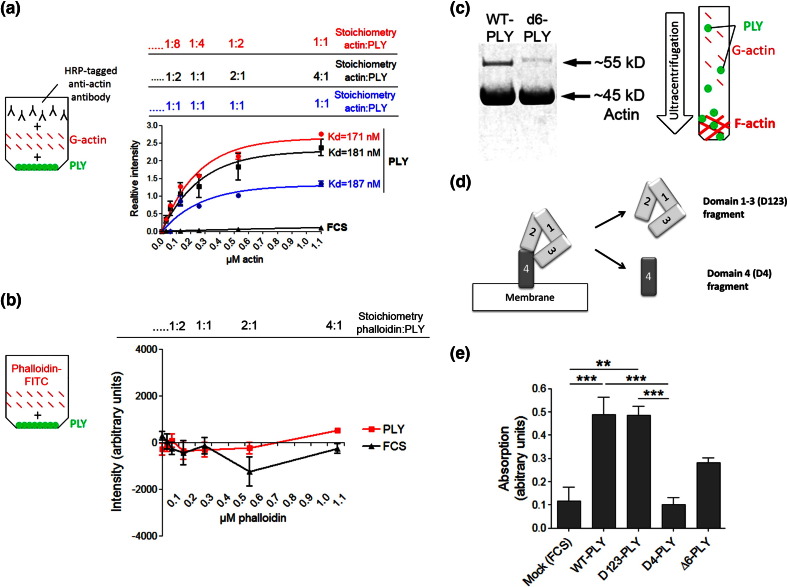
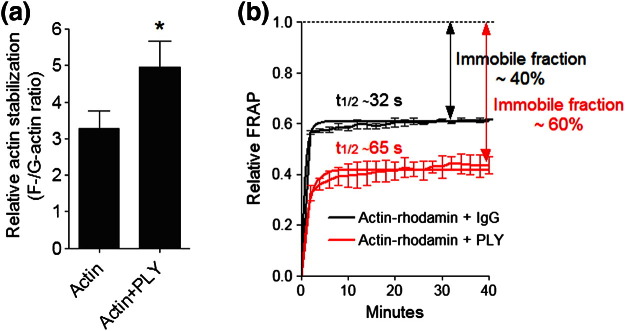
The eukaryotic actin cytoskeleton is an evolutionarily well-established pathogen target, as a large number of bacterial factors disturb its dynamics to alter the function of the host cells. These pathogenic factors modulate or mimic actin effector proteins or they modify actin directly, leading to an imbalance of the precisely regulated actin turnover. Here, we show that the pore-forming, cholesterol-dependent cytolysin pneumolysin (PLY), a major neurotoxin of Streptococcus pneumoniae, has the capacity to bind actin directly and to enhance actin polymerisation in vitro. In cells, the toxin co-localised with F-actin shortly after exposure, and this direct interaction was verified by Förster resonance energy transfer. PLY was capable of exerting its effect on actin through the lipid bilayer of giant unilamellar vesicles, but only when its pore competence was preserved. The dissociation constant of G-actin binding to PLY in a biochemical environment was 170-190 nM, which is indicative of a high-affinity interaction, comparable to the affinity of other intracellular actin-binding factors. Our results demonstrate the first example of a direct interaction of a pore-forming toxin with cytoskeletal components, suggesting that the cross talk between pore-forming cytolysins and cells is more complex than previously thought.
真核生物肌动蛋白细胞骨架是一种进化上成熟的病原体靶标,因为大量的细菌因子扰乱其动态,从而改变宿主细胞的功能。这些致病因子调节或模拟肌动蛋白效应蛋白,或者直接修饰肌动蛋白,导致精确调节的肌动蛋白周转失衡。在这里,我们表明,形成孔的、胆固醇依赖性细胞溶素肺炎球菌溶血素(PLY),肺炎链球菌的主要神经毒素,具有直接结合肌动蛋白的能力,并在体外增强肌动蛋白聚合。在细胞中,毒素在暴露后不久与 F-肌动蛋白共定位,并且这种直接相互作用通过Förster 共振能量转移得到了验证。PLY 能够通过大单层囊泡的脂质双层对肌动蛋白发挥作用,但前提是其孔的能力得以保留。在生化环境中,G-肌动蛋白与 PLY 的结合解离常数为 170-190 nM,表明这是一种高亲和力相互作用,与其他细胞内肌动蛋白结合因子的亲和力相当。我们的结果证明了第一个形成孔的毒素与细胞骨架成分直接相互作用的例子,这表明形成孔的细胞溶素与细胞之间的串扰比以前认为的更复杂。