Departments of Microbiology and Internal Medicine, Center for Microbial Interface Biology, Ohio State University, Columbus, Ohio, United States of America.
PLoS Pathog. 2011 Nov;7(11):e1002356. doi: 10.1371/journal.ppat.1002356. Epub 2011 Nov 3.
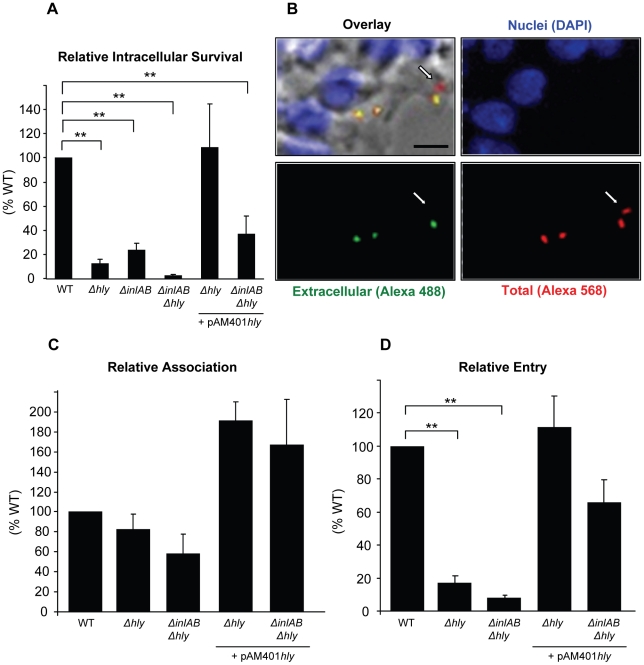
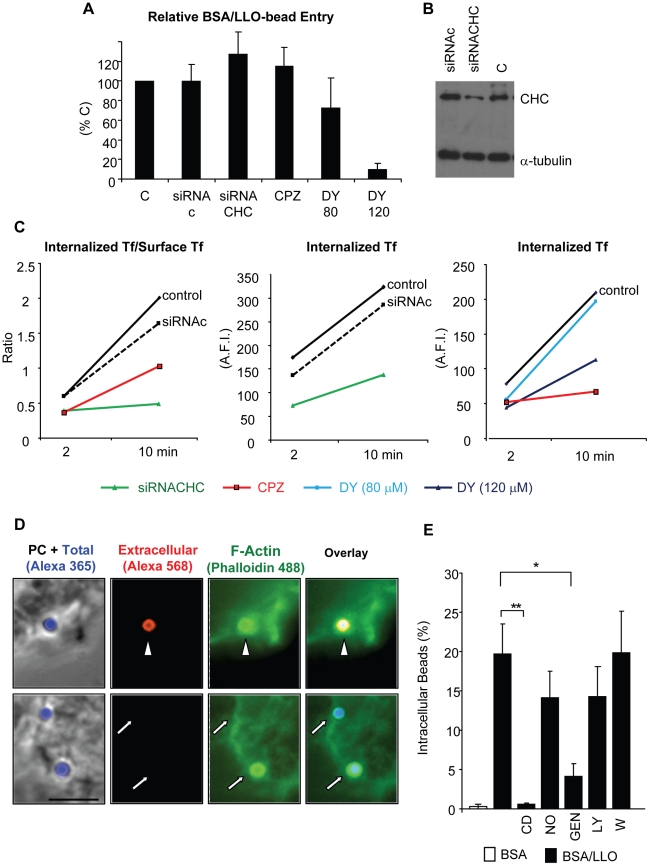
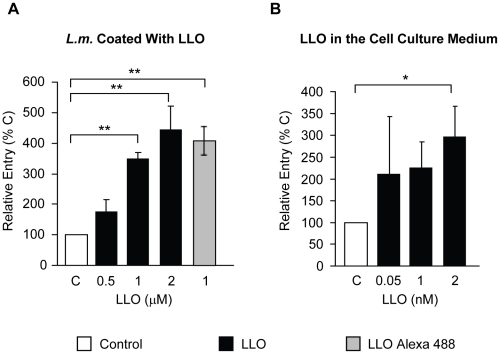
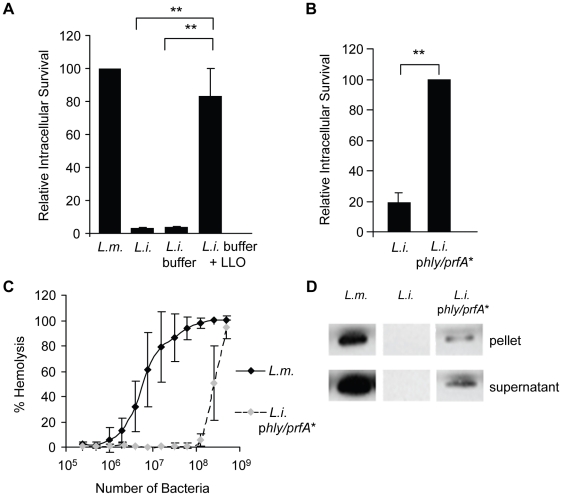
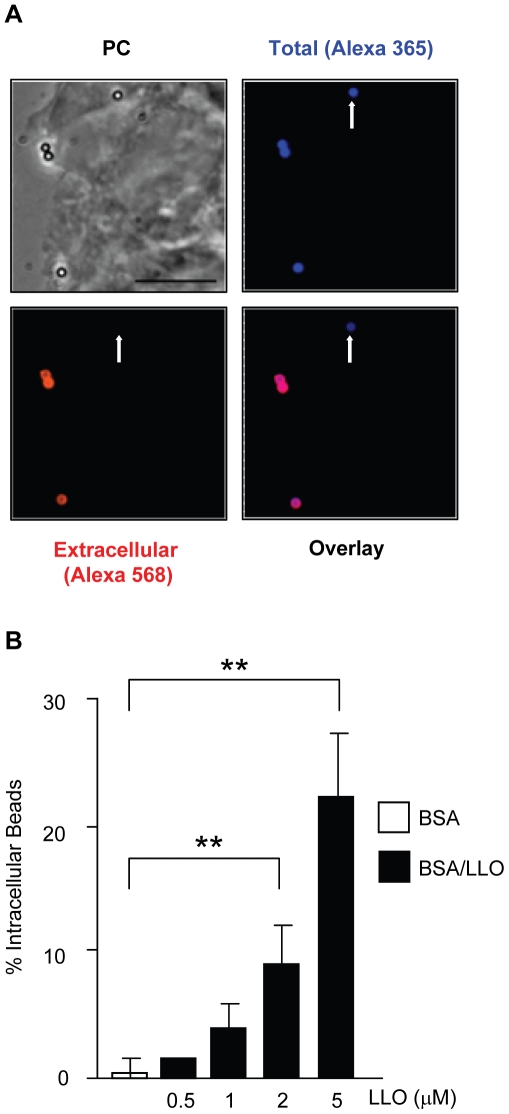
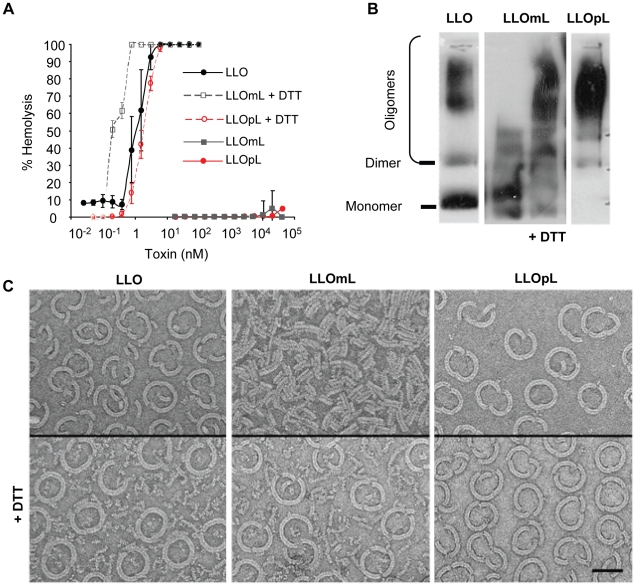
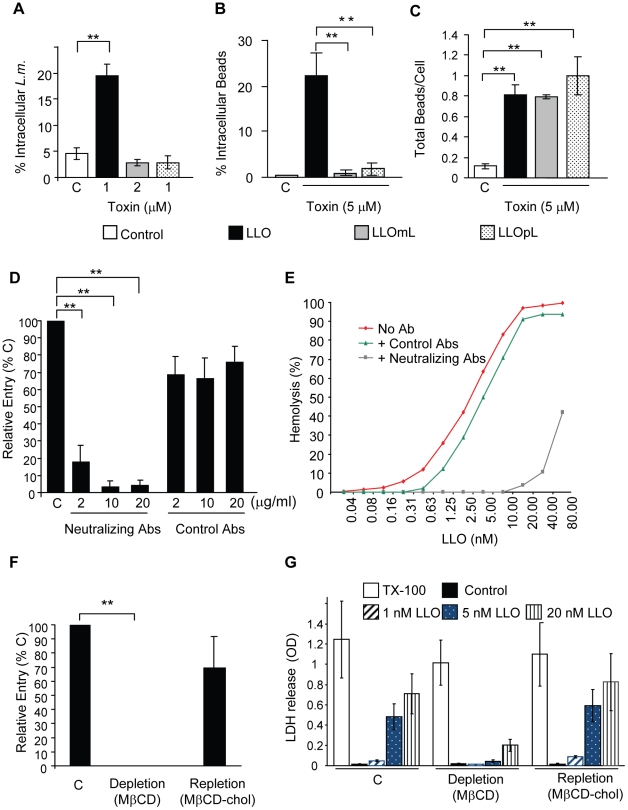
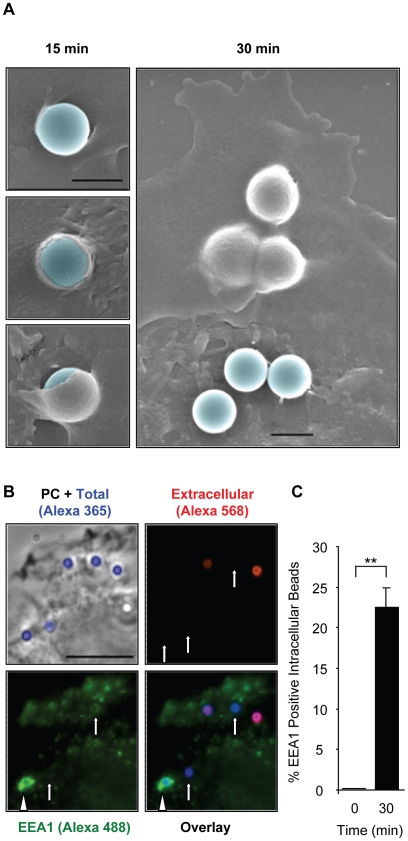
Intracellular pathogens have evolved diverse strategies to invade and survive within host cells. Among the most studied facultative intracellular pathogens, Listeria monocytogenes is known to express two invasins-InlA and InlB-that induce bacterial internalization into nonphagocytic cells. The pore-forming toxin listeriolysin O (LLO) facilitates bacterial escape from the internalization vesicle into the cytoplasm, where bacteria divide and undergo cell-to-cell spreading via actin-based motility. In the present study we demonstrate that in addition to InlA and InlB, LLO is required for efficient internalization of L. monocytogenes into human hepatocytes (HepG2). Surprisingly, LLO is an invasion factor sufficient to induce the internalization of noninvasive Listeria innocua or polystyrene beads into host cells in a dose-dependent fashion and at the concentrations produced by L. monocytogenes. To elucidate the mechanisms underlying LLO-induced bacterial entry, we constructed novel LLO derivatives locked at different stages of the toxin assembly on host membranes. We found that LLO-induced bacterial or bead entry only occurs upon LLO pore formation. Scanning electron and fluorescence microscopy studies show that LLO-coated beads stimulate the formation of membrane extensions that ingest the beads into an early endosomal compartment. This LLO-induced internalization pathway is dynamin-and F-actin-dependent, and clathrin-independent. Interestingly, further linking pore formation to bacteria/bead uptake, LLO induces F-actin polymerization in a tyrosine kinase-and pore-dependent fashion. In conclusion, we demonstrate for the first time that a bacterial pathogen perforates the host cell plasma membrane as a strategy to activate the endocytic machinery and gain entry into the host cell.
细胞内病原体进化出多种策略来入侵和在宿主细胞内生存。在研究最多的兼性细胞内病原体中,单核细胞增生李斯特菌已知表达两种入侵素-InlA 和 InlB-它们诱导细菌内化进入非吞噬细胞。成孔毒素李斯特菌溶血素 O(LLO)有助于细菌从内化囊泡逃逸到细胞质中,在细胞质中细菌分裂并通过肌动蛋白为基础的运动进行细胞间传播。在本研究中,我们证明除了 InlA 和 InlB 之外,LLO 对于李斯特菌有效内化进入人肝细胞(HepG2)也是必需的。令人惊讶的是,LLO 是一种足以诱导非侵袭性李斯特菌无害株或聚苯乙烯珠以剂量依赖性方式和李斯特菌产生的浓度内化进入宿主细胞的入侵因子。为了阐明 LLO 诱导细菌进入的机制,我们构建了新型 LLO 衍生物,这些衍生物在宿主膜上锁定在毒素组装的不同阶段。我们发现,只有在 LLO 孔形成时,LLO 诱导的细菌或珠内才会发生。扫描电子显微镜和荧光显微镜研究表明,LLO 包被的珠粒刺激形成膜延伸,将珠粒摄入早期内体隔室。这种 LLO 诱导的内化途径依赖于胞质动力蛋白和 F-肌动蛋白,且不依赖于网格蛋白。有趣的是,进一步将孔形成与细菌/珠粒摄取联系起来,LLO 以酪氨酸激酶和孔依赖性方式诱导 F-肌动蛋白聚合。总之,我们首次证明细菌病原体刺穿宿主细胞膜作为激活内吞机制并进入宿主细胞的策略。