Department of Molecular and Cellular Biology, Baylor College of Medicine, Houston, Texas, United States of America.
PLoS One. 2012;7(11):e50634. doi: 10.1371/journal.pone.0050634. Epub 2012 Nov 30.
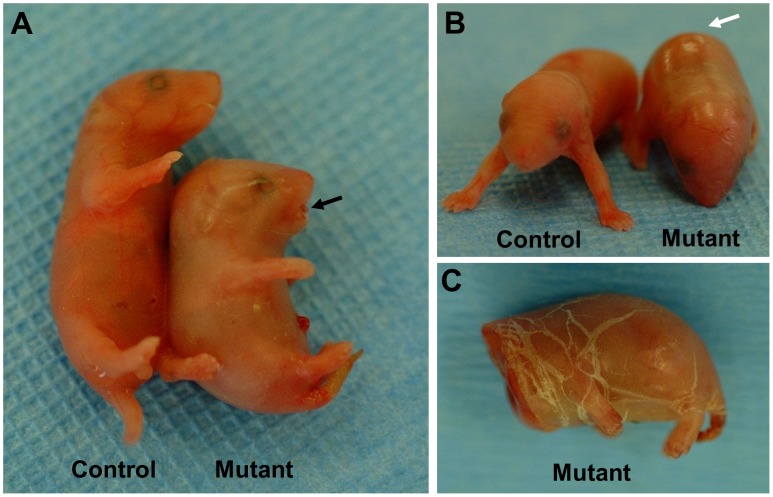
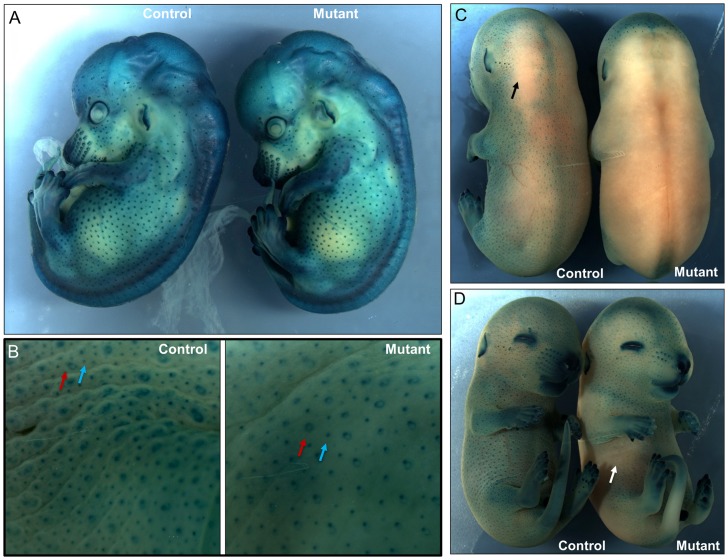
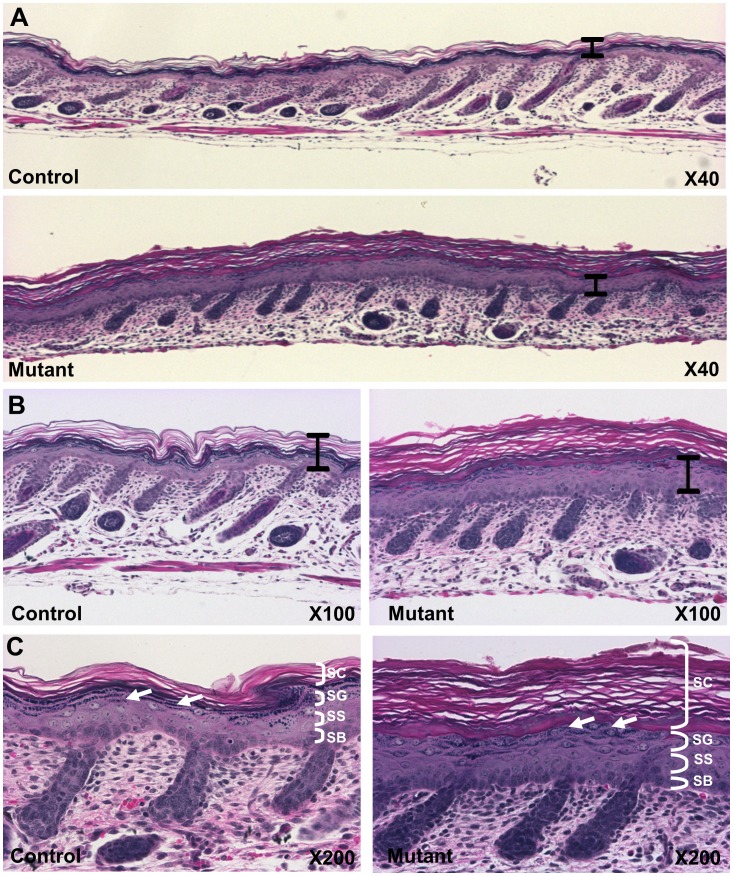
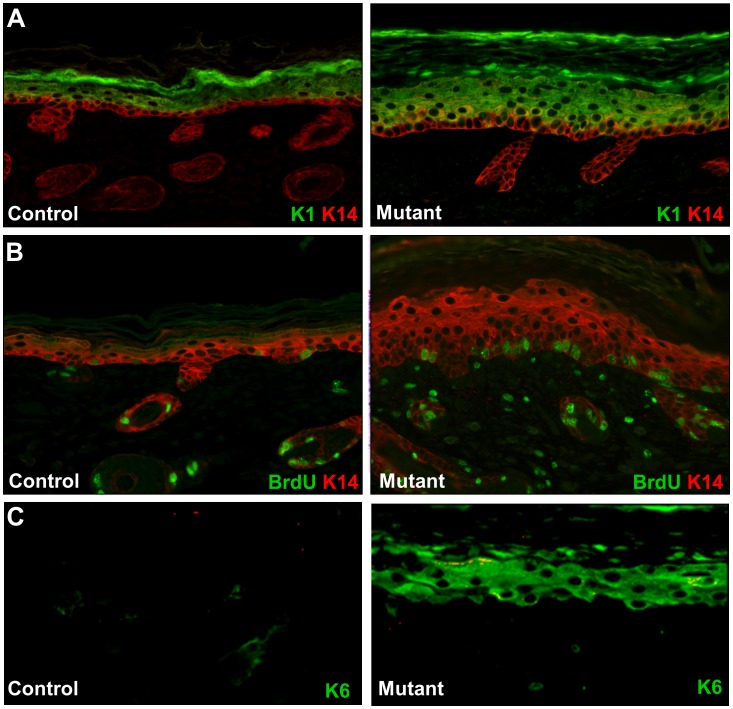
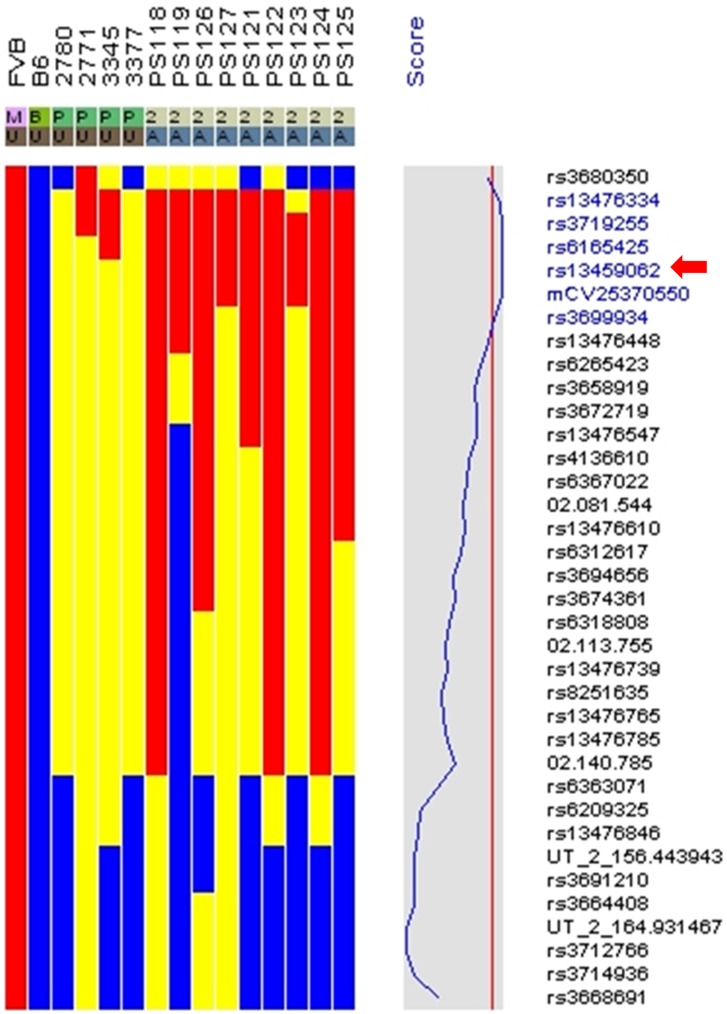
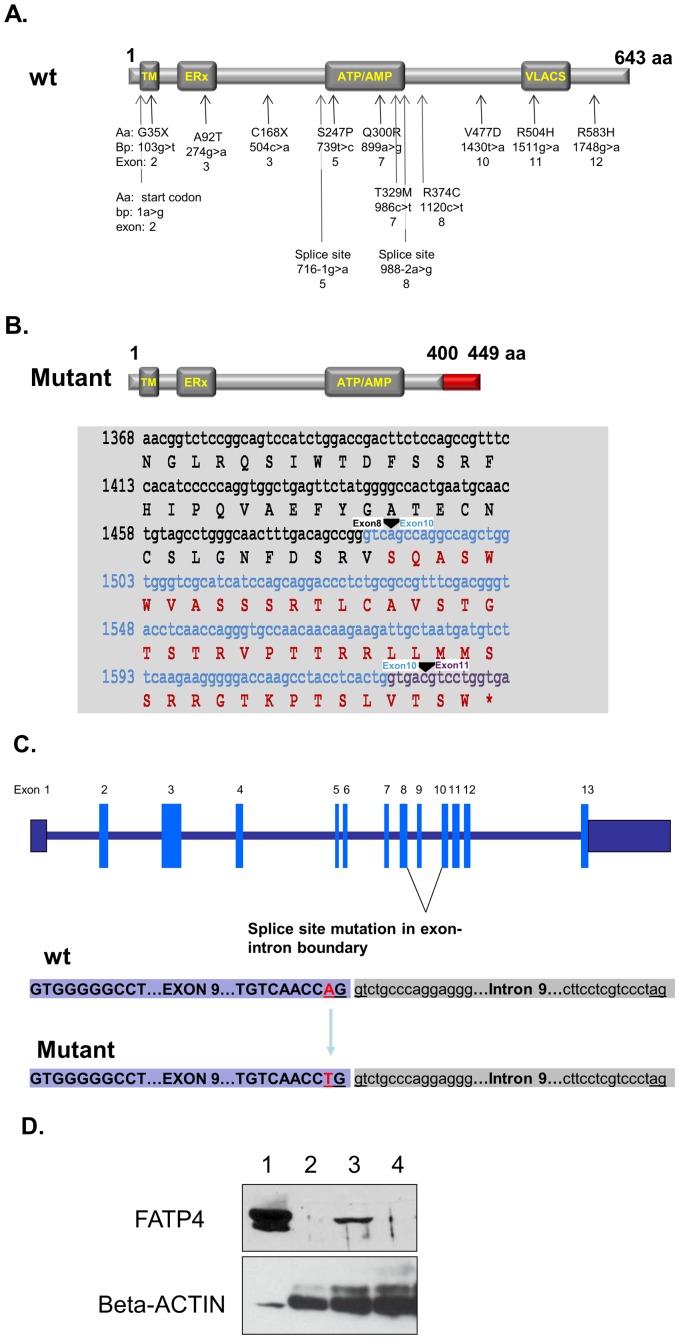
Congenital ichthyoses are life-threatening conditions in humans. We describe here the identification and molecular characterization of a novel recessive mutation in mice that results in newborn lethality with severe congenital lamellar ichthyosis. Mutant newborns have a taut, shiny, non-expandable epidermis that resembles cornified manifestations of autosomal-recessive congenital ichthyosis in humans. The skin is stretched so tightly that the newborn mice are immobilized. The genetic defect was mapped to a region near the proximal end of chromosome 2 by SNP analysis, suggesting Fatp4/Slc27a4 as a candidate gene. FATP4 mutations in humans cause ichthyosis prematurity syndrome (IPS), and mutations of Fatp4 in mice have previously been found to cause a phenotype that resembles human congenital ichthyoses. Characterization of the Fatp4 cDNA revealed a fusion of exon 8 to exon 10, with deletion of exon 9. Genomic sequencing identified an A to T mutation in the splice donor sequence at the 3'-end of exon 9. Loss of exon 9 results in a frame shift mutation upstream from the conserved very long-chain acyl-CoA synthase (VLACS) domain. Histological studies revealed that the mutant mice have defects in keratinocyte differentiation, along with hyperproliferation of the stratum basale of the epidermis, a hyperkeratotic stratum corneum, and reduced numbers of secondary hair follicles. Since Fatp4 protein is present primarily at the stratum granulosum and the stratum spinosum, the hyperproliferation and the alterations in hair follicle induction suggest that very long chain fatty acids, in addition to being required for normal cornification, may influence signals from the stratum corneum to the basal cells that help to orchestrate normal skin differentiation.
先天性鱼鳞病是一种危及生命的人类疾病。在这里,我们描述了一种新型隐性突变的鉴定和分子特征,这种突变导致新生小鼠致死,并伴有严重的先天性板层鱼鳞病。突变的新生小鼠具有紧绷、有光泽、不可伸展的表皮,类似于常染色体隐性先天性鱼鳞病在人类中的角质化表现。皮肤被拉伸得如此之紧,以至于新生小鼠无法动弹。通过 SNP 分析,遗传缺陷被定位到染色体 2 近端附近的一个区域,提示 Fatp4/Slc27a4 是候选基因。人类中的 FATP4 突变导致鱼鳞病早发性综合征(IPS),并且先前发现 Fatp4 在小鼠中的突变导致类似于人类先天性鱼鳞病的表型。Fatp4 cDNA 的特征表明外显子 8 与外显子 10 融合,外显子 9 缺失。基因组测序在exon 9 的 3'-末端的剪接供体位点发现一个 A 到 T 的突变。exon 9 的丢失导致在保守的非常长链酰基辅酶 A 合酶(VLACS)结构域上游发生移码突变。组织学研究表明,突变小鼠的角质形成细胞分化存在缺陷,同时伴有表皮基底细胞层过度增生、角化过度的角质层和次级毛囊数量减少。由于 Fatp4 蛋白主要存在于颗粒层和棘层,过度增生和毛囊诱导的改变表明,除了正常角质化所必需的非常长链脂肪酸外,它们可能还会影响来自角质层的信号,这些信号有助于协调正常的皮肤分化。