Department of Clinical Pharmacology, Gunma University Graduate School of Medicine, 3-39-22 Showa-machi, Maebashi 371-8511, Japan. ; Department of Pharmacy, Gunma University Hospital, 3-39-15 Showa-machi, Maebashi 371-8511, Japan.
Clin Med Insights Oncol. 2012;6:407-21. doi: 10.4137/CMO.S7340. Epub 2012 Dec 6.
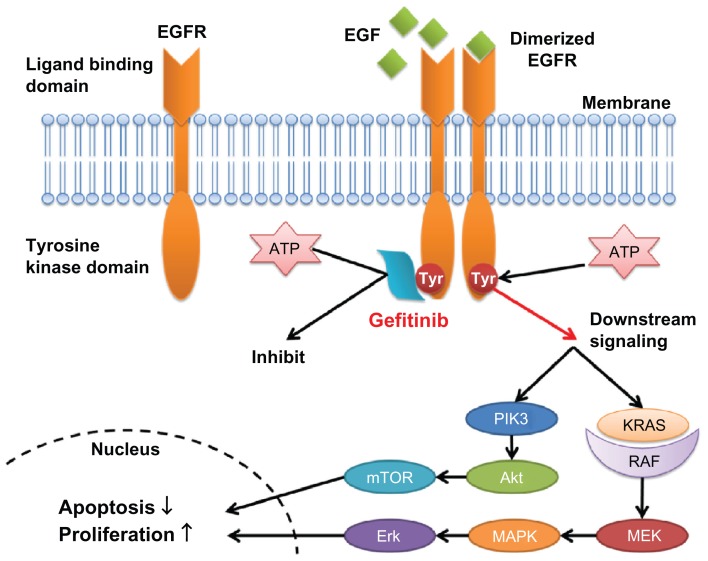
In the past decade, molecular-targeted drugs have been focused upon for the treatment of cancer. In 2002, gefitinib, an epidermal growth factor receptor (EGFR) tyrosine kinase inhibitor became available in Japan for the treatment of non-small cell lung cancer (NSCLC). Over 80% of selected patients, such as EGFR mutation-positive patients, respond to gefitinib treatment; however, most patients develop acquired resistance to gefitinib within a few years. Recently, many studies have been performed to determine precisely how to select patients who will respond to gefitinib, the best timing for its administration, and how to avoid the development of acquired resistance as well as adverse drug effects. This article reviews the use of gefitinib for the treatment of NSCLC from a pharmaceutical viewpoint.
在过去的十年中,分子靶向药物一直是癌症治疗的焦点。2002 年,表皮生长因子受体(EGFR)酪氨酸激酶抑制剂吉非替尼在日本上市,用于治疗非小细胞肺癌(NSCLC)。超过 80%的选定患者,如 EGFR 突变阳性患者,对吉非替尼治疗有反应;然而,大多数患者在几年内会对吉非替尼产生获得性耐药。最近,许多研究旨在确定如何选择对吉非替尼有反应的患者,最佳的给药时间,以及如何避免获得性耐药和药物不良反应。本文从药物的角度回顾了吉非替尼治疗非小细胞肺癌的应用。