Department of Mechanical Engineering, Northwestern University, Evanston, Illinois 60208, USA.
Sci Rep. 2012;2:988. doi: 10.1038/srep00988. Epub 2012 Dec 17.
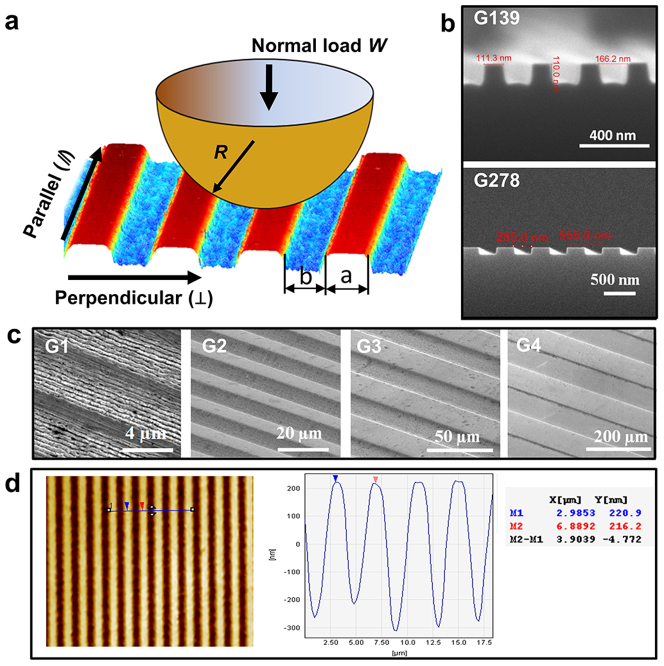
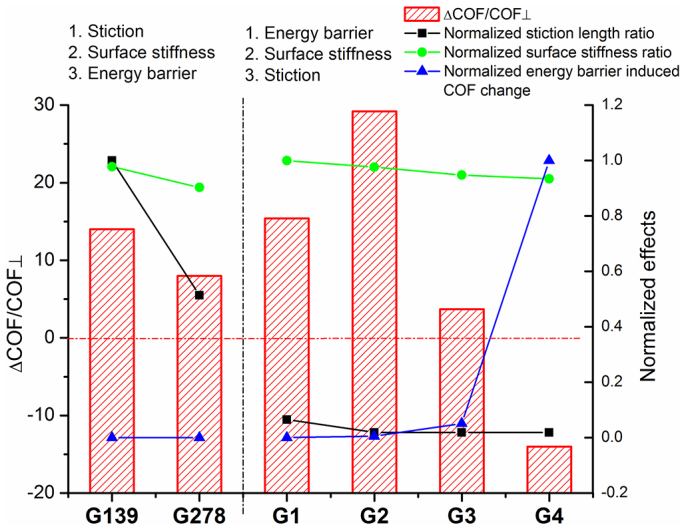
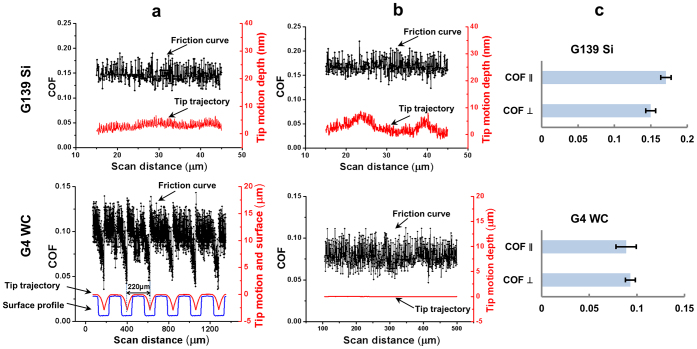
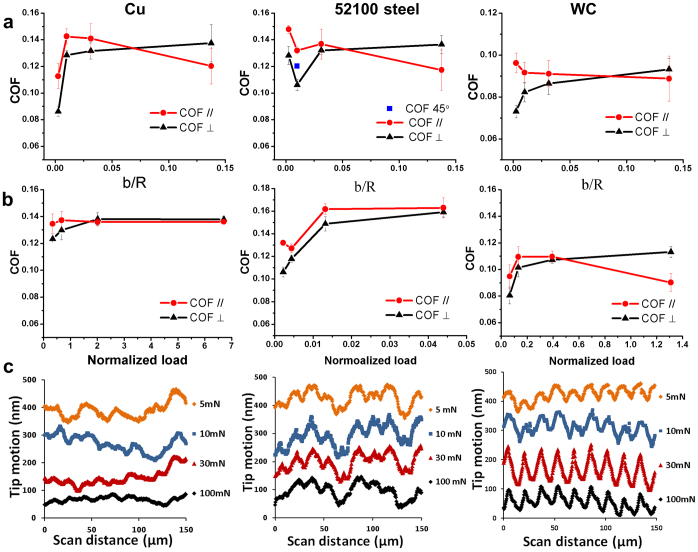
Friction characteristics with respect to surface topographic orientation were investigated using surfaces of different materials and fabricated with grooves of different scales. Scratching friction tests were conducted using a nano-indentation-scratching system with the tip motion parallel or perpendicular to the groove orientation. Similar friction anisotropy trends were observed for all the surfaces studied, which are (1) under a light load and for surfaces with narrow grooves, the tip motion parallel to the grooves offers higher friction coefficients than does that perpendicular to them, (2) otherwise, equal or lower friction coefficients are found under this motion. The influences of groove size relative to the diameter of the mating tip (as a representative asperity), surface contact stiffness, contact area, and the characteristic stiction length are discussed. The appearance of this friction anisotropy is independent of material; however, the boundary and the point of trend transition depend on material properties.
研究了不同材料表面和不同尺度沟槽的表面形貌取向对摩擦特性的影响。采用纳米压痕划痕系统,在平行或垂直于沟槽方向进行划痕摩擦试验。对于所有研究的表面,都观察到相似的摩擦各向异性趋势,即:(1) 在轻载和窄沟槽表面下,平行于沟槽的针尖运动提供的摩擦系数高于垂直于沟槽的针尖运动;(2) 否则,在这种运动下,摩擦系数相等或更低。讨论了沟槽尺寸相对于配合尖端(作为代表性的粗糙度)直径、表面接触刚度、接触面积和特征粘着长度的影响。这种摩擦各向异性的出现与材料无关;然而,趋势转变的边界和转折点取决于材料特性。