Watkins Richard R, Lemonovich Tracy L, File Thomas M
Division of Infectious Diseases, Akron General Medical Center, Akron, OH, USA.
Core Evid. 2012;7:131-43. doi: 10.2147/CE.S33430. Epub 2012 Dec 11.
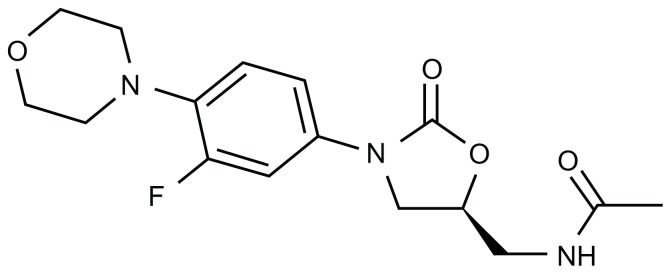
Methicillin-resistant Staphylococcus aureus (MRSA), including community-associated and hospital-associated strains, is a major cause of human morbidity and mortality. Treatment options have become limited due to the emergence of MRSA strains with decreased sensitivity to vancomycin, which has long been the first-line therapy for serious infections. This has prompted the search for novel antibiotics that are efficacious against MRSA. Linezolid, an oxazolidinone class of antibiotic, was approved by the Food and Drug Administration in 2000 for treatment of MRSA infections. Since then, there have been a multitude of clinical trials and research studies evaluating the effectiveness of linezolid against serious infections, including pneumonia (both community- and hospital-acquired), skin and soft-tissue infections such as diabetic foot ulcers, endocarditis, osteomyelitis, prosthetic devices, and others. The primary aim of this review is to provide an up-to-date evaluation of the clinical evidence for using linezolid to treat MRSA infections, with a focus on recently published studies, including those on nosocomial pneumonia. Other objectives are to analyze the cost-effectiveness of linezolid compared to other agents, and to review the pharmokinetics and pharmacodynamics of linezolid, emphasizing the most current concepts.
耐甲氧西林金黄色葡萄球菌(MRSA),包括社区相关性和医院相关性菌株,是导致人类发病和死亡的主要原因。由于对万古霉素敏感性降低的MRSA菌株的出现,治疗选择变得有限,而万古霉素长期以来一直是严重感染的一线治疗药物。这促使人们寻找对MRSA有效的新型抗生素。利奈唑胺是一种恶唑烷酮类抗生素,于2000年被美国食品药品监督管理局批准用于治疗MRSA感染。从那时起,已经有大量的临床试验和研究评估利奈唑胺对严重感染的有效性,包括肺炎(社区获得性和医院获得性)、皮肤和软组织感染如糖尿病足溃疡、心内膜炎、骨髓炎、假体装置感染等。本综述的主要目的是对使用利奈唑胺治疗MRSA感染的临床证据进行最新评估,重点关注最近发表的研究,包括医院获得性肺炎的研究。其他目标是分析利奈唑胺与其他药物相比的成本效益,并回顾利奈唑胺的药代动力学和药效学,强调最新概念。