Department of Pharmacology and IDM, University of Valencia, Burjasot, Valencia, Spain.
PLoS One. 2012;7(12):e52435. doi: 10.1371/journal.pone.0052435. Epub 2012 Dec 20.
Heme oxygenase-1 (HO-1) is induced in many cell types as a defense mechanism against stress. We have investigated the possible role of endogenous HO-1 in the effector phase of arthritis using the K/BxN serum transfer model of arthritis in HO-1 heterozygous and homozygous knock-out mice.
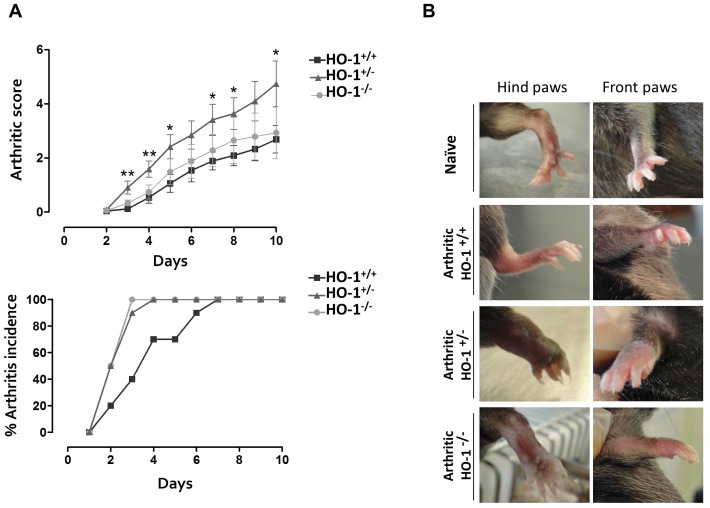
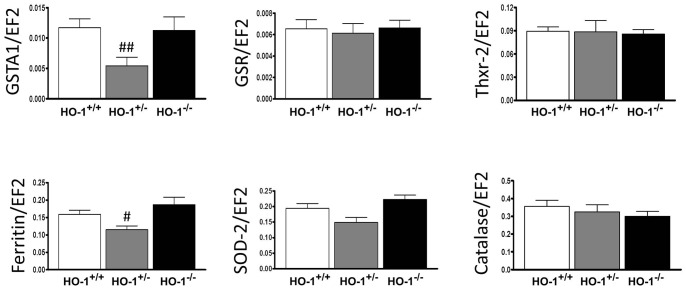
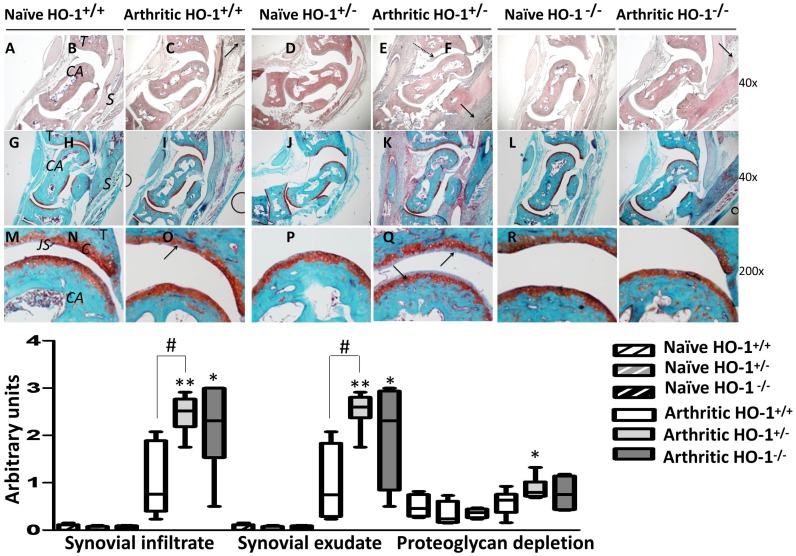
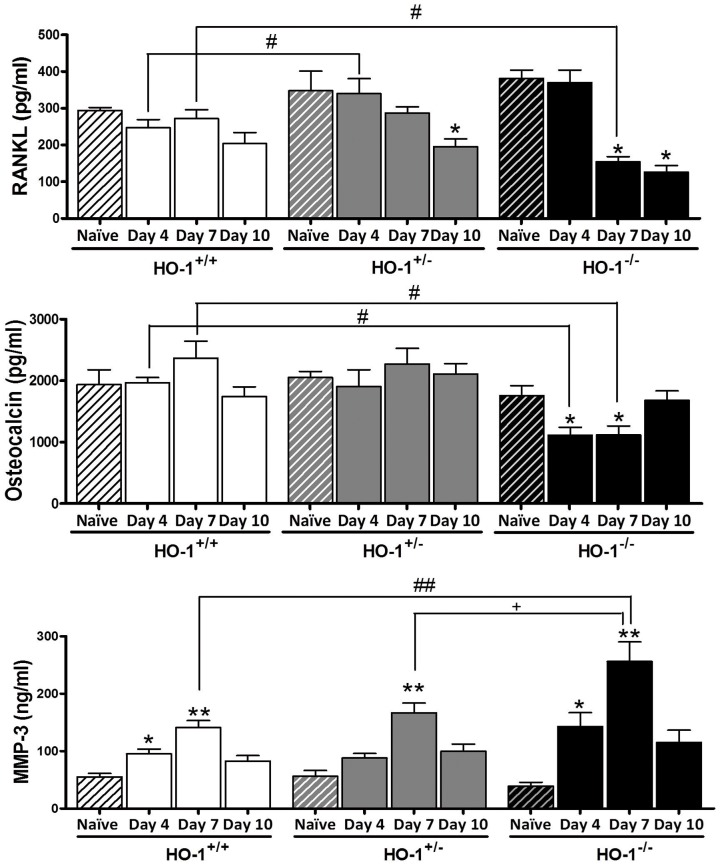
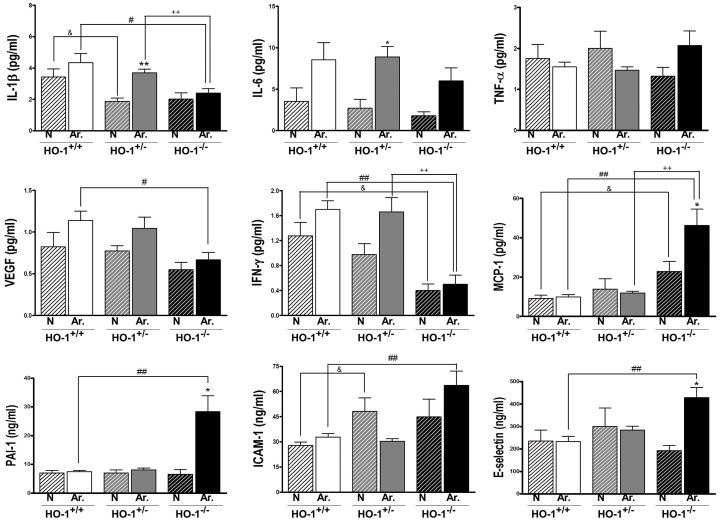
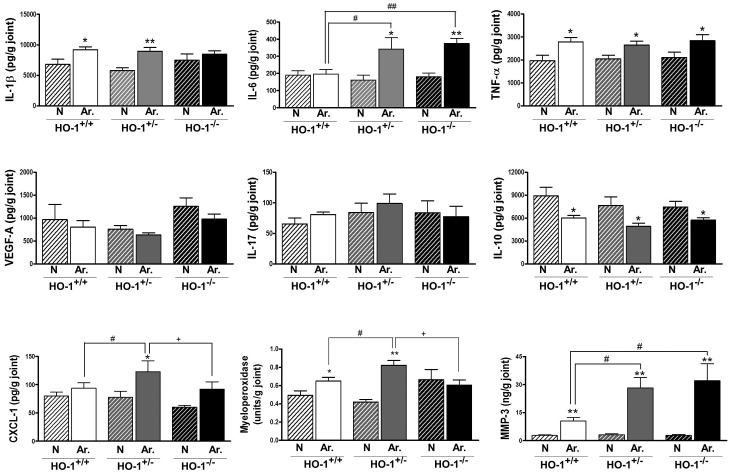
METHODOLOGY/PRINCIPAL FINDINGS: Arthritis was induced in C57/Black-6 xFVB (HO-1(+/+), HO-1(+/-) and HO-1(-/-)) mice by intraperitoneal injection of 150 µl serum from arthritic K/BxN mice at days 0 and 2. Blood was collected and animals were sacrificed at day 10. Histological analysis was performed in ankle sections. The levels of inflammatory mediators were measured in serum and paw homogenates by enzyme-linked immunosorbent assay or Multiplex technology. The incidence of arthritis was higher in HO-1(+/-) and HO-1(-/-) groups compared with HO-1(+/+). The inflammatory response was aggravated in HO-1(+/-) mice as shown by arthritic score and the migration of inflammatory cells that could be related to the enhancement of CXCL-1 production. In addition, the HO-1(+/-) group showed proteoglycan depletion significantly higher than HO-1(+/+) mice. Serum levels of matrix metalloproteinase-3, monocyte chemotactic protein-1, plasminogen activator inhibitor-1, E-selectin and intercellular adhesion molecule-1 were increased in arthritic HO-1(-/-) mice, whereas vascular endothelial growth factor and some cytokines such as interferon-γ showed a reduction compared to HO-1(+/+) or HO-1(+/-) mice. In addition, down-regulated gene expression of ferritin, glutathione S-reductase A1 and superoxide dismutase-2 was observed in the livers of arthritic HO-1(+/-) animals.
CONCLUSION/SIGNIFICANCE: Endogenous HO-1 regulates the production of systemic and local inflammatory mediators and plays a protective role in K/BxN serum transfer arthritis.
血红素加氧酶-1(HO-1)作为一种应对应激的防御机制,在许多细胞类型中被诱导。我们使用 K/BxN 血清转移关节炎模型,研究了内源性 HO-1 在关节炎效应阶段的可能作用,该模型在 HO-1 杂合子和纯合子敲除小鼠中。
方法/主要发现:通过在 0 天和 2 天向 C57/Black-6 xFVB(HO-1(+/+)、HO-1(+/-)和 HO-1(-/-))小鼠腹腔内注射 150 µl 来自关节炎 K/BxN 小鼠的血清,诱导关节炎。在第 10 天采集血液并处死动物。对踝关节切片进行组织学分析。通过酶联免疫吸附测定或多重技术测量血清和爪匀浆中炎症介质的水平。与 HO-1(+/+)相比,HO-1(+/-)和 HO-1(-/-)组的关节炎发病率更高。HO-1(+/-)小鼠的炎症反应加重,表现在关节炎评分和炎症细胞的迁移上,这可能与 CXCL-1 产生的增强有关。此外,HO-1(+/-)组的蛋白聚糖耗竭明显高于 HO-1(+/+)小鼠。关节炎 HO-1(-/-)小鼠的血清基质金属蛋白酶-3、单核细胞趋化蛋白-1、纤溶酶原激活物抑制剂-1、E-选择素和细胞间黏附分子-1 水平升高,而血管内皮生长因子和一些细胞因子,如干扰素-γ,与 HO-1(+/+)或 HO-1(+/-)小鼠相比有所降低。此外,在关节炎 HO-1(+/-)动物的肝脏中观察到铁蛋白、谷胱甘肽 S-转移酶 A1 和超氧化物歧化酶-2 的基因表达下调。
结论/意义:内源性 HO-1 调节系统和局部炎症介质的产生,并在 K/BxN 血清转移关节炎中发挥保护作用。