Motor Control Laboratory, School of Psychology, University of Tasmania, Tasmania, Australia.
PLoS One. 2012;7(12):e52573. doi: 10.1371/journal.pone.0052573. Epub 2012 Dec 19.
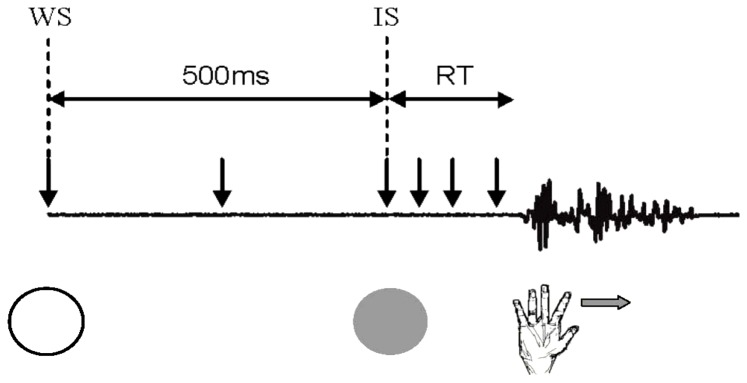
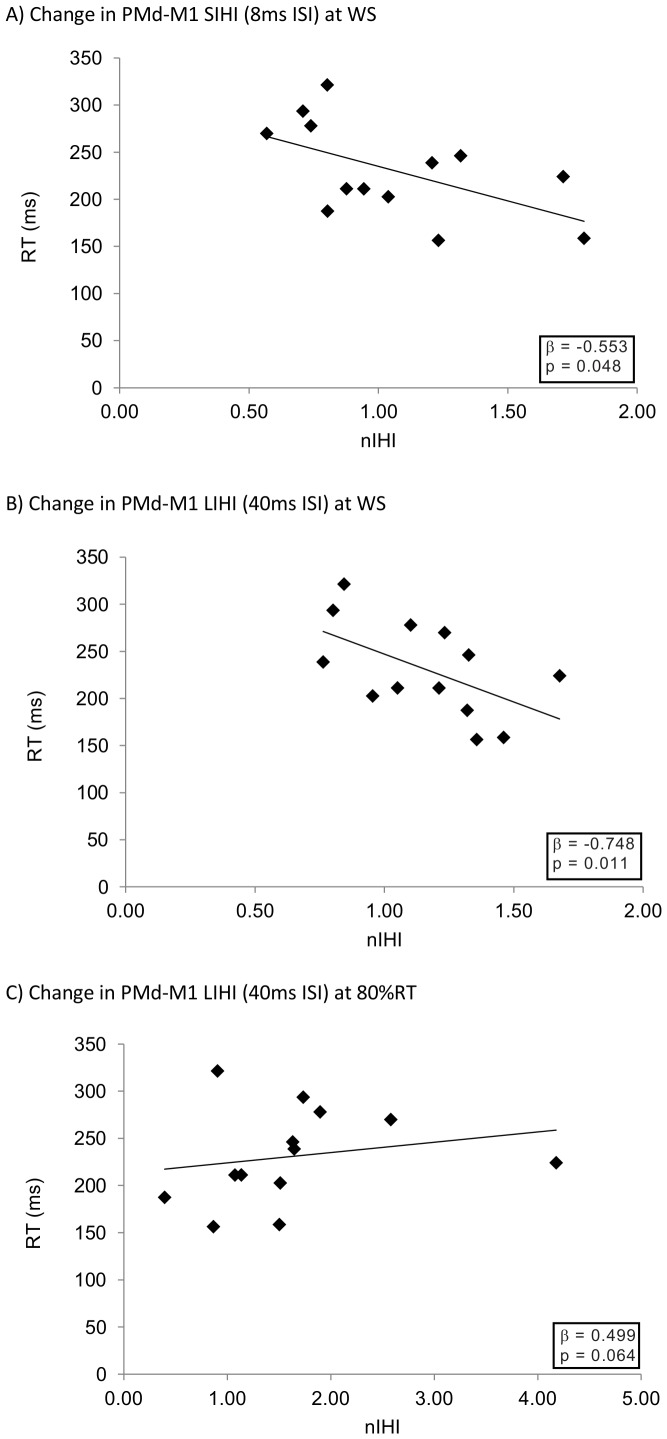
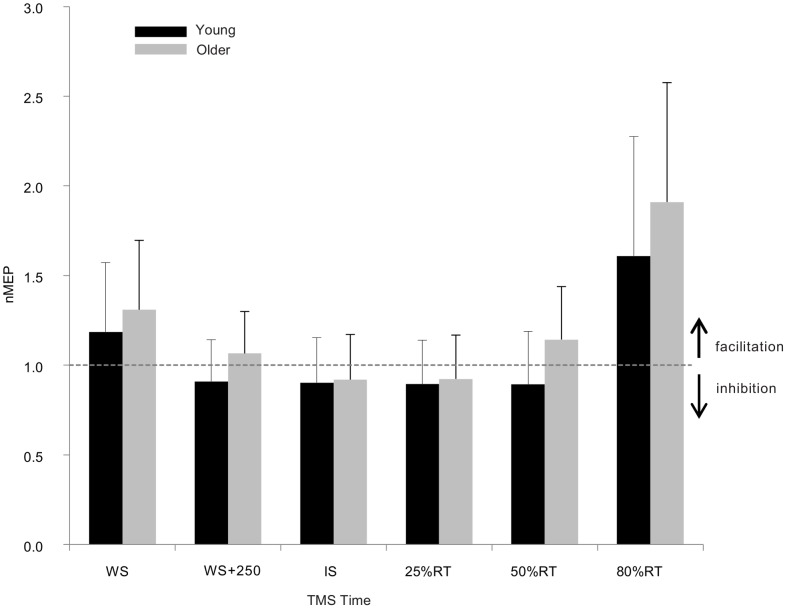
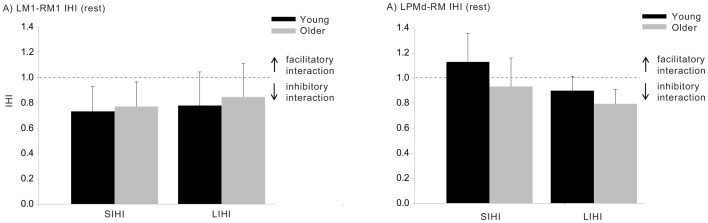
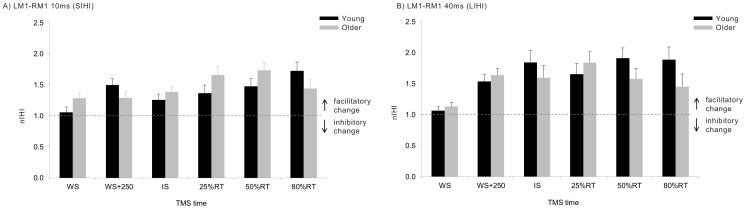
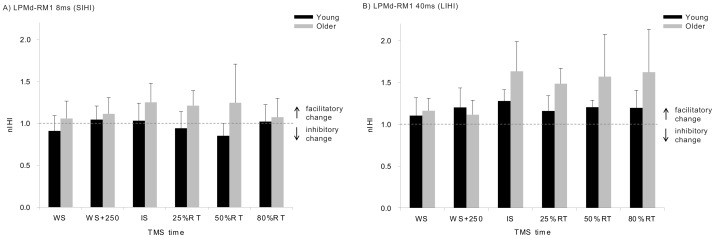
Neural interactions between contralateral motor regions are thought to be instrumental in the successful preparation, and execution, of volitional movements. Here we investigated whether healthy ageing is associated with a change in functional connectivity, as indicated by the ability to modulate interhemispheric interactions during movement preparation in a manner that assists rapid movement responses. Thirteen young (mean age 22.2 years) and thirteen older (68.5 years) adults rapidly abducted their left index finger as soon as possible in response to a visual imperative signal, presented 500 ms after a visual warning signal.Interactions between left dorsal premotor cortex (LPMd) and right primary motor cortex (RM1) and between left primary motor cortex (LM1) and RM1 were investigated at six time points between the warning signal and the volitional response using paired-pulse transcranial magnetic stimulation. Relative to the inhibitory interactions measured at rest, both young and older adults released LM1-RM1 inhibition beginning 250 ms after the warning signal, with no significant differences between groups. LPMd-RM1 interactions became facilitatory (from the onset of the imperative signal onwards) in the older, but not the young, group. Regression analyses revealed that for the older adults, modulation of LPMd-RM1 interactions early in the preparation period was associated with faster responses, suggesting that specifically timed modulation of these pathways may be a compensatory mechanism to offset, at least in part, slowing of motor responses. The results suggest a greater reliance on premotor regions during the preparation of simple motor actions with advancing age.
人们认为,对侧运动区域之间的神经相互作用对于有意愿运动的成功准备和执行至关重要。在这里,我们研究了健康的衰老是否与功能连接的变化有关,这种变化表现为在运动准备过程中能够以一种有助于快速运动反应的方式调节半球间相互作用的能力。13 名年轻(平均年龄 22.2 岁)和 13 名年长(68.5 岁)成年人在视觉指令信号出现后 500 毫秒,尽快快速向左食指外展。在警告信号和自愿反应之间的六个时间点使用成对脉冲经颅磁刺激研究了左背侧运动前皮层(LPMd)和右初级运动皮层(RM1)之间以及左初级运动皮层(LM1)和 RM1 之间的相互作用。与在休息时测量的抑制相互作用相比,年轻和年长成年人都在警告信号后 250 毫秒开始释放 LM1-RM1 抑制,两组之间没有显着差异。在年长组中,LPMd-RM1 相互作用变得促进(从指令信号开始),而在年轻组中则没有。回归分析表明,对于年长成年人,在准备期早期调节 LPMd-RM1 相互作用与更快的反应相关,这表明这些通路的特定时间调节可能是补偿机制,至少部分抵消了运动反应的减慢。结果表明,随着年龄的增长,在准备简单运动动作时,对运动前区域的依赖性更大。