Department of Virology II, National Institute of Infectious Diseases, Tokyo, Japan.
PLoS One. 2012;7(12):e52697. doi: 10.1371/journal.pone.0052697. Epub 2012 Dec 20.
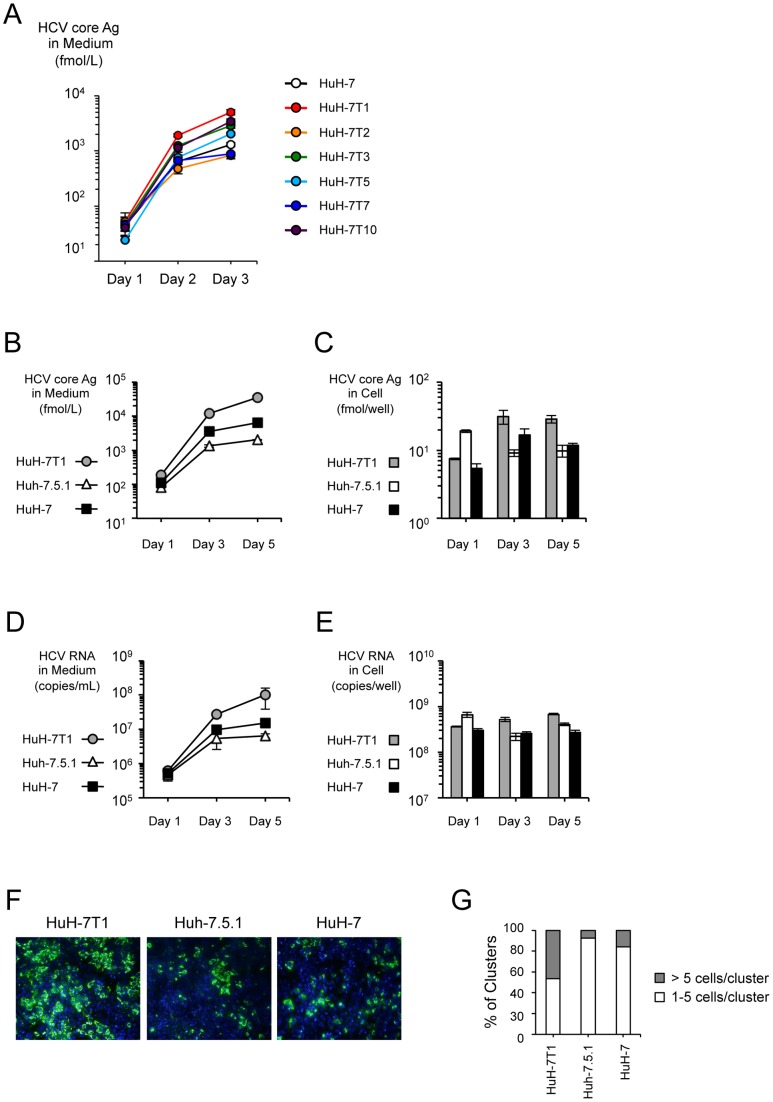
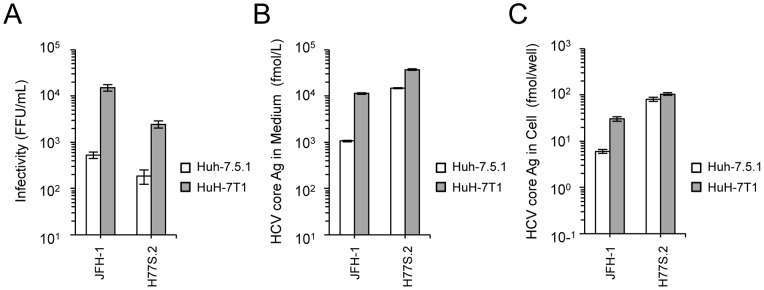
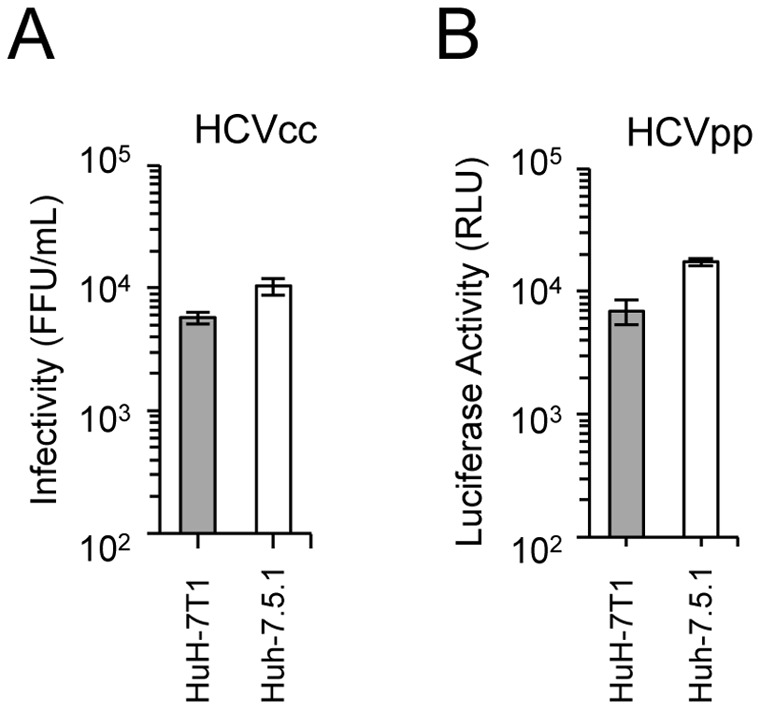
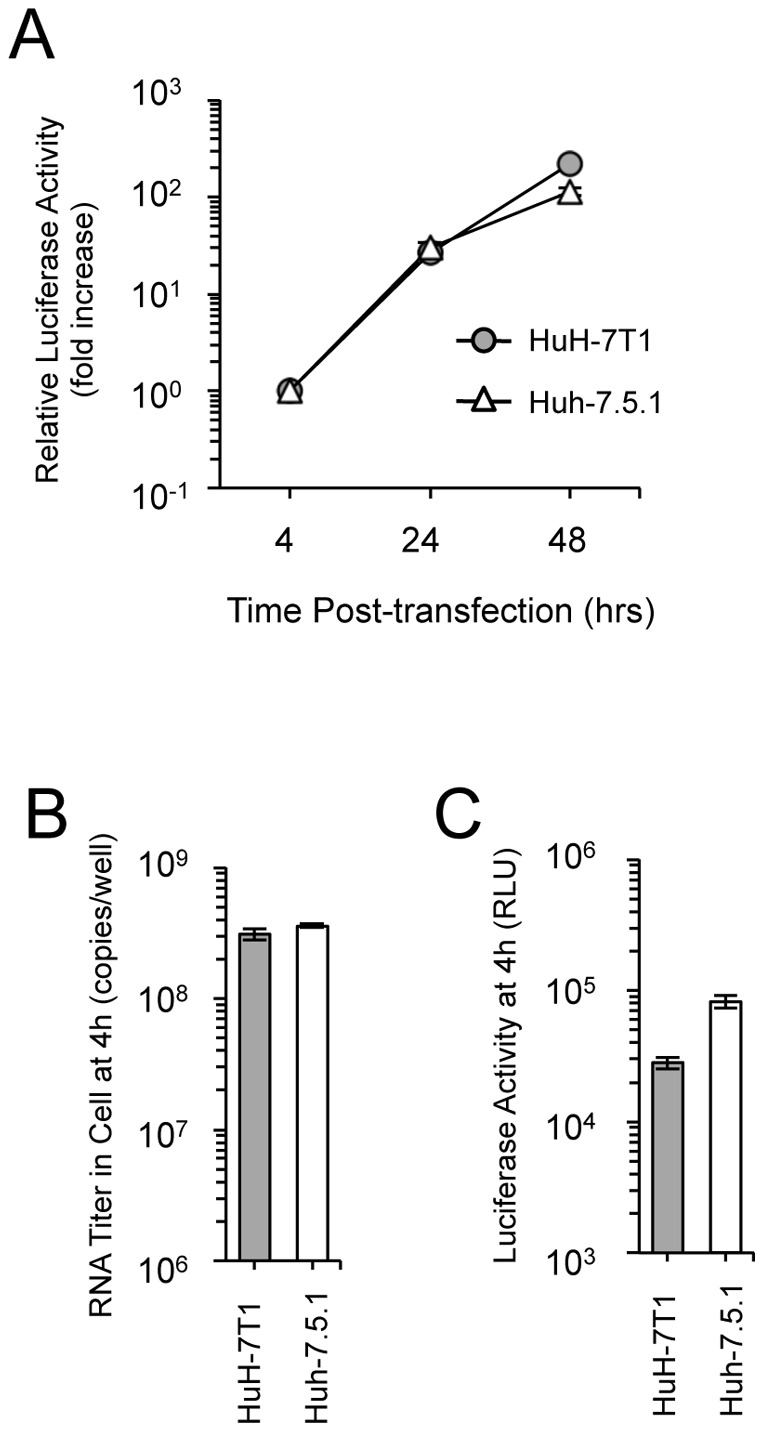
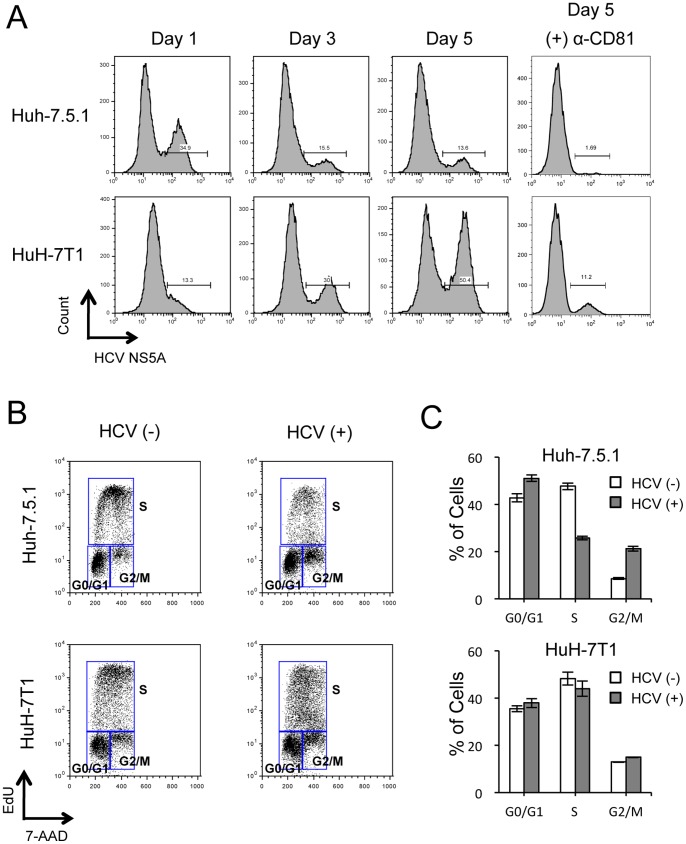
Hepatitis C virus (HCV) cell culture system with JFH-1 strain and HuH-7 cells enabled us to produce infectious HCV particles in vitro, and such system is useful to explore the anti-HCV compounds and to develop the vaccine against HCV. In the present study, we describe the derivation of a cell line that permits improved production of HCV particles. Specifically, we characterized several subclones that were isolated from the original HuH-7 cell line by limiting dilution. These HuH-7 subclones displayed a notable range of HCV production levels following transfection by full-genome JFH-1 RNA. Among these subclones, HuH-7T1 produced HCV more efficiently than other subclones and Huh-7.5.1 that is known to be highly permissive for HCV replication. Upon transfection with full-genome RNA, HCV production was increased ten-fold in HuH-7T1 compared to Huh-7.5.1. This increase in viral production correlated with increased efficiency of intracellular infectious virus production. Furthermore, HCV replication did not induce cell cycle arrest in HuH-7T1, whereas it did in Huh-7.5.1. Consequently, the use of HuH-7T1 as host cells could provide increased population of HCV-positive cells and elevated viral titer. In conclusion, we isolated a HuH-7 subclone, HuH-7T1, that supports efficient HCV production. High efficiency of intracellular infectious virus production and evasion of cell cycle arrest were important for this phenotype. We expect that the use of this cell line will facilitate analysis of the underlying mechanisms for HCV particle assembly and the cell cycle arrest caused by HCV.
利用 JFH-1 株和 HuH-7 细胞的丙型肝炎病毒 (HCV) 细胞培养系统使我们能够在体外产生感染性 HCV 颗粒,该系统有助于探索抗 HCV 化合物并开发针对 HCV 的疫苗。在本研究中,我们描述了一种能够提高 HCV 颗粒产量的细胞系的衍生方法。具体而言,我们通过有限稀释从原始 HuH-7 细胞系中分离出几个亚克隆,并对其进行了特征描述。这些 HuH-7 亚克隆在用全长 JFH-1 RNA 转染后显示出显著不同的 HCV 产生水平。在这些亚克隆中,HuH-7T1 比其他亚克隆和已知对 HCV 复制高度许可的 Huh-7.5.1 更有效地产生 HCV。在 HuH-7T1 中转染全长 RNA 后,与 Huh-7.5.1 相比,HCV 产量增加了十倍。这种病毒产量的增加与细胞内感染性病毒产生效率的提高相关。此外,HCV 复制不会在 HuH-7T1 中诱导细胞周期停滞,而在 Huh-7.5.1 中会诱导细胞周期停滞。因此,使用 HuH-7T1 作为宿主细胞可以提供更多的 HCV 阳性细胞和更高的病毒滴度。总之,我们分离出一个支持高效 HCV 产生的 HuH-7 亚克隆 HuH-7T1。细胞内感染性病毒产生效率高和逃避细胞周期停滞是该表型的重要因素。我们预计,该细胞系的使用将有助于分析 HCV 颗粒组装和 HCV 引起的细胞周期停滞的潜在机制。