Department of Otolaryngology, Guangzhou Overseas Chinese Hospital, School of Medicine, Jinan University, Guangzhou, China.
PLoS One. 2012;7(12):e52863. doi: 10.1371/journal.pone.0052863. Epub 2012 Dec 28.
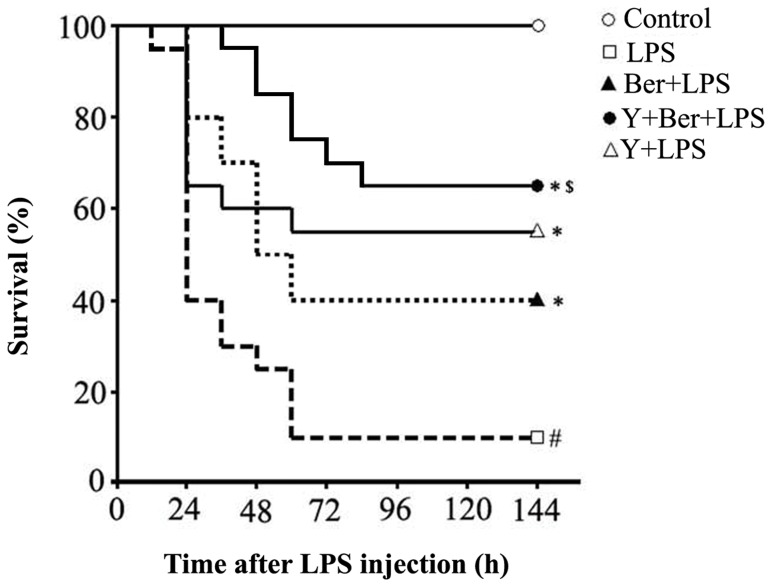
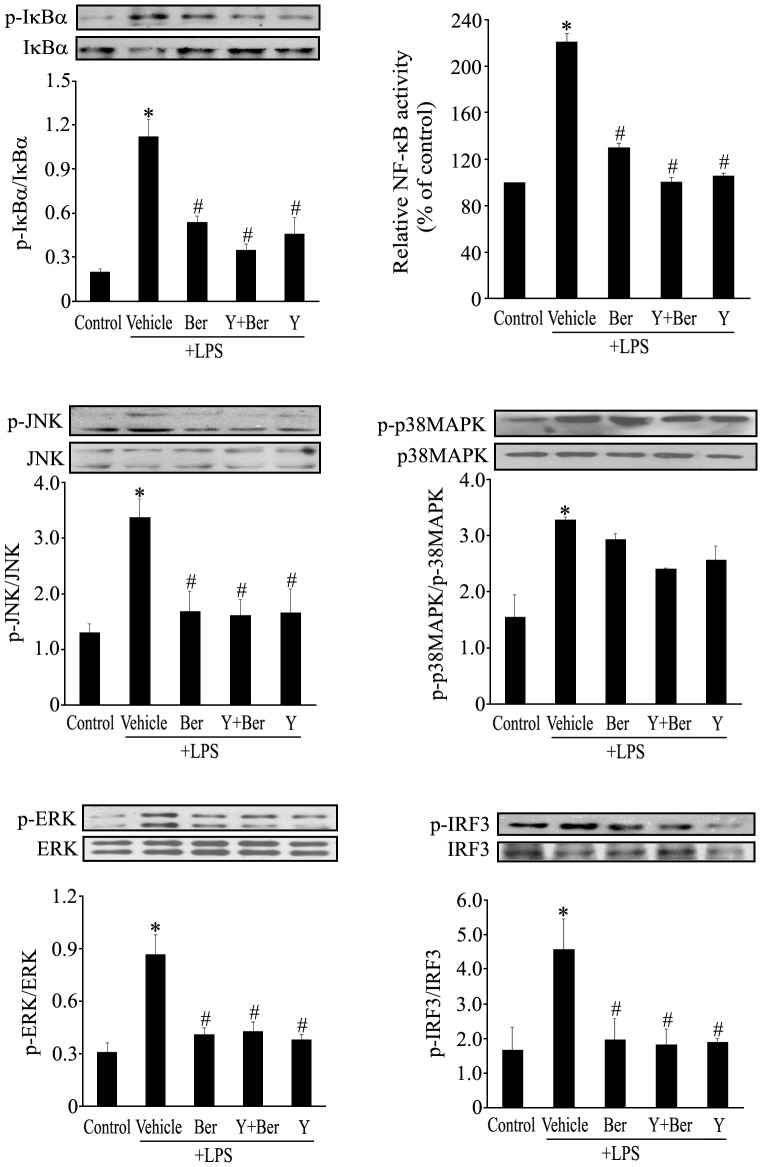
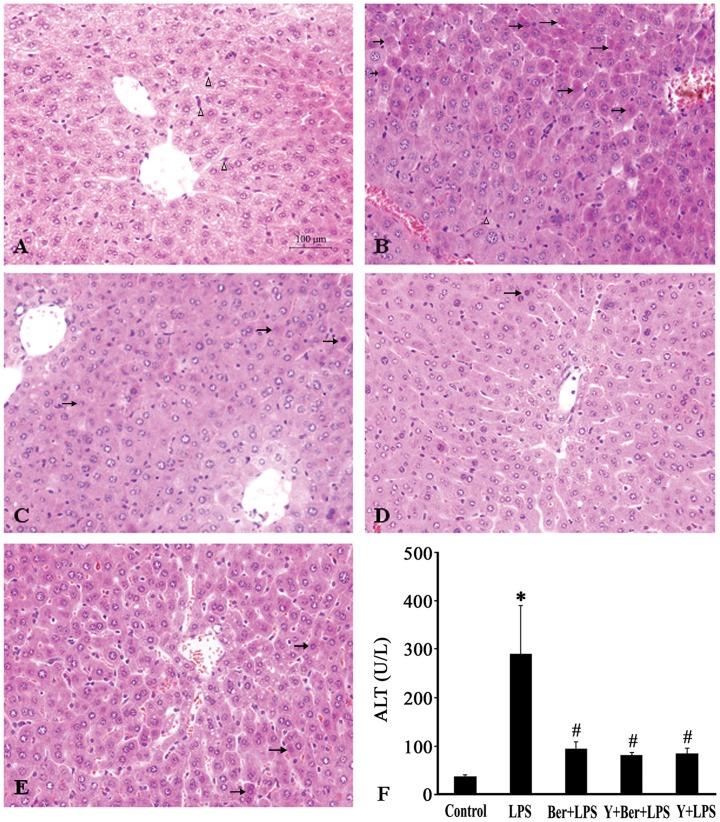
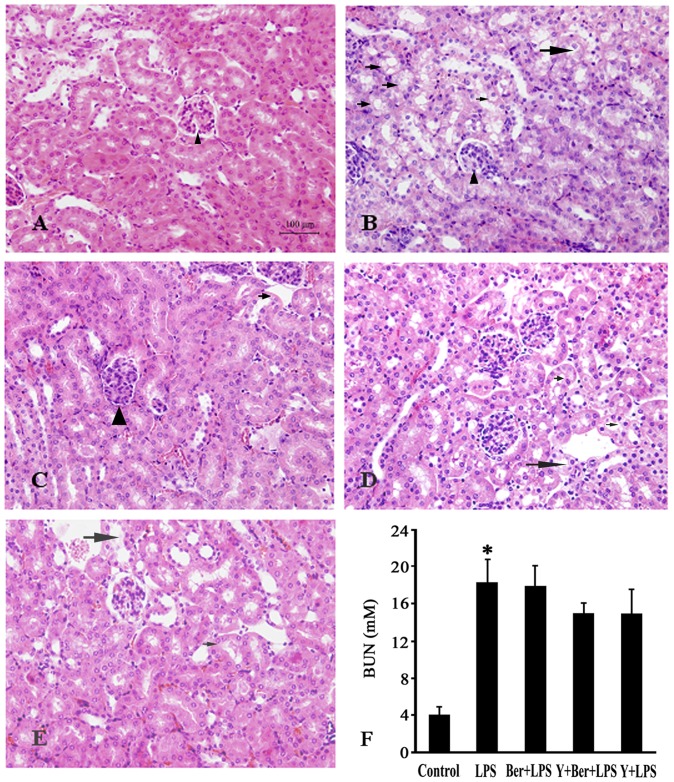
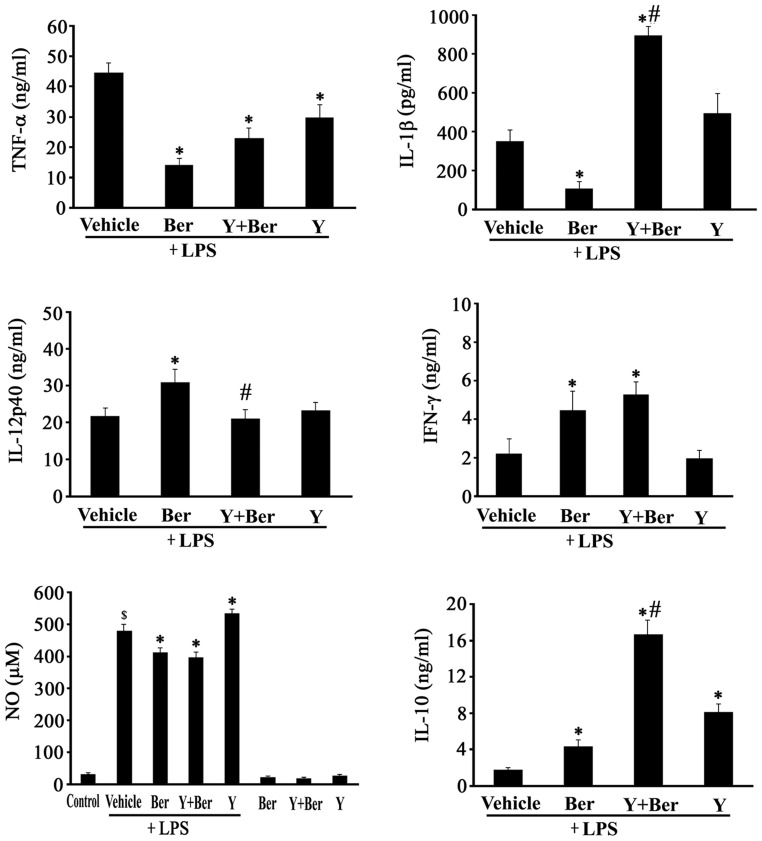
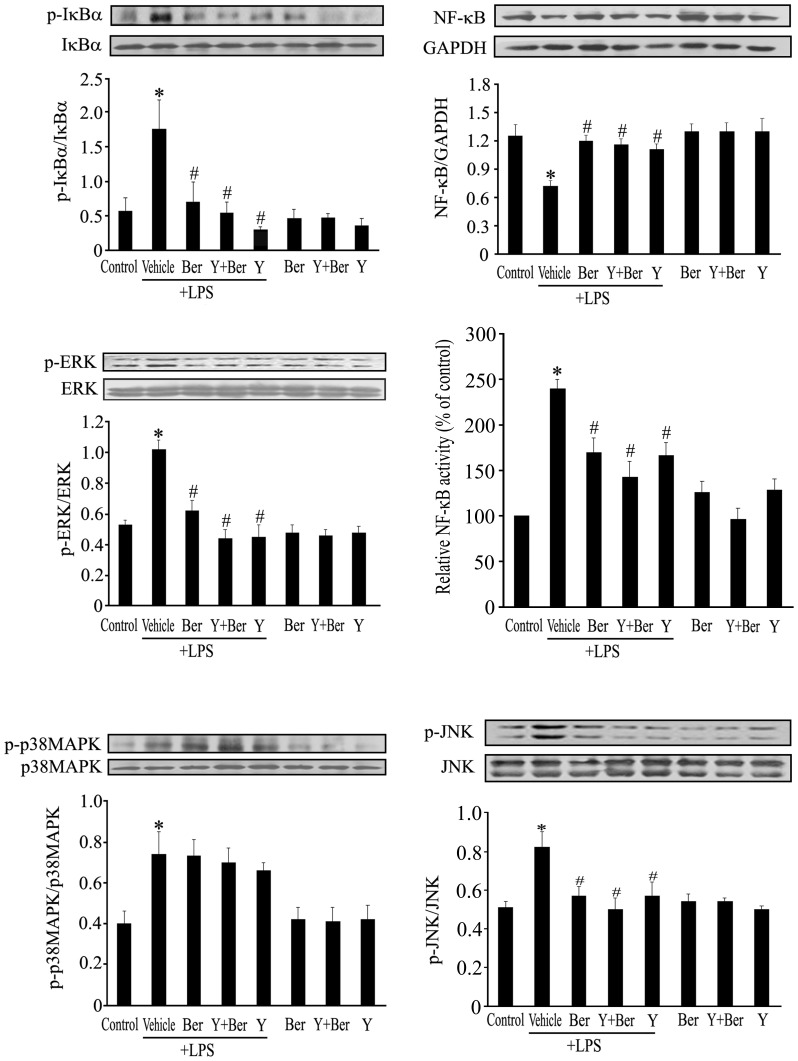
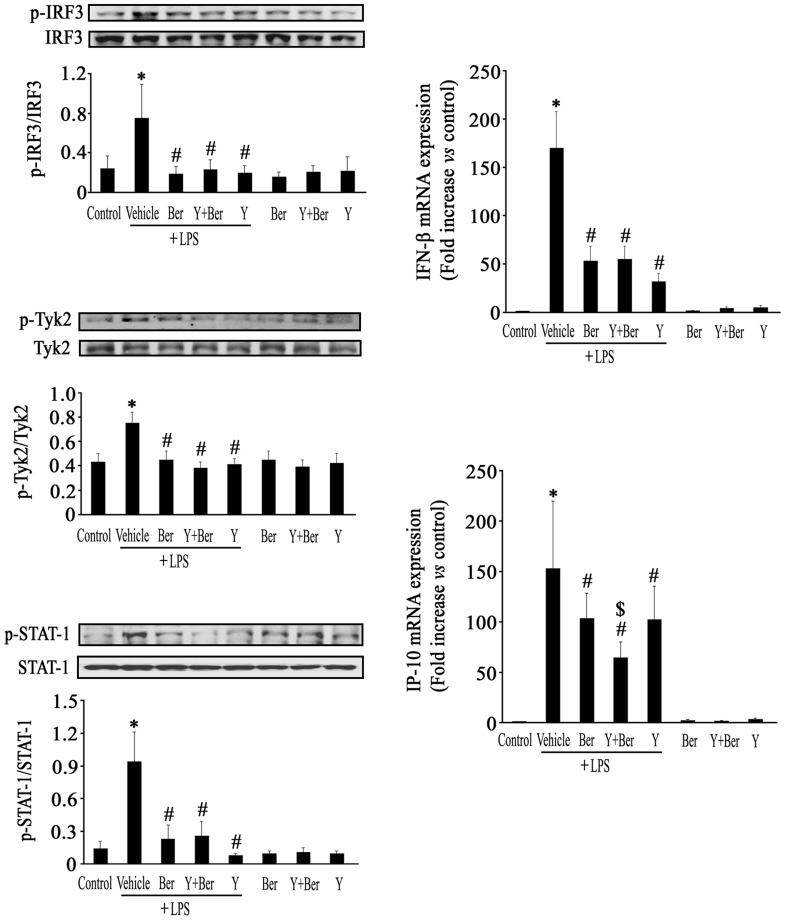
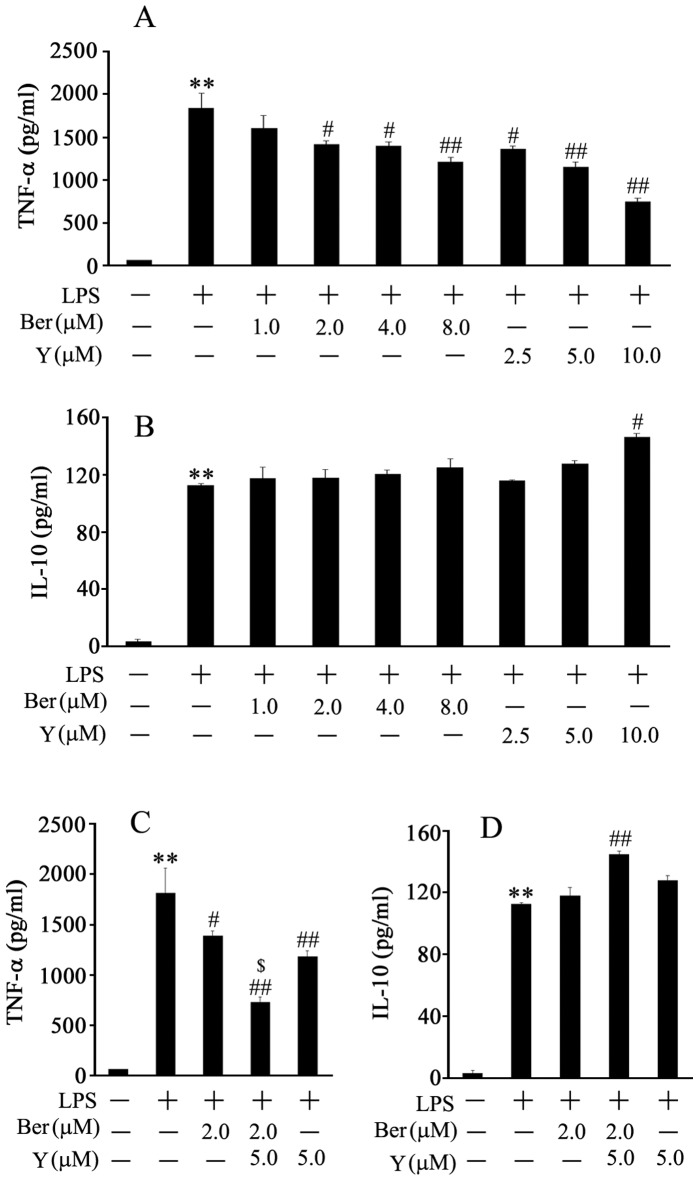
Sepsis remains a major cause of mortality in intensive care units, better therapies are urgently needed. Gram-negative bacterial lipopolysaccharide (LPS) is an important trigger of sepsis. We have demonstrated that berberine (Ber) protects against lethality induced by LPS, which is enhanced by yohimbine (Y) pretreatment, and Ber combined with Y also improves survival in septic mice. However, the precise mechanisms by which Y enhances protection of Ber against LPS-induced lethality remain unclear. The present study confirmed that simultaneously administered Y also enhanced protection of Ber against LPS-induced lethality. Ber or/and Y attenuated liver injury, but not renal injury in LPS-challenged mice. Ber or/and Y all inhibited LPS-stimulated IκBα, JNK and ERK phosphorylation, NF-κB activation as well as TNF-α production. Ber also increased IL-10 production in LPS-challenged mice, which was enhanced by Y. Furthermore, Ber or/and Y all suppressed LPS-induced IRF3, TyK2 and STAT1 phosphorylation, as well as IFN-β and IP-10 mRNA expression in spleen of mice at 1 h after LPS challenge. Especially, Y enhanced the inhibitory effect of Ber on LPS-induced IP-10 mRNA expression. In vitro experiments further demonstrated that Y significantly enhanced the inhibitory effect of Ber on TNF-α production in LPS-treated peritoneal macrophages, Ber combined with Y promoted LPS-induced IL-10 production and LPS-stimulated IκBα, JNK, ERK and IRF3 phosphorylation and NF-κB activation were also suppressed by Ber or/and Y pretreatment in peritoneal macrophages. Taken together, these results demonstrate that Y enhances the protection of Ber against LPS-induced lethality in mice via attenuating liver injury, upregulating IL-10 production and suppressing IκBα, JNK, ERK and IRF3 phosphorylation. Ber combined with Y may be an effective immunomodulator agent for the prevention of sepsis.
脓毒症仍然是重症监护病房死亡的主要原因,迫切需要更好的治疗方法。革兰氏阴性菌脂多糖 (LPS) 是脓毒症的重要触发因素。我们已经证明小檗碱 (Ber) 可以预防 LPS 诱导的致死性,而育亨宾 (Y) 预处理可以增强这种作用,Ber 与 Y 联合使用也可以提高脓毒症小鼠的存活率。然而,Y 增强 Ber 对 LPS 诱导的致死性的保护的确切机制尚不清楚。本研究证实,同时给予 Y 也增强了 Ber 对 LPS 诱导的致死性的保护作用。Ber 或/和 Y 减轻了 LPS 攻击小鼠的肝损伤,但对肾损伤没有影响。Ber 或/和 Y 均抑制 LPS 刺激的 IκBα、JNK 和 ERK 磷酸化、NF-κB 激活以及 TNF-α 的产生。Ber 还增加了 LPS 攻击小鼠的 IL-10 产生,而 Y 增强了这一作用。此外,Ber 或/和 Y 均抑制了 LPS 诱导的 IRF3、TyK2 和 STAT1 磷酸化,以及 LPS 攻击后 1 小时小鼠脾脏中 IFN-β 和 IP-10 mRNA 的表达。特别是,Y 增强了 Ber 对 LPS 诱导的 IP-10 mRNA 表达的抑制作用。体外实验进一步表明,Y 显著增强了 Ber 对 LPS 处理的腹腔巨噬细胞中 TNF-α 产生的抑制作用,Ber 与 Y 联合使用促进了 LPS 诱导的 IL-10 产生,Ber 或/和 Y 预处理还抑制了 LPS 刺激的 IκBα、JNK、ERK 和 IRF3 磷酸化以及 NF-κB 激活。综上所述,这些结果表明,Y 通过减轻肝损伤、上调 IL-10 产生以及抑制 IκBα、JNK、ERK 和 IRF3 磷酸化,增强了 Ber 对 LPS 诱导的小鼠致死性的保护作用。Ber 与 Y 联合使用可能是预防脓毒症的有效免疫调节剂。