Biotechnical Faculty, Department of Forestry and Renewable Forest Resources, University of Ljubljana, Ljubljana, Slovenia.
PLoS One. 2013;8(1):e52641. doi: 10.1371/journal.pone.0052641. Epub 2013 Jan 7.
Due to a long history of intensive forest exploitation, few European beech (Fagus sylvatica L.) old-growth forests have been preserved in Europe.
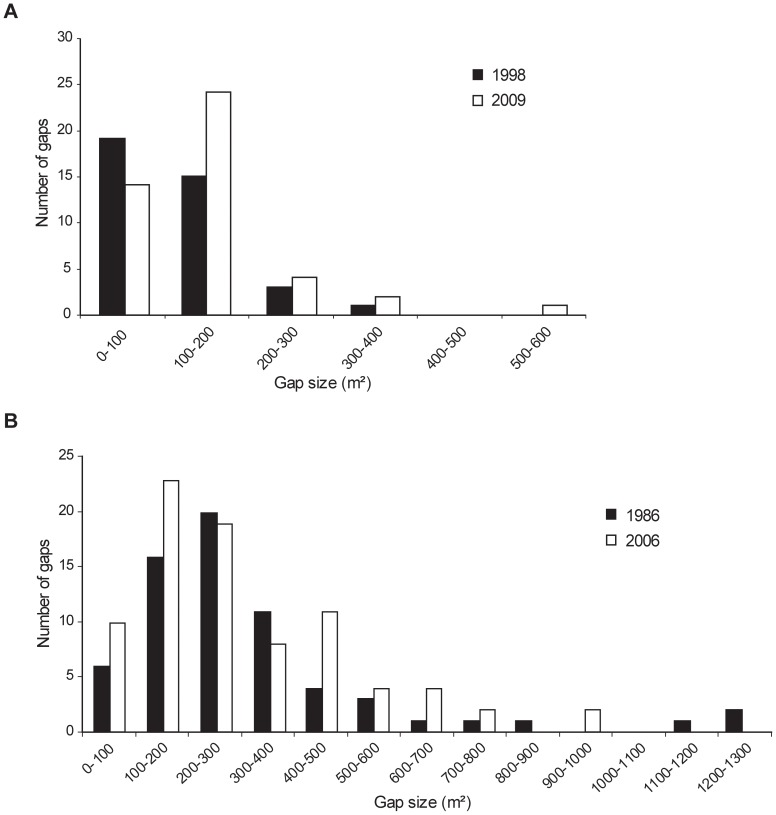
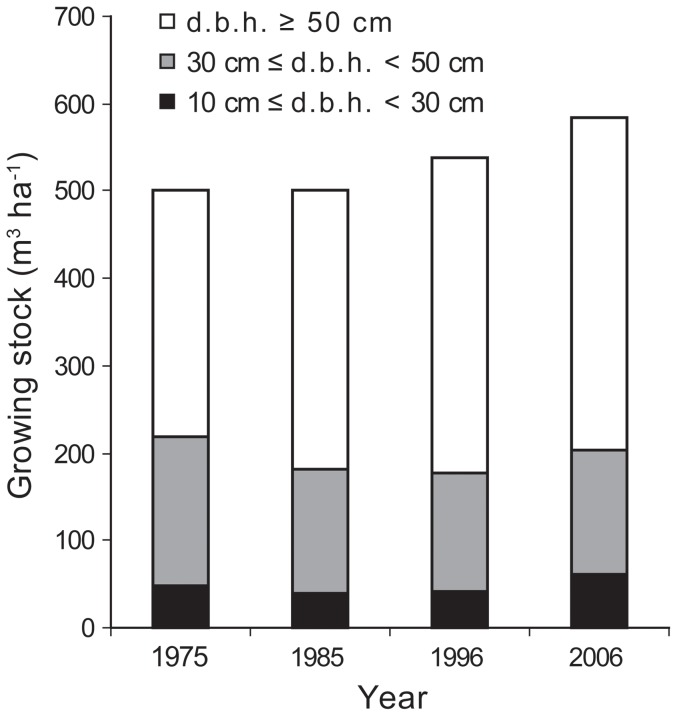
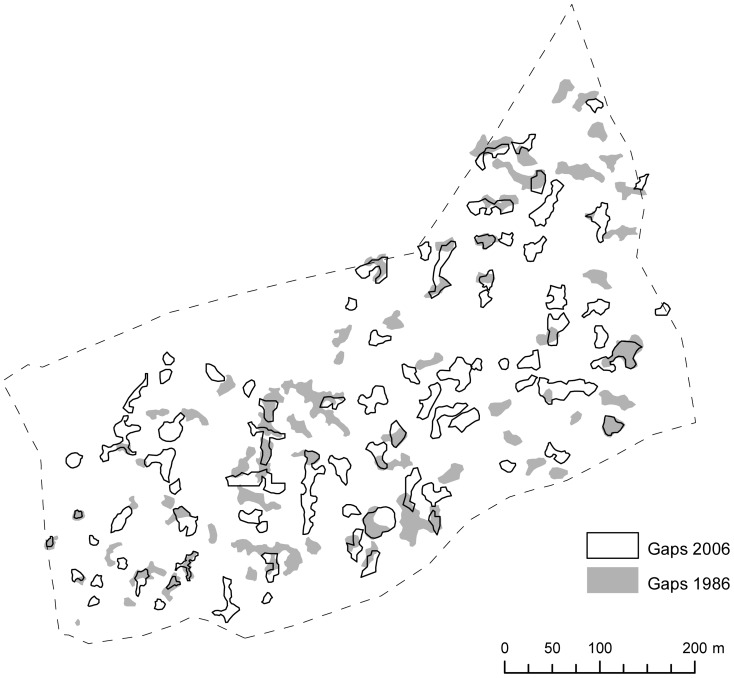
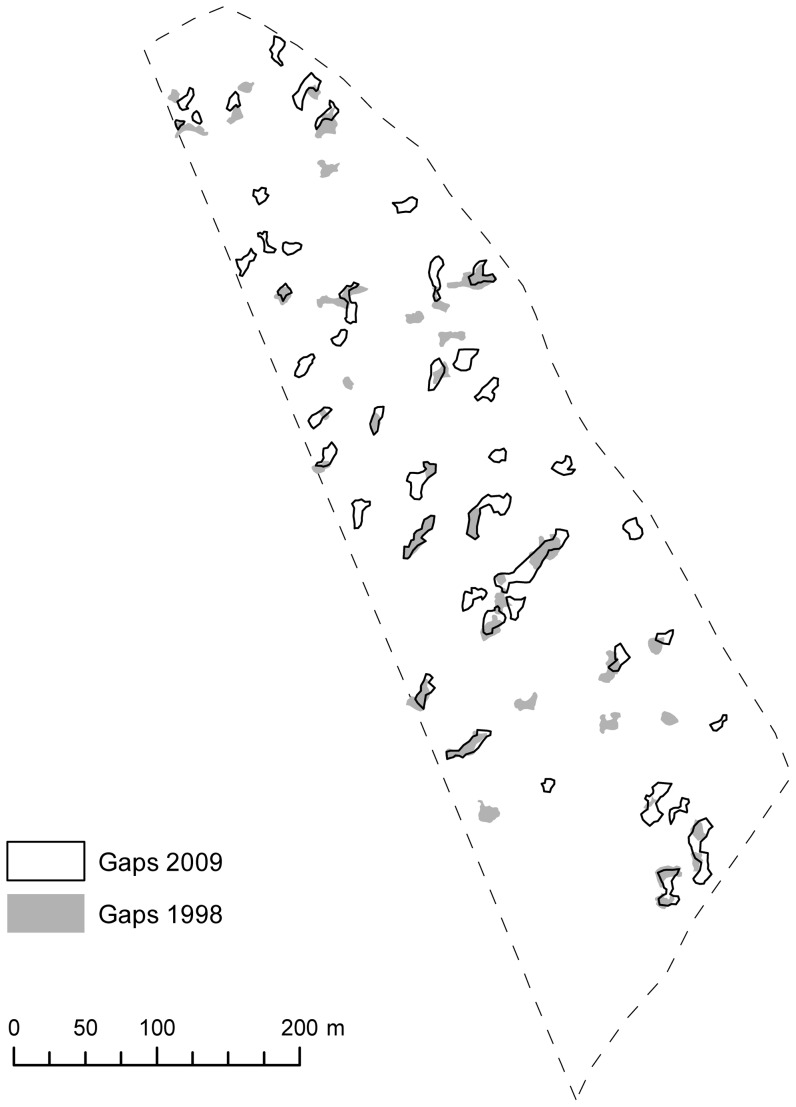
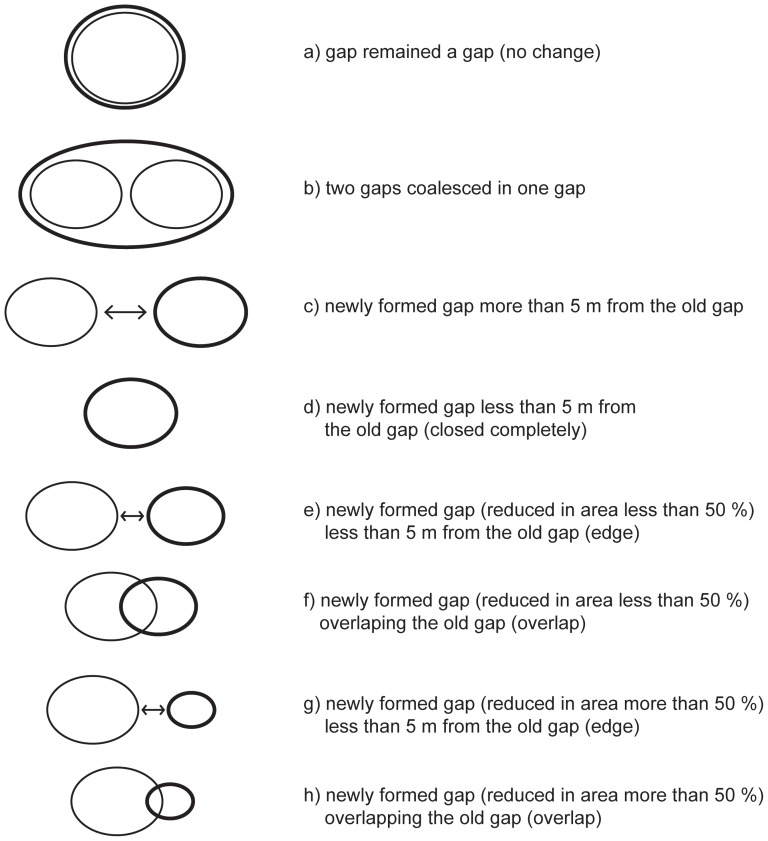
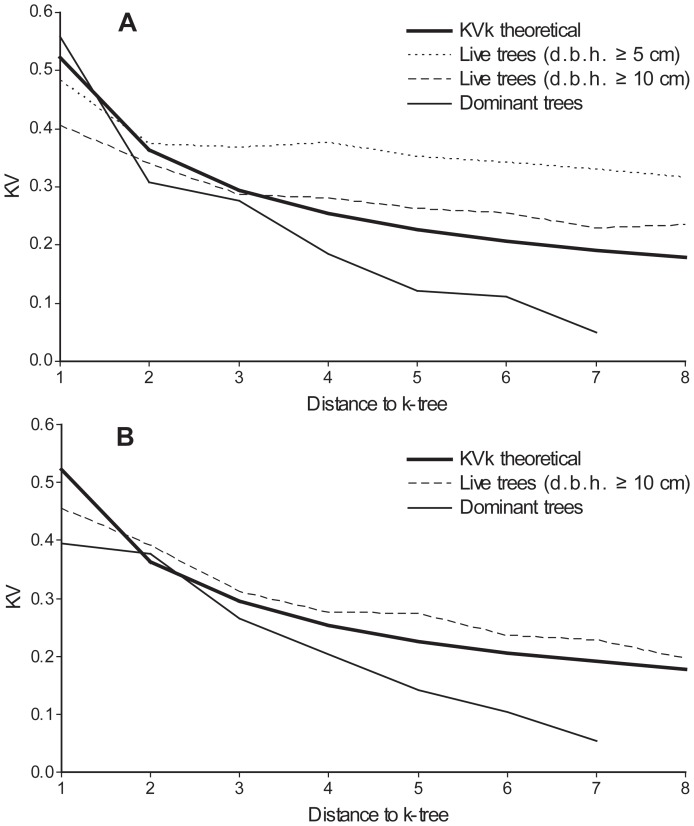
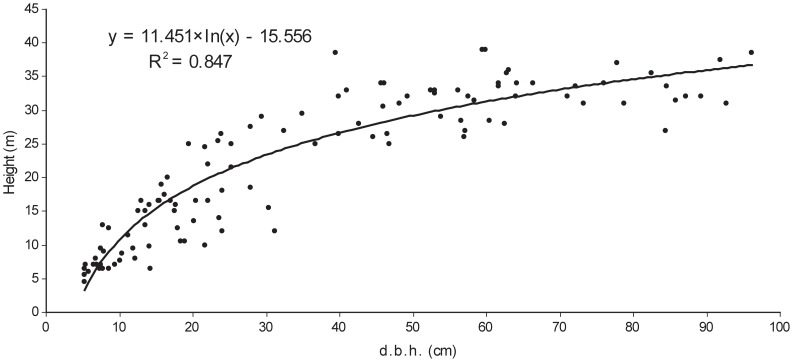
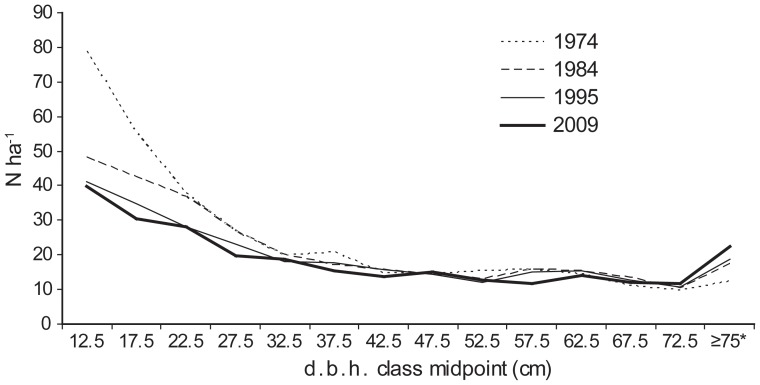
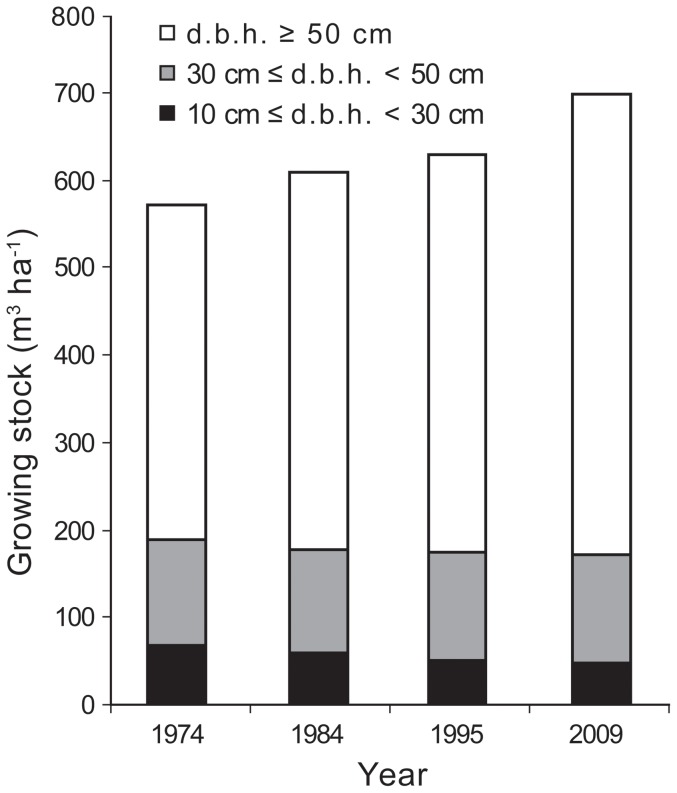
We studied two beech forest reserves in southern Slovenia. We examined the structural characteristics of the two forest reserves based on data from sample plots and complete inventory obtained from four previous forest management plans. To gain a better understanding of disturbance dynamics, we used aerial imagery to study the characteristics of canopy gaps over an 11-year period in the Kopa forest reserve and a 20-year period in the Gorjanci forest reserve.
The results suggest that these forests are structurally heterogeneous over small spatial scales. Gap size analysis showed that gaps smaller than 500 m(2) are the dominant driving force of stand development. The percentage of forest area in canopy gaps ranged from 3.2 to 4.5% in the Kopa forest reserve and from 9.1 to 10.6% in the Gorjanci forest reserve. These forests exhibit relatively high annual rates of coverage by newly established (0.15 and 0.25%) and closed (0.08 and 0.16%) canopy gaps. New gap formation is dependant on senescent trees located throughout the reserve.
We conclude that these stands are not even-sized, but rather unevenly structured. This is due to the fact that the disturbance regime is characterized by low intensity, small-scale disturbances.
由于长期以来森林的高强度开发,欧洲留存的欧洲山毛榉(Fagus sylvatica L.)原生林已寥寥无几。
我们研究了斯洛文尼亚南部的两片山毛榉林保护区。我们通过来自四个先前森林管理计划的样地和完整清查数据,研究了这两个森林保护区的结构特征。为了更好地了解干扰动态,我们使用航空影像研究了科帕(Kopa)森林保护区 11 年和戈扬奇(Gorjanci)森林保护区 20 年期间林冠空隙的特征。
结果表明,这些森林在小尺度上结构上存在异质性。空隙大小分析表明,小于 500 m² 的空隙是林分发育的主要驱动力。林冠空隙中森林面积的百分比在科帕森林保护区为 3.2%至 4.5%,在戈扬奇森林保护区为 9.1%至 10.6%。这些森林表现出相对较高的新建立(0.15%和 0.25%)和封闭(0.08%和 0.16%)林冠空隙的年度覆盖率。新空隙的形成取决于分布在整个保护区内的衰老树木。
我们的结论是,这些林分不是大小均匀的,而是结构不均匀的。这是因为干扰机制的特点是强度低、规模小的干扰。