Department of Ophthalmology, Graduate School of Medical Sciences, Kyushu University, Fukuoka, Japan.
PLoS One. 2013;8(1):e53338. doi: 10.1371/journal.pone.0053338. Epub 2013 Jan 8.
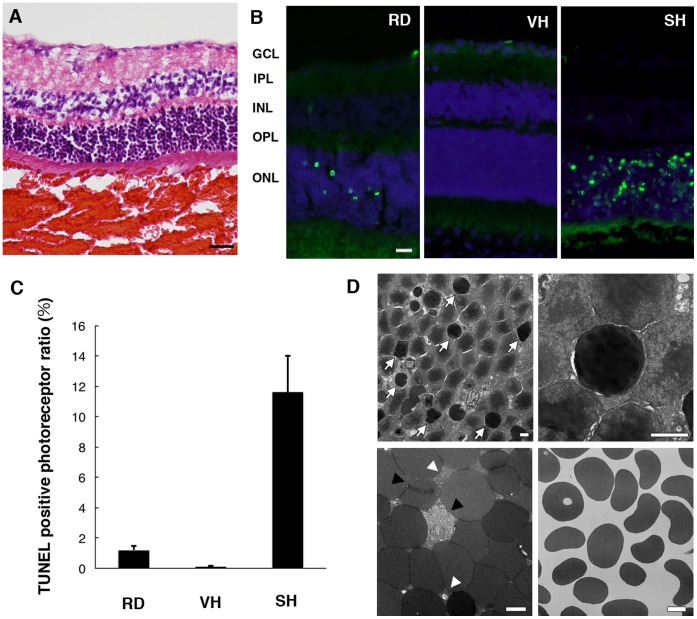
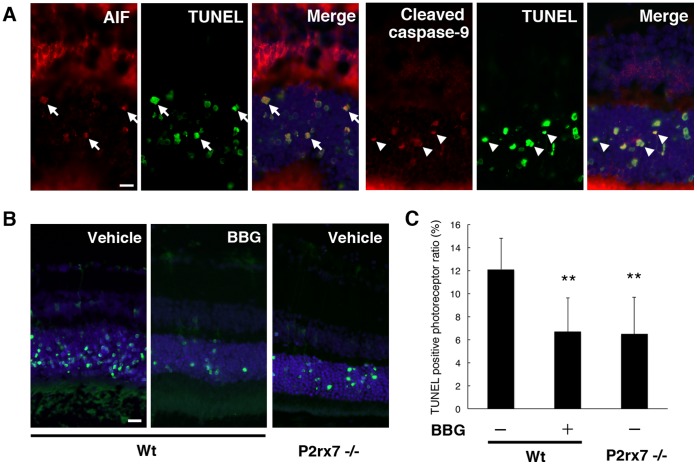
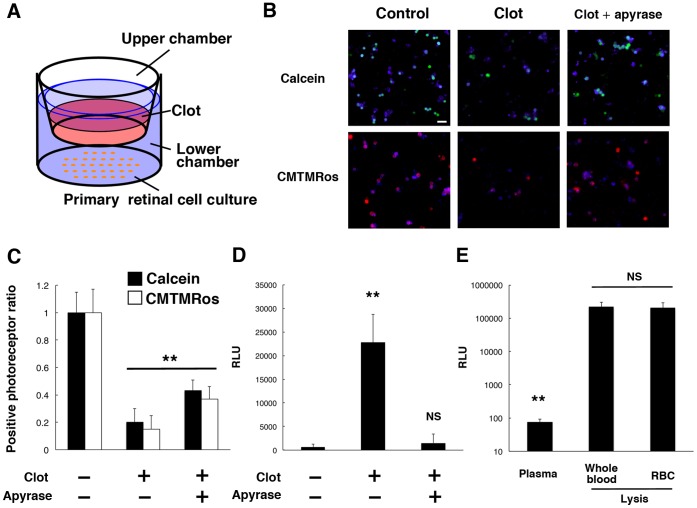
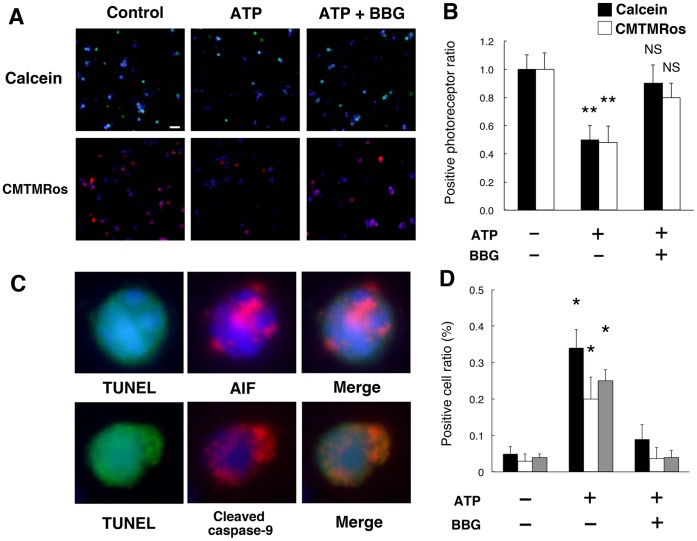
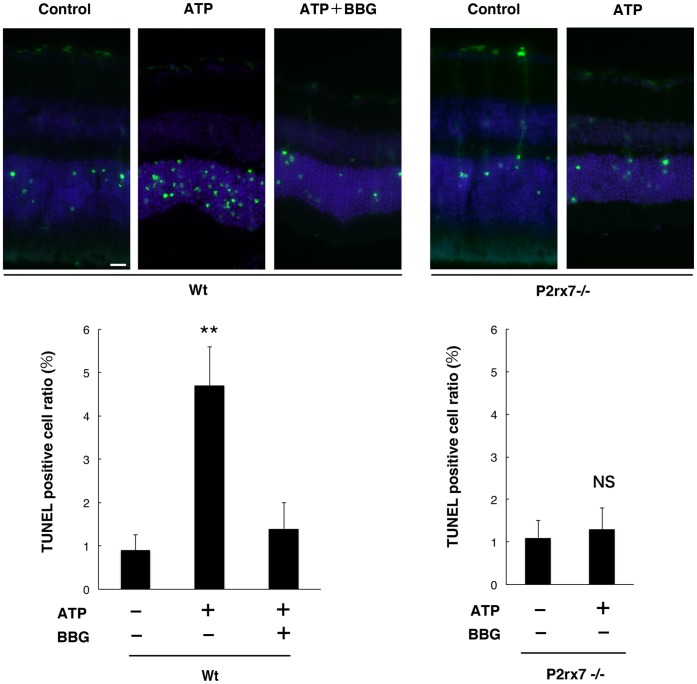
Photoreceptor degeneration is the most critical cause of visual impairment in age-related macular degeneration (AMD). In neovascular form of AMD, severe photoreceptor loss develops with subretinal hemorrhage due to choroidal neovascularization (CNV), growth of abnormal blood vessels from choroidal circulation. However, the detailed mechanisms of this process remain elusive. Here we demonstrate that neovascular AMD with subretinal hemorrhage accompanies a significant increase in extracellular ATP, and that extracellular ATP initiates neurodegenerative processes through specific ligation of Purinergic receptor P2X, ligand-gated ion channel, 7 (P2RX7; P2X7 receptor). Increased extracellular ATP levels were found in the vitreous samples of AMD patients with subretinal hemorrhage compared to control vitreous samples. Extravascular blood induced a massive release of ATP and photoreceptor cell apoptosis in co-culture with primary retinal cells. Photoreceptor cell apoptosis accompanied mitochondrial apoptotic pathways, namely activation of caspase-9 and translocation of apoptosis-inducing factor (AIF) from mitochondria to nuclei, as well as TUNEL-detectable DNA fragmentation. These hallmarks of photoreceptor cell apoptosis were prevented by brilliant blue G (BBG), a selective P2RX7 antagonist, which is an approved adjuvant in ocular surgery. Finally, in a mouse model of subretinal hemorrhage, photoreceptor cells degenerated through BBG-inhibitable apoptosis, suggesting that ligation of P2RX7 by extracellular ATP may accelerate photoreceptor cell apoptosis in AMD with subretinal hemorrhage. Our results indicate a novel mechanism that could involve neuronal cell death not only in AMD but also in hemorrhagic disorders in the CNS and encourage the potential application of BBG as a neuroprotective therapy.
光感受器变性是年龄相关性黄斑变性(AMD)导致视力损害的最主要原因。在 AMD 的新生血管形式中,由于脉络膜新生血管(CNV),即来自脉络膜循环的异常血管生长,会出现视网膜下出血,导致严重的光感受器丧失。然而,这一过程的详细机制仍不清楚。在这里,我们证明伴有视网膜下出血的新生血管性 AMD 伴随着细胞外 ATP 显著增加,并且细胞外 ATP 通过嘌呤能受体 P2X7(P2RX7;P2X7 受体)的特异性连接引发神经退行性过程。与对照玻璃体液样本相比,在伴有视网膜下出血的 AMD 患者的玻璃体液样本中发现细胞外 ATP 水平升高。血管外血液在与原代视网膜细胞共培养时会引起 ATP 的大量释放和光感受器细胞凋亡。光感受器细胞凋亡伴随着线粒体凋亡途径,即半胱天冬酶-9 的激活和凋亡诱导因子(AIF)从线粒体向细胞核的易位,以及 TUNEL 可检测到的 DNA 片段化。用亮蓝 G(BBG),一种选择性 P2RX7 拮抗剂,可预防这些光感受器细胞凋亡的特征,BBG 是眼科手术中的一种已批准的辅助剂。最后,在视网膜下出血的小鼠模型中,光感受器细胞通过可被 BBG 抑制的凋亡而退化,这表明细胞外 ATP 对 P2RX7 的连接可能会加速伴有视网膜下出血的 AMD 中的光感受器细胞凋亡。我们的结果表明了一种新的机制,不仅涉及 AMD 中的神经元细胞死亡,而且涉及 CNS 中的出血性疾病,并鼓励将 BBG 作为神经保护疗法的潜在应用。