Kim Young Mi, Lee Ji-Yun, Xia Lijun, Mulvihill John J, Li Shibo
Department of Pediatrics, The University of Oklahoma Health Sciences Center, Oklahoma City, OK 73104, USA.
Mol Cytogenet. 2013 Jan 16;6(1):3. doi: 10.1186/1755-8166-6-3.
Obtaining a germ cell line is one of the most important steps in developing a transgenic or knockout mouse with a targeted mutated gene of interest. A common problem with this technology is that embryonic stem (ES) cells often lack, or are extremely inefficient at, germ line transmission.
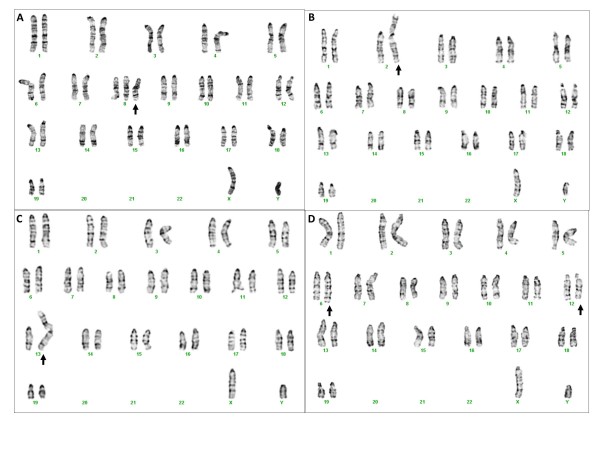
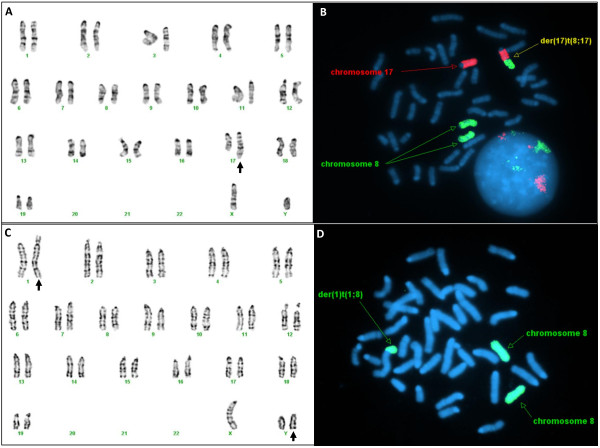
To determine whether chromosomal anomalies are correlated with inefficient ES cell germ line transmission, we examined 97 constructed ES cell lines using conventional cytogenetic analysis, and fluorescence in situ hybridization (FISH). Chromosomal abnormalities occurred in 44 (45%) out of the 97 specimens analyzed: 31 specimens had trisomy 8 or mosaic trisomy 8, eight specimens had partial trisomy 8 resulting from unbalanced translocations, and five specimens had other chromosomal anomalies.
Our data suggest that chromosomal analysis is an important tool for improving the yield and quality of gene targeting experiments.
获得生殖细胞系是培育具有感兴趣的靶向突变基因的转基因或基因敲除小鼠的最重要步骤之一。这项技术的一个常见问题是胚胎干细胞(ES细胞)常常缺乏种系传递能力,或者种系传递效率极低。
为了确定染色体异常是否与ES细胞种系传递效率低下相关,我们使用传统细胞遗传学分析和荧光原位杂交(FISH)检测了97个构建的ES细胞系。在分析的97个样本中,44个(45%)出现了染色体异常:31个样本有8号染色体三体或8号染色体嵌合三体,8个样本因不平衡易位出现部分8号染色体三体,5个样本有其他染色体异常。
我们的数据表明,染色体分析是提高基因靶向实验产量和质量的重要工具。