Human DNA Variability Department, GENYO, Centre for Genomics and Oncological Research, Pfizer-University of Granada-Andalusian Regional Government, Parque Tecnológico Ciencias de la Salud, Av. de la Ilustracion 114, 18007 Granada, Spain.
Dis Model Mech. 2013 Mar;6(2):544-54. doi: 10.1242/dmm.010652. Epub 2013 Jan 11.
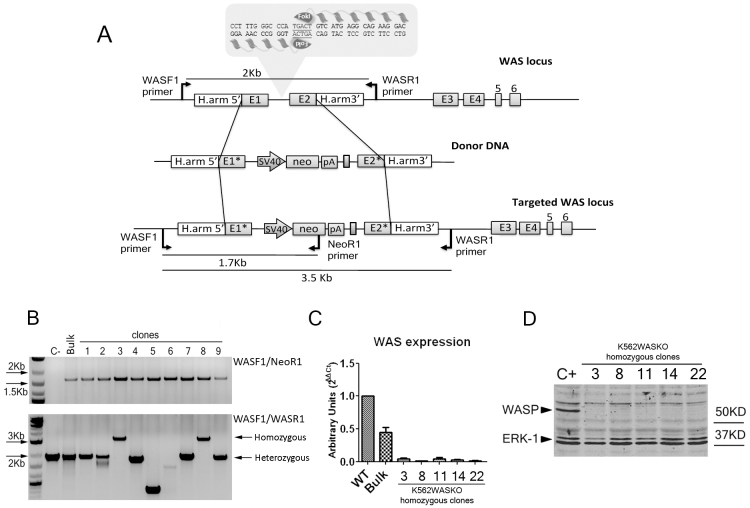
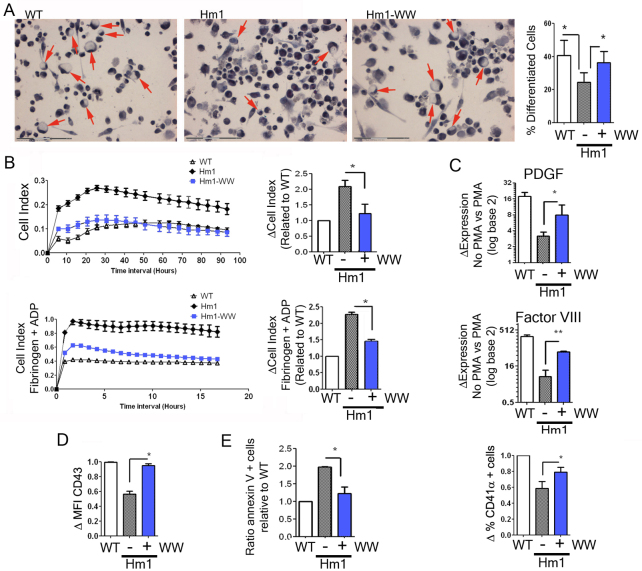
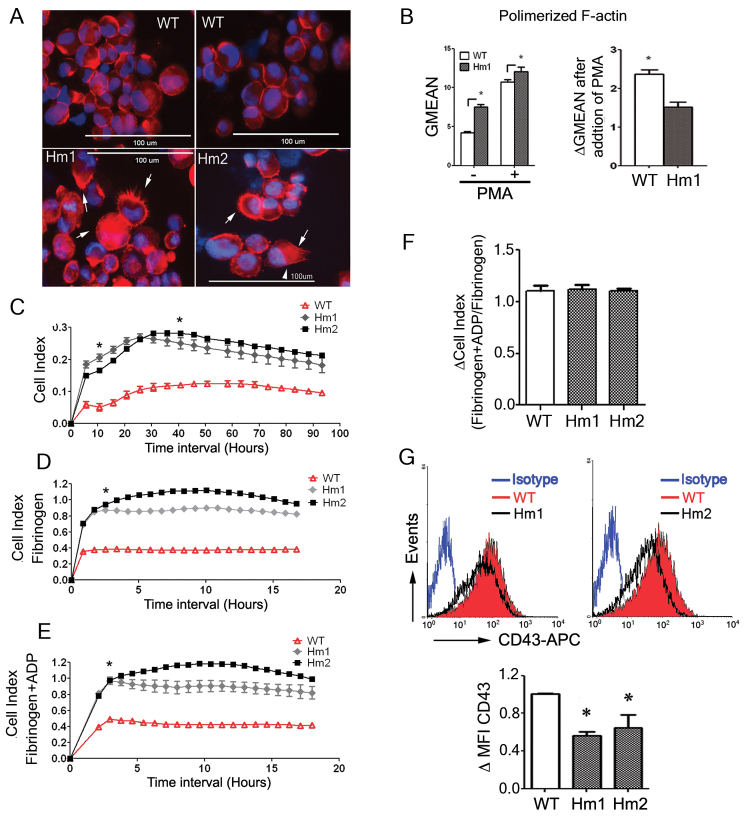
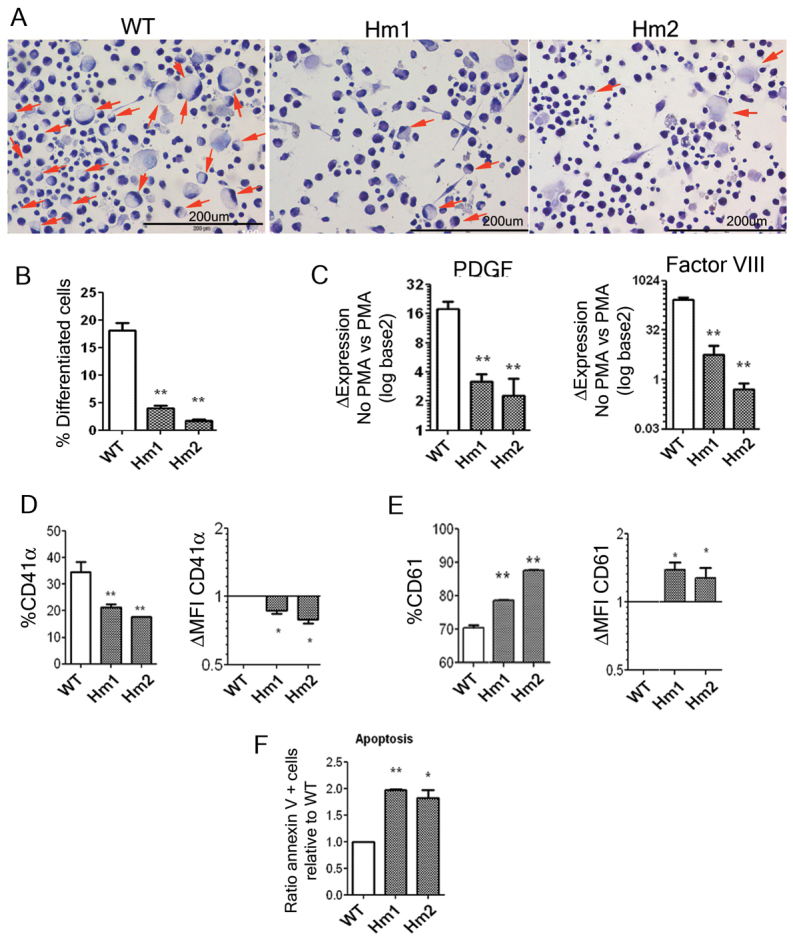
Mutations in the WAS gene cause Wiskott-Aldrich syndrome (WAS), which is characterized by eczema, immunodeficiency and microthrombocytopenia. Although the role of WASP in lymphocytes and myeloid cells is well characterized, its role on megakaryocyte (MK) development is poorly understood. In order to develop a human cellular model that mimics the megakaryocytic-derived defects observed in WAS patients we used K562 cells, a well-known model for study of megakaryocytic development. We knocked out the WAS gene in K562 cells using a zinc-finger nuclease (ZFN) pair targeting the WAS intron 1 and a homologous donor DNA that disrupted WASP expression. Knockout of WASP on K562 cells (K562WASKO cells) resulted in several megakaryocytic-related defects such as morphological alterations, lower expression of CD41, lower increments in F-actin polymerization upon stimulation, reduced CD43 expression and increased phosphatidylserine exposure. All these defects have been previously described either in WAS-knockout mice or in WAS patients, validating K562WASKO as a cell model for WAS. However, K562WASPKO cells showed also increased basal F-actin and adhesion, increased expression of CD61 and reduced expression of TGFβ and Factor VIII, defects that have never been described before for WAS-deficient cells. Interestingly, these phenotypic alterations correlate with different roles for WASP in megakaryocytic differentiation. All phenotypic alterations observed in K562WASKO cells were alleviated upon expression of WAS following lentiviral transduction, confirming the role of WASP in these phenotypes. In summary, in this work we have validated a human cellular model, K562WASPKO, that mimics the megakaryocytic-related defects found in WAS-knockout mice and have found evidences for a role of WASP as regulator of megakaryocytic differentiation. We propose the use of K562WASPKO cells as a tool to study the molecular mechanisms involved in the megakaryocytic-related defects observed in WAS patients and as a cellular model to study new therapeutic strategies.
WAS 基因突变导致威特综合征(Wiskott-Aldrich syndrome,WAS),其特征为湿疹、免疫缺陷和微小血小板减少症。虽然 WASP 在淋巴细胞和髓样细胞中的作用已得到很好的描述,但它在巨核细胞(MK)发育中的作用尚不清楚。为了开发一种模拟 WAS 患者中观察到的巨核细胞衍生缺陷的人类细胞模型,我们使用了 K562 细胞,这是研究巨核细胞发育的著名模型。我们使用针对 WAS 内含子 1 的锌指核酸酶(ZFN)对 K562 细胞中的 WAS 基因进行敲除,并使用同源供体 DNA 破坏 WASP 的表达。在 K562 细胞中敲除 WASP(K562WASKO 细胞)导致几种巨核细胞相关缺陷,例如形态改变、CD41 表达降低、刺激后 F-肌动蛋白聚合增加减少、CD43 表达降低和磷脂酰丝氨酸暴露增加。所有这些缺陷在 WAS 敲除小鼠或 WAS 患者中均有描述,验证了 K562WASKO 作为 WAS 的细胞模型。然而,K562WASPKO 细胞还表现出基础 F-肌动蛋白和粘附增加、CD61 表达增加和 TGFβ和因子 VIII 表达降低,这些缺陷以前从未在 WAS 缺陷细胞中描述过。有趣的是,这些表型改变与 WASP 在巨核细胞分化中的不同作用有关。在 K562WASKO 细胞中观察到的所有表型改变均在慢病毒转导后表达 WAS 时得到缓解,证实了 WASP 在这些表型中的作用。总之,在这项工作中,我们验证了一种人类细胞模型 K562WASPKO,它模拟了在 WAS 敲除小鼠中发现的与巨核细胞相关的缺陷,并找到了 WASP 作为巨核细胞分化调节剂的证据。我们建议使用 K562WASPKO 细胞作为研究 WAS 患者中观察到的巨核细胞相关缺陷的分子机制的工具,并作为研究新的治疗策略的细胞模型。