School of Public Health, Addis Ababa University, PO Box 9086, code 1000, Addis Ababa, Ethiopia.
BMC Pregnancy Childbirth. 2013 Jan 16;13:5. doi: 10.1186/1471-2393-13-5.
Skilled attendants during labor, delivery, and in the early postpartum period, can prevent up to 75% or more of maternal death. However, in many developing countries, very few mothers make at least one antenatal visit and even less receive delivery care from skilled professionals. The present study reports findings from a region where key challenges related to transportation and availability of obstetric services were addressed by an ongoing project, giving a unique opportunity to understand why women might continue to prefer home delivery even when facility based delivery is available at minimal cost.
The study took place in Ethiopia using a mixed study design employing a cross sectional household survey among 15-49 year old women combined with in-depth interviews and focus group discussions.
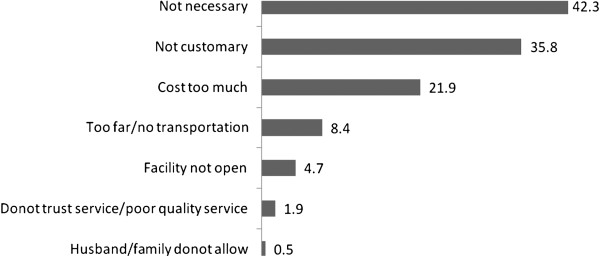
Seventy one percent of mothers received antenatal care from a health professional (doctor, health officer, nurse, or midwife) for their most recent birth in the one year preceding the survey. Overall only 16% of deliveries were assisted by health professionals, while a significant majority (78%) was attended by traditional birth attendants. The most important reasons for not seeking institutional delivery were the belief that it is not necessary (42%) and not customary (36%), followed by high cost (22%) and distance or lack of transportation (8%). The group discussions and interviews identified several reasons for the preference of traditional birth attendants over health facilities. Traditional birth attendants were seen as culturally acceptable and competent health workers. Women reported poor quality of care and previous negative experiences with health facilities. In addition, women's low awareness on the advantages of skilled attendance at delivery, little role in making decisions (even when they want), and economic constraints during referral contribute to the low level of service utilization.
The study indicated the crucial role of proper health care provider-client communication and providing a more client centered and culturally sensitive care if utilization of existing health facilities is to be maximized. Implications of findings for maternal health programs and further research are discussed.
熟练的接生员在分娩和产后早期可以预防多达 75%或更多的孕产妇死亡。然而,在许多发展中国家,很少有产妇至少接受一次产前检查,更不用说接受专业人员的分娩护理。本研究报告了一个地区的研究结果,该地区的一个正在进行的项目解决了与交通和产科服务可用性相关的关键挑战,为了解为什么即使在设施提供的分娩服务费用低廉的情况下,女性仍可能继续选择家庭分娩提供了独特的机会。
该研究在埃塞俄比亚进行,采用混合研究设计,在调查前一年对 15-49 岁的妇女进行横断面家庭调查,并结合深入访谈和焦点小组讨论。
在最近一次分娩中,71%的母亲接受了来自卫生专业人员(医生、卫生官员、护士或助产士)的产前护理。总体而言,只有 16%的分娩由卫生专业人员协助,而绝大多数(78%)由传统接生员协助。不寻求机构分娩的最重要原因是认为没有必要(42%)和不符合习俗(36%),其次是高成本(22%)和距离或缺乏交通(8%)。小组讨论和访谈确定了传统接生员优于卫生机构的几个原因。传统接生员被视为文化上可接受和有能力的卫生工作者。妇女报告了护理质量差和以前对卫生机构的负面经历。此外,妇女对熟练接生员在分娩中的优势的认识不足,在决策方面作用较小(即使她们有意愿),以及转诊时的经济限制,都导致服务利用率低。
研究表明,适当的医疗保健提供者与患者之间的沟通以及提供更以患者为中心和文化敏感的护理对于最大限度地利用现有卫生设施至关重要。讨论了研究结果对孕产妇保健计划和进一步研究的影响。