Maloney Stephen, Chamberlain Michael, Morrison Shane, Kotsanas George, Keating Jennifer L, Ilic Dragan
Monash University, Department of Physiotherapy, Frankston, Australia.
J Med Internet Res. 2013 Jan 16;15(1):e7. doi: 10.2196/jmir.2094.
Web-based digital repositories allow educational resources to be accessed efficiently and conveniently from diverse geographic locations, hold a variety of resource formats, enable interactive learning, and facilitate targeted access for the user. Unlike some other learning management systems (LMS), resources can be retrieved through search engines and meta-tagged labels, and content can be streamed, which is particularly useful for multimedia resources.
The aim of this study was to examine usage and user experiences of an online learning repository (Physeek) in a population of physiotherapy students. The secondary aim of this project was to examine how students prefer to access resources and which resources they find most helpful.
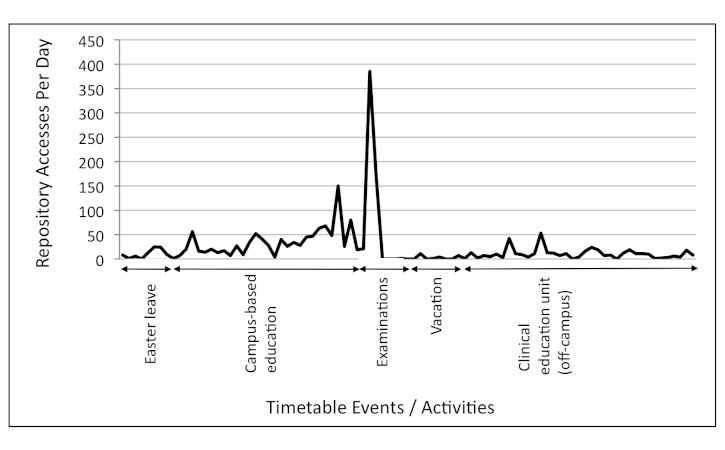
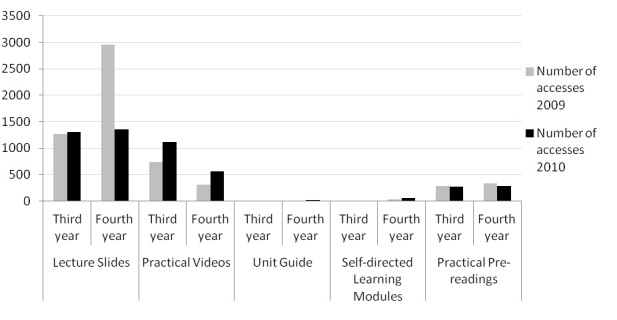
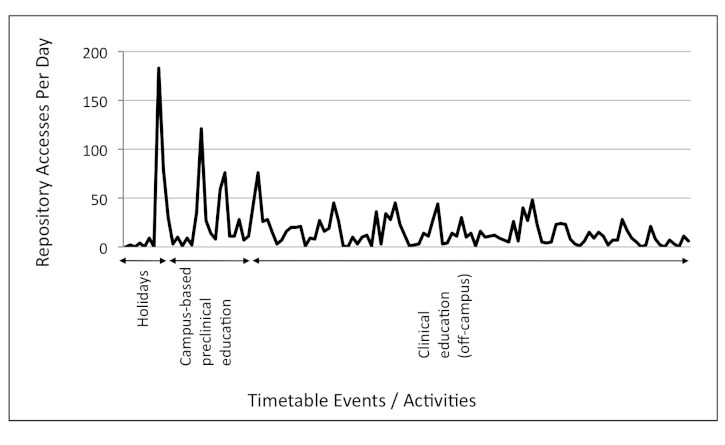
The following data were examined using an audit of the repository server: (1) number of online resources accessed per day in 2010, (2) number of each type of resource accessed, (3) number of resources accessed during business hours (9 am to 5 pm) and outside business hours (years 1-4), (4) session length of each log-on (years 1-4), and (5) video quality (bit rate) of each video accessed. An online questionnaire and 3 focus groups assessed student feedback and self-reported experiences of Physeek.
Students preferred the support provided by Physeek to other sources of educational material primarily because of its efficiency. Peak usage commonly occurred at times of increased academic need (ie, examination times). Students perceived online repositories as a potential tool to support lifelong learning and health care delivery.
The results of this study indicate that today's health professional students welcome the benefits of online learning resources because of their convenience and usability. This represents a transition away from traditional learning styles and toward technological learning support and may indicate a growing link between social immersions in Internet-based connections and learning styles. The true potential for Web-based resources to support student learning is as yet unknown.
基于网络的数字资源库使教育资源能够从不同地理位置高效便捷地获取,拥有多种资源格式,支持交互式学习,并便于用户进行有针对性的访问。与其他一些学习管理系统(LMS)不同,资源可以通过搜索引擎和元标签进行检索,内容可以流式传输,这对多媒体资源尤为有用。
本研究旨在调查物理治疗专业学生群体对在线学习资源库(Physeek)的使用情况和用户体验。该项目的次要目的是研究学生更喜欢如何获取资源以及他们认为最有帮助的资源类型。
通过对资源库服务器进行审计,检查以下数据:(1)2010年每天访问的在线资源数量,(2)每种类型资源的访问数量,(3)工作时间(上午9点至下午5点)和非工作时间(1 - 4年级)访问的资源数量,(4)每次登录的会话时长(1 - 4年级),以及(5)访问的每个视频的视频质量(比特率)。通过在线问卷和3个焦点小组评估学生对Physeek的反馈和自我报告的体验。
学生更喜欢Physeek提供的支持而非其他教育材料来源,主要是因为其效率高。使用高峰通常出现在学术需求增加的时候(即考试期间)。学生将在线资源库视为支持终身学习和医疗保健服务的潜在工具。
本研究结果表明,当今的健康专业学生欢迎在线学习资源带来的便利和实用性。这代表着从传统学习方式向技术学习支持的转变,可能表明基于互联网连接的社交沉浸与学习方式之间的联系日益紧密。基于网络的资源支持学生学习的真正潜力尚不清楚。