Human Molecular Genetics Program, Children's Memorial Research Center, Department of Pediatrics, Northwestern University Feinberg School of Medicine Chicago, IL 60614, USA.
Nucleic Acids Res. 2013 Mar 1;41(5):2857-68. doi: 10.1093/nar/gks1462. Epub 2013 Jan 15.
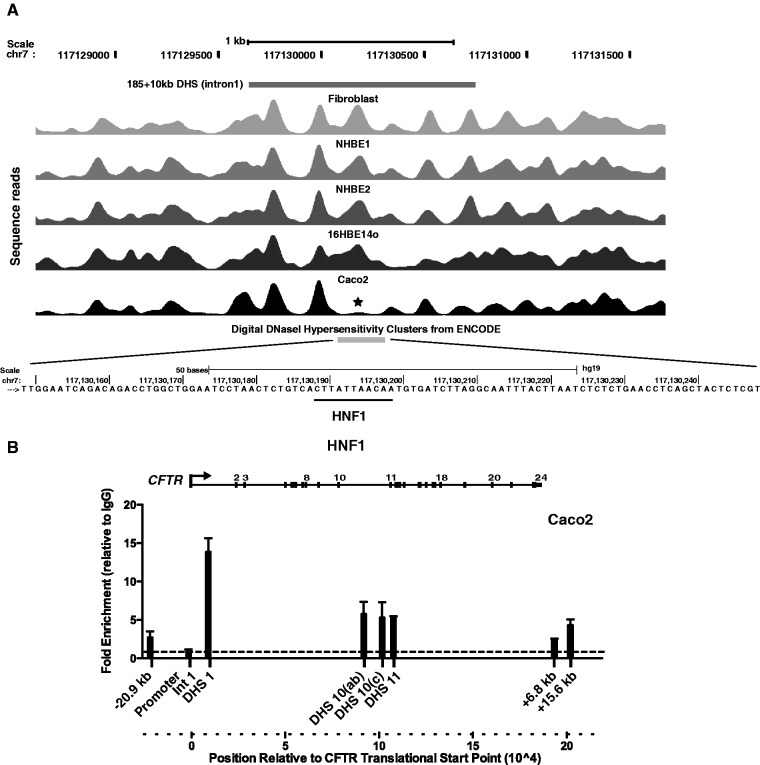
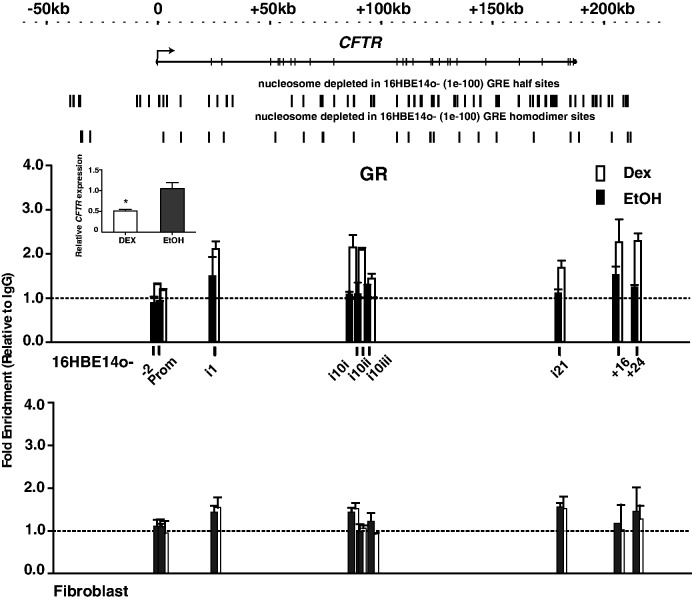
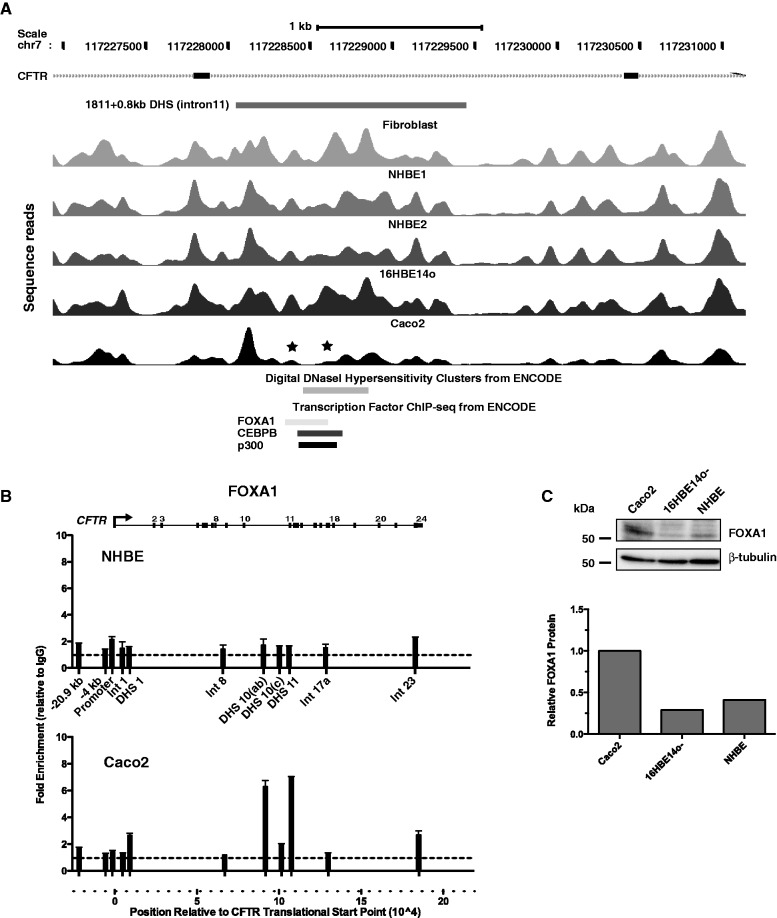
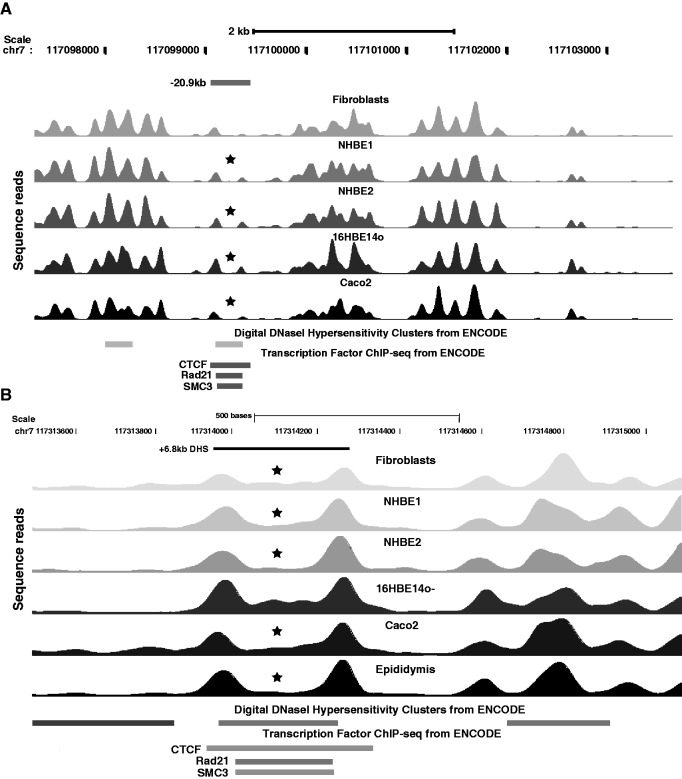
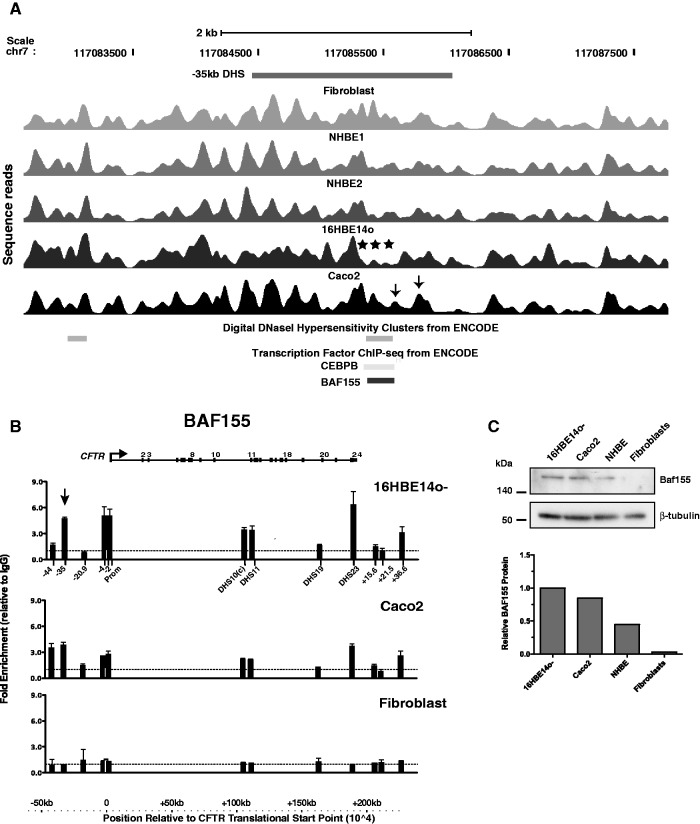
Nucleosome positioning on the chromatin strand plays a critical role in regulating accessibility of DNA to transcription factors and chromatin modifying enzymes. Hence, detailed information on nucleosome depletion or movement at cis-acting regulatory elements has the potential to identify predicted binding sites for trans-acting factors. Using a novel method based on enrichment of mononucleosomal DNA by bacterial artificial chromosome hybridization, we mapped nucleosome positions by deep sequencing across 250 kb, encompassing the cystic fibrosis transmembrane conductance regulator (CFTR) gene. CFTR shows tight tissue-specific regulation of expression, which is largely determined by cis-regulatory elements that lie outside the gene promoter. Although multiple elements are known, the repertoire of transcription factors that interact with these sites to activate or repress CFTR expression remains incomplete. Here, we show that specific nucleosome depletion corresponds to well-characterized binding sites for known trans-acting factors, including hepatocyte nuclear factor 1, Forkhead box A1 and CCCTC-binding factor. Moreover, the cell-type selective nucleosome positioning is effective in predicting binding sites for novel interacting factors, such as BAF155. Finally, we identify transcription factor binding sites that are overrepresented in regions where nucleosomes are depleted in a cell-specific manner. This approach recognizes the glucocorticoid receptor as a novel trans-acting factor that regulates CFTR expression in vivo.
染色质链上核小体的定位在调节 DNA 对转录因子和染色质修饰酶的可及性方面起着关键作用。因此,关于顺式作用调节元件处核小体耗竭或移动的详细信息有可能识别出反式作用因子的预测结合位点。我们使用一种基于细菌人工染色体杂交富集单核小体 DNA 的新方法,通过深度测序在 250 kb 范围内绘制了核小体的位置,涵盖了囊性纤维化跨膜电导调节剂 (CFTR) 基因。CFTR 的表达受到严格的组织特异性调控,这主要由位于基因启动子之外的顺式调节元件决定。尽管已经确定了多个元件,但与这些位点相互作用以激活或抑制 CFTR 表达的转录因子的 repertoire 仍然不完整。在这里,我们表明,特定的核小体耗竭与已知的反式作用因子(包括肝细胞核因子 1、叉头框 A1 和 CCCTC 结合因子)的特征结合位点相对应。此外,细胞选择性核小体定位有效地预测了新型相互作用因子(如 BAF155)的结合位点。最后,我们确定了在核小体以细胞特异性方式耗竭的区域中过度表达的转录因子结合位点。这种方法将糖皮质激素受体识别为一种新的反式作用因子,可在体内调节 CFTR 的表达。