Department of Biology, University of Rochester, Rochester, New York, United States of America.
PLoS Genet. 2013;9(1):e1003179. doi: 10.1371/journal.pgen.1003179. Epub 2013 Jan 10.
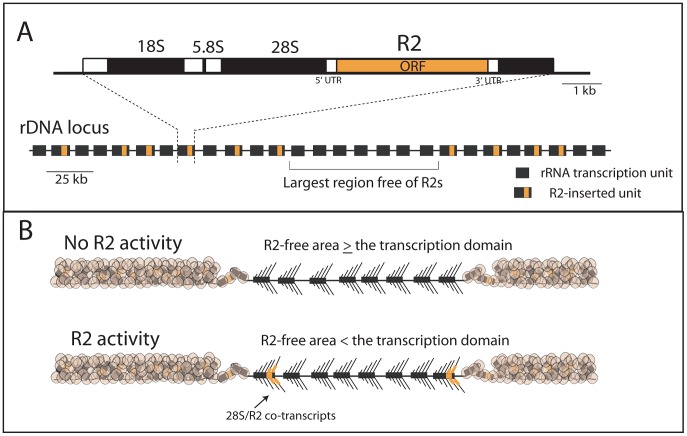
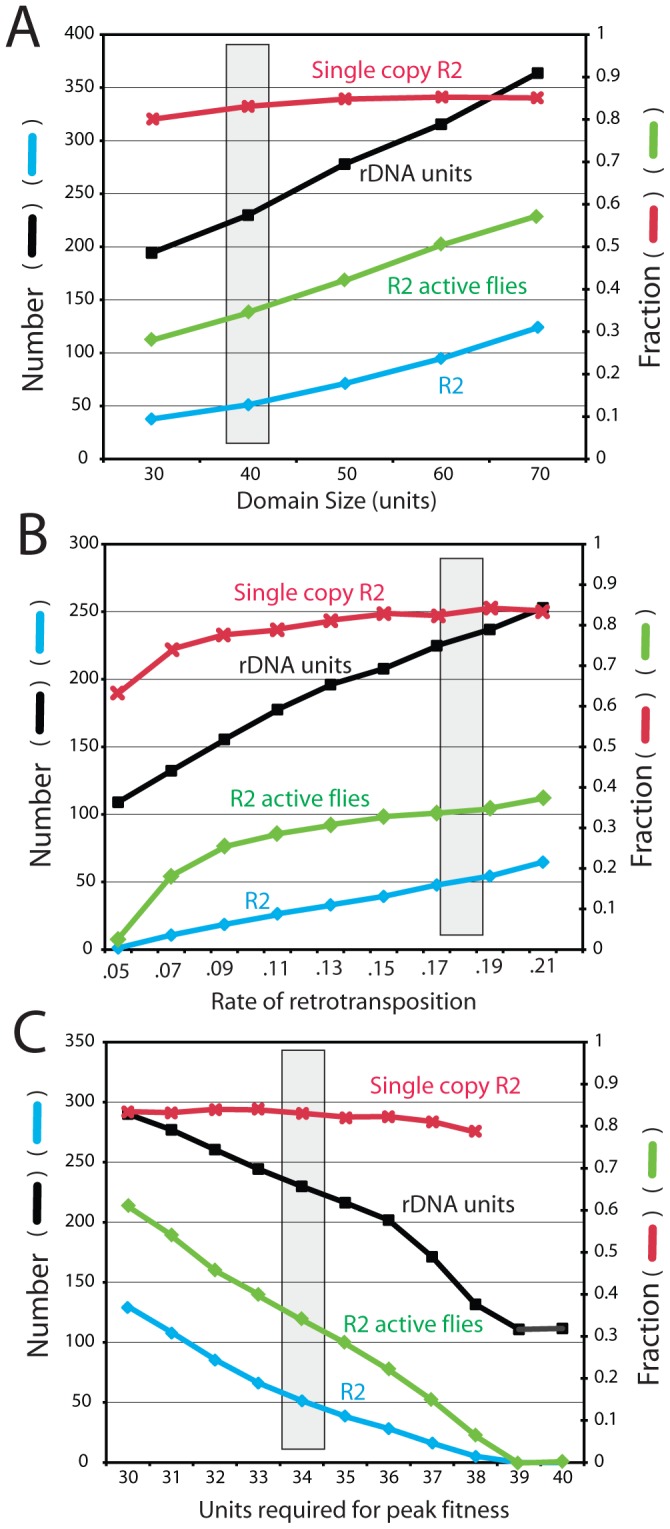
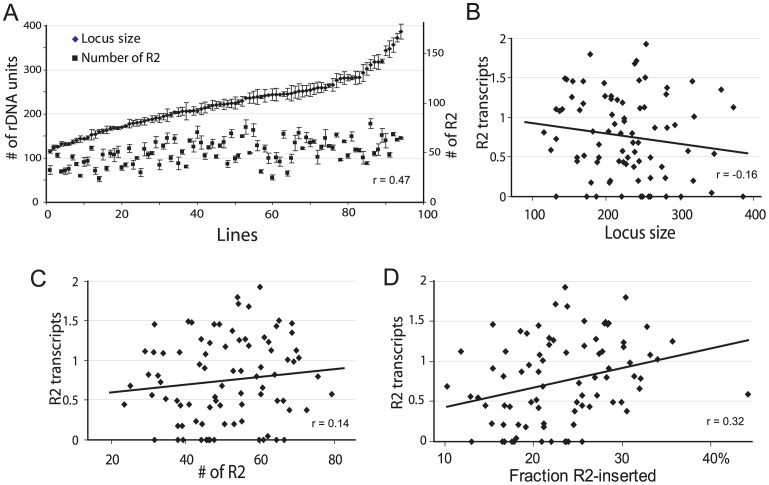
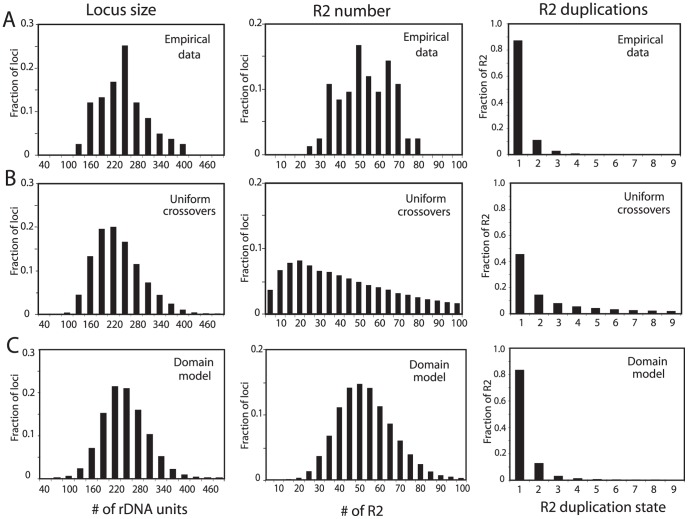
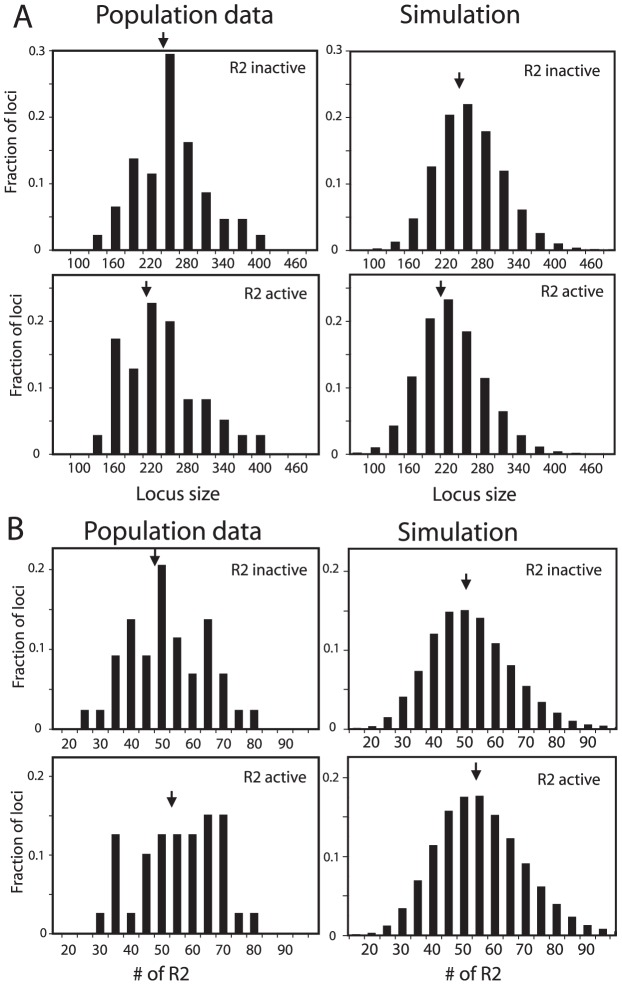
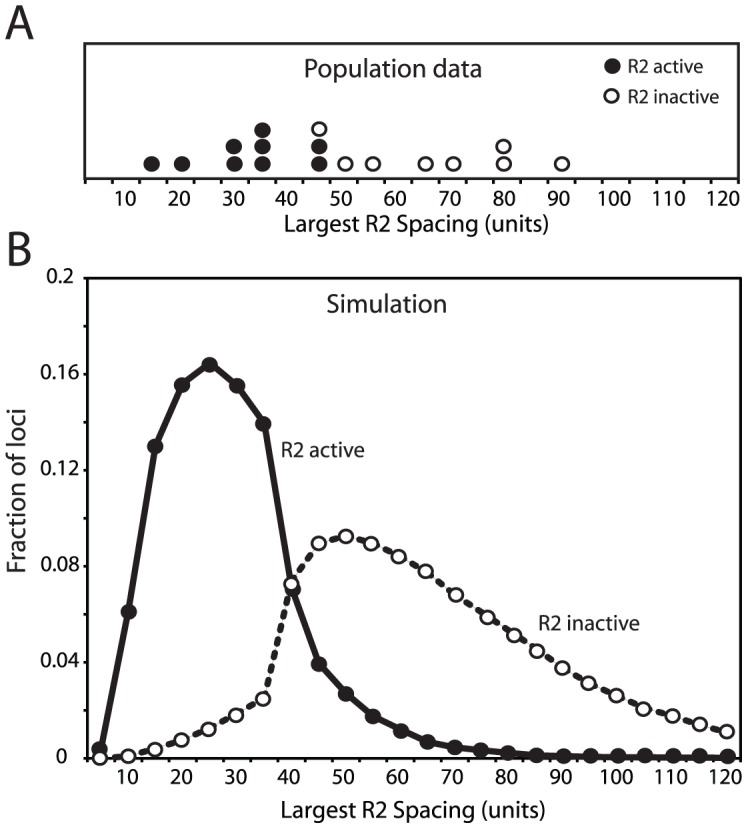
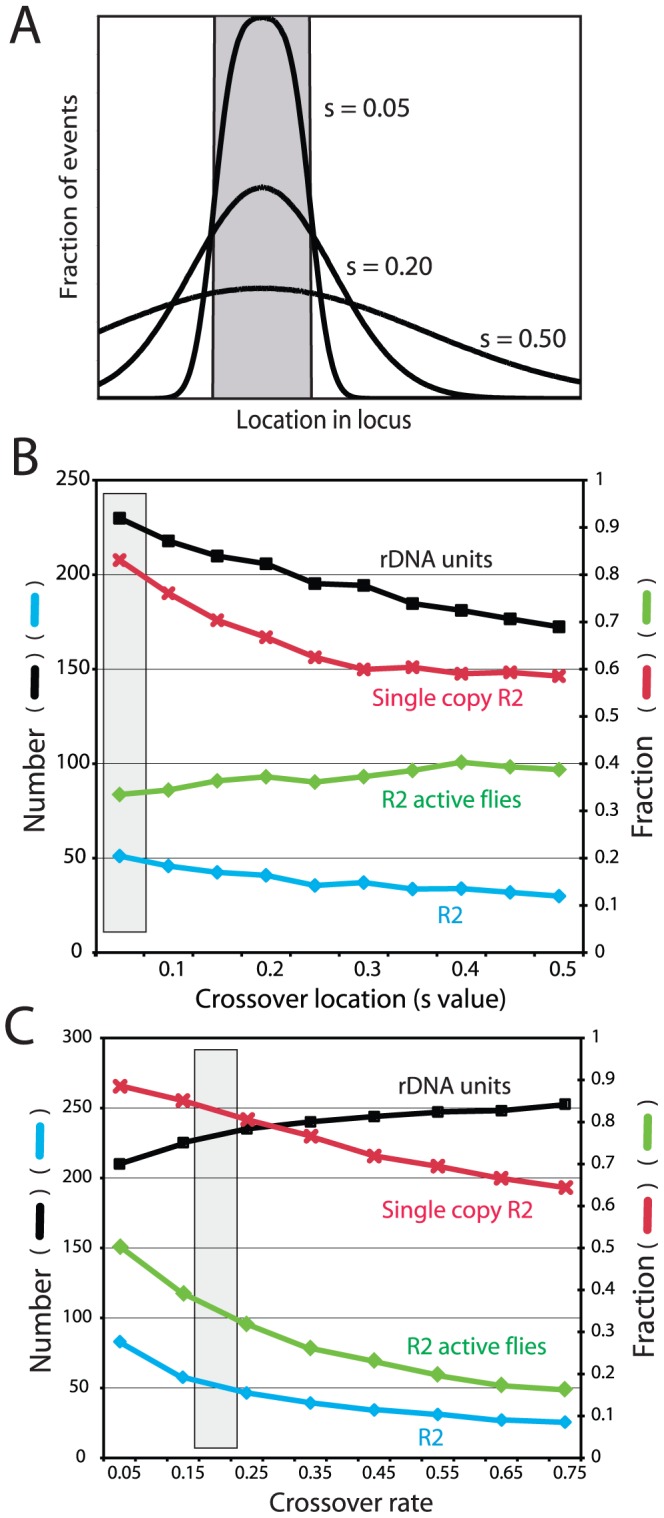
R2 retrotransposable elements exclusively insert into the tandemly repeated rRNA genes, the rDNA loci, of their animal hosts. R2 elements form stable long-term associations with their host, in which all individuals in a population contain many potentially active copies, but only a fraction of these individuals show active R2 retrotransposition. Previous studies have found that R2 RNA transcripts are processed from a 28S co-transcript and that the likelihood of R2-inserted units being transcribed is dependent upon their distribution within the rDNA locus. Here we analyze the rDNA locus and R2 elements from nearly 100 R2-active and R2-inactive individuals from natural populations of Drosophila simulans. Along with previous findings concerning the structure and expression of the rDNA loci, these data were incorporated into computer simulations to model the crossover events that give rise to the concerted evolution of the rRNA genes. The simulations that best reproduce the population data assume that only about 40 rDNA units out of the over 200 total units are actively transcribed and that these transcribed units are clustered in a single region of the locus. In the model, the host establishes this transcription domain at each generation in the region with the fewest R2 insertions. Only if the host cannot avoid R2 insertions within this 40-unit domain are R2 elements active in that generation. The simulations also require that most crossover events in the locus occur in the transcription domain in order to explain the empirical observation that R2 elements are seldom duplicated by crossover events. Thus the key to the long-term stability of R2 elements is the stochastic nature of the crossover events within the rDNA locus, and the inevitable expansions and contractions that introduce and remove R2-inserted units from the transcriptionally active domain.
R2 反转录转座子仅插入其动物宿主的串联重复 rRNA 基因(rDNA 基因座)。R2 元件与其宿主形成稳定的长期关联,在这种关联中,种群中的所有个体都包含许多潜在的活性拷贝,但只有一部分个体显示出活跃的 R2 反转录转座。先前的研究发现,R2 RNA 转录物是从 28S 共转录本加工而来的,并且 R2 插入单元被转录的可能性取决于它们在 rDNA 基因座内的分布。在这里,我们分析了来自自然种群的近 100 个 R2 活跃和 R2 不活跃的果蝇 simulans 的 rDNA 基因座和 R2 元件。结合之前关于 rDNA 基因座结构和表达的发现,这些数据被纳入计算机模拟中,以模拟导致 rRNA 基因协同进化的交叉事件。最能再现种群数据的模拟假设,只有大约 200 个总单元中的 40 个 rDNA 单元被积极转录,并且这些转录单元在基因座的一个单一区域聚类。在该模型中,宿主在每一代都在 rDNA 插入最少的区域建立这个转录域。只有当宿主无法避免在这个 40 个单元域内的 R2 插入时,该代的 R2 元件才会活跃。该模拟还要求该基因座中的大多数交叉事件发生在转录域中,才能解释 R2 元件很少通过交叉事件复制的经验观察。因此,R2 元件长期稳定性的关键是 rDNA 基因座内交叉事件的随机性,以及引入和从转录活性域中去除 R2 插入单元的不可避免的扩展和收缩。