Unité Biologie Moléculaire du Gène chez les Extrêmophiles, Département de Microbiologie, Institut Pasteur, Paris, France.
PLoS One. 2013;8(1):e49044. doi: 10.1371/journal.pone.0049044. Epub 2013 Jan 11.
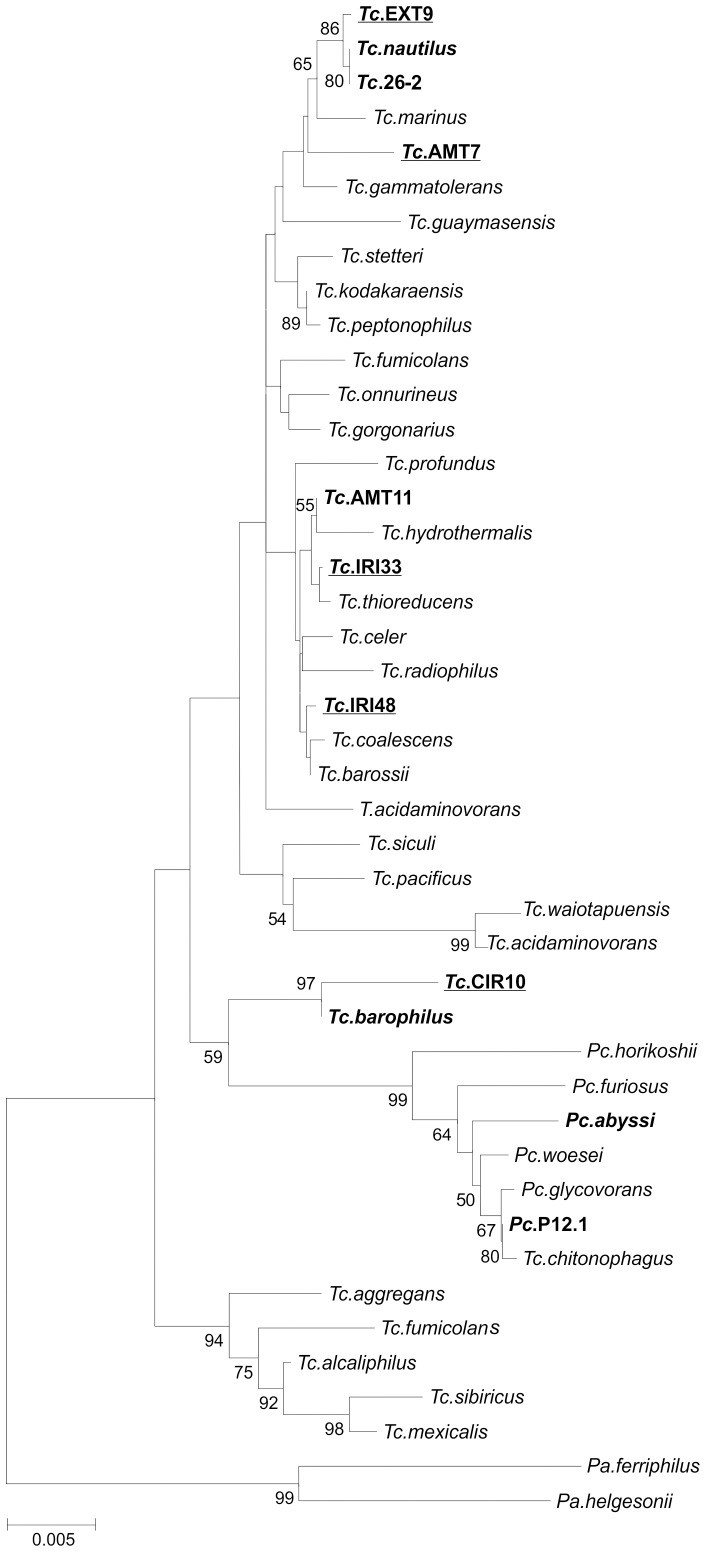
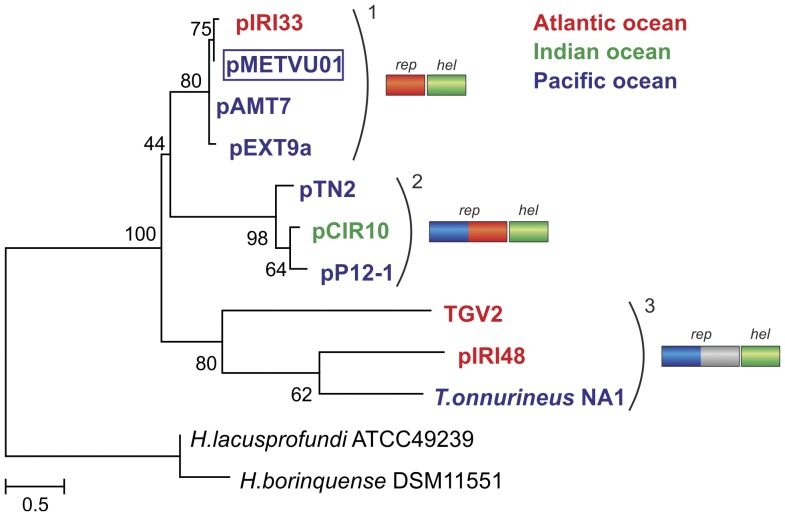
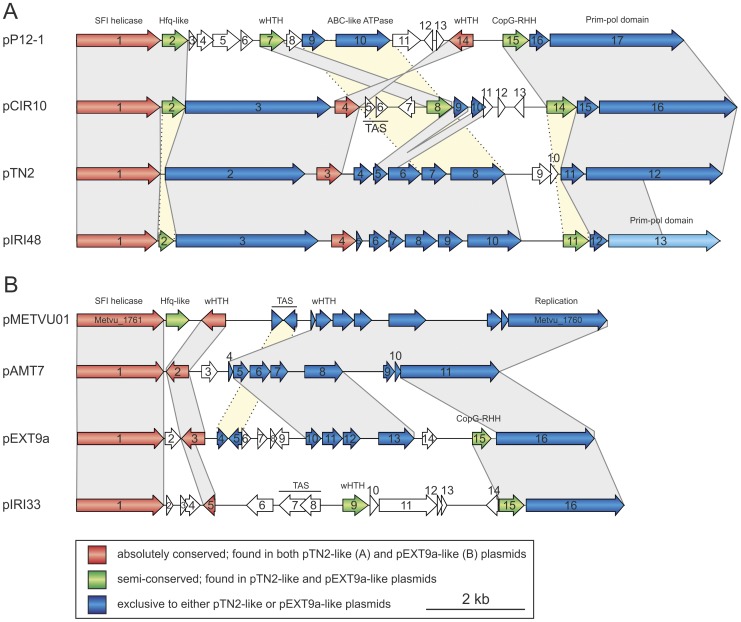
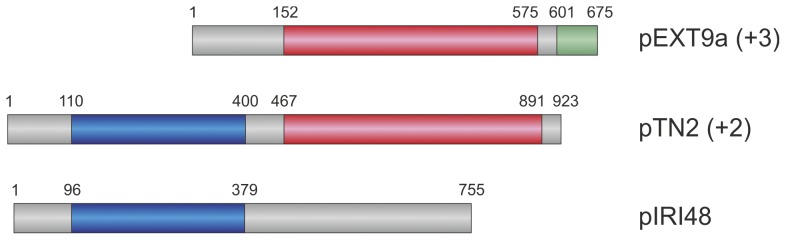
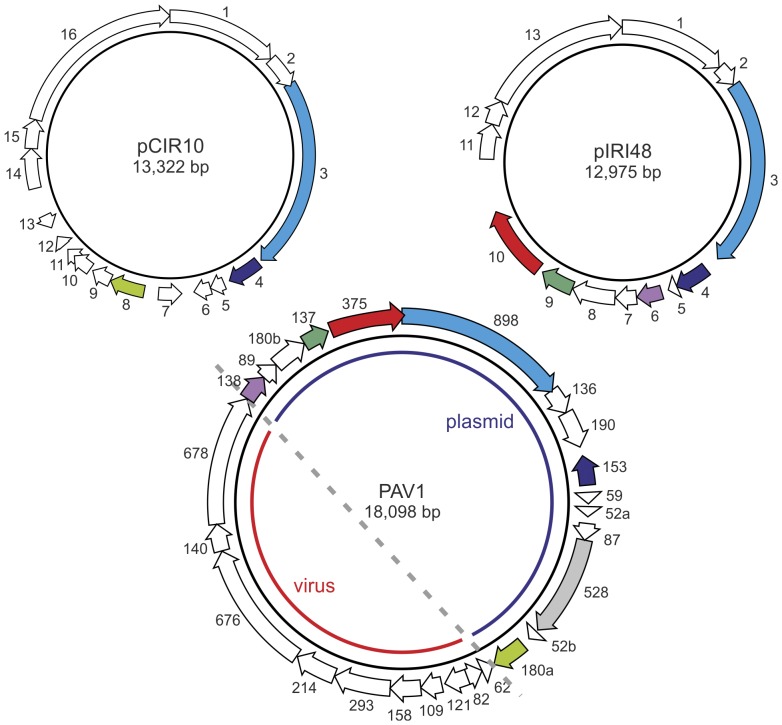
Mobilome of hyperthermophilic archaea dwelling in deep-sea hydrothermal vents is poorly characterized. To gain insight into genetic diversity and dynamics of mobile genetic elements in these environments we have sequenced five new plasmids from different Thermococcus strains that have been isolated from geographically remote hydrothermal vents. The plasmids were ascribed to two subfamilies, pTN2-like and pEXT9a-like. Gene content and phylogenetic analyses illuminated a robust connection between pTN2-like plasmids and Pyrococcus abyssi virus 1 (PAV1), with roughly half of the viral genome being composed of genes that have homologues in plasmids. Unexpectedly, pEXT9a-like plasmids were found to be closely related to the previously sequenced plasmid pMETVU01 from Methanocaldococcus vulcanius M7. Our data suggests that the latter observation is most compatible with an unprecedented horizontal transfer of a pEXT9a-like plasmid from Thermococcales to Methanococcales. Gene content analysis revealed that thermococcal plasmids encode Hfq-like proteins and toxin-antitoxin (TA) systems of two different families, VapBC and RelBE. Notably, although abundant in archaeal genomes, to our knowledge, TA and hfq-like genes have not been previously found in archaeal plasmids or viruses. Finally, the plasmids described here might prove to be useful in developing new genetic tools for hyperthermophiles.
栖息在深海热液喷口的超嗜热古菌的移动体组特征描述不足。为了深入了解这些环境中移动遗传元件的遗传多样性和动态,我们从不同的 Thermococcus 菌株中分离出了五个新的质粒,这些菌株来自地理位置遥远的热液喷口。这些质粒被归为两个亚科,pTN2 样和 pEXT9a 样。基因内容和系统发育分析表明,pTN2 样质粒与 Pyrococcus abyssi 病毒 1(PAV1)之间存在着牢固的联系,大约一半的病毒基因组由与质粒同源的基因组成。出乎意料的是,pEXT9a 样质粒与先前测序的 Methanocaldococcus vulcanius M7 质粒 pMETVU01 密切相关。我们的数据表明,这种情况最符合 Thermococcales 到 Methanococcales 的 pEXT9a 样质粒的前所未有的水平转移。基因内容分析表明,热球菌质粒编码 Hfq 样蛋白和两种不同家族的毒素-抗毒素(TA)系统,VapBC 和 RelBE。值得注意的是,尽管 TA 和 hfq 样基因在古菌基因组中很丰富,但据我们所知,这些基因以前从未在古菌质粒或病毒中发现过。最后,本文中描述的质粒可能被证明对开发用于高温微生物的新遗传工具很有用。