Department of Animal Science and Food Processing in Tropics and Subtropics, Institute of Tropics and Subtropics, Czech University of Life Sciences Prague, Praha, Czech Republic.
PLoS One. 2013;8(1):e53052. doi: 10.1371/journal.pone.0053052. Epub 2013 Jan 9.
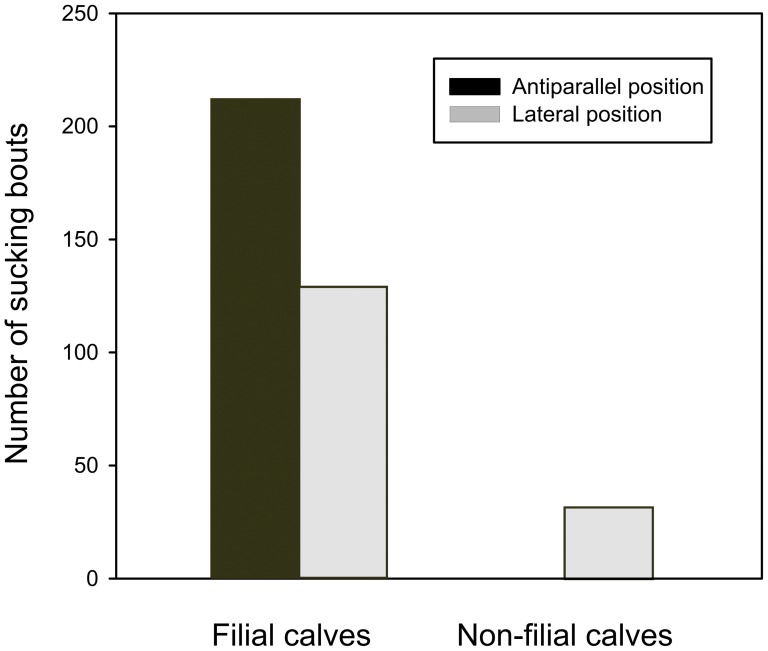
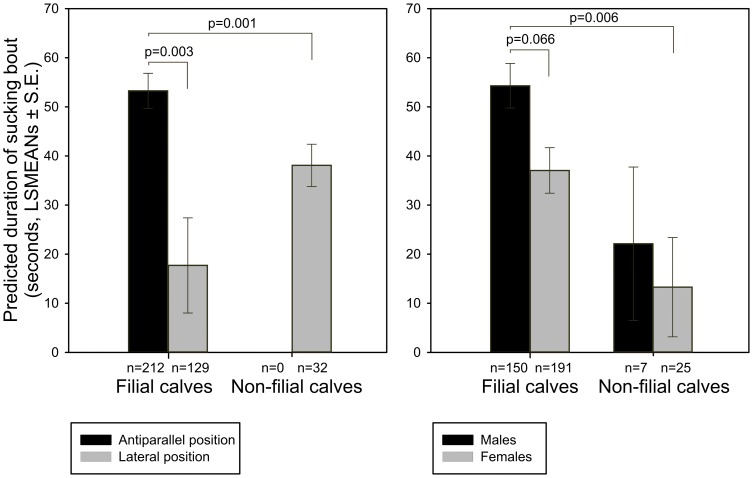
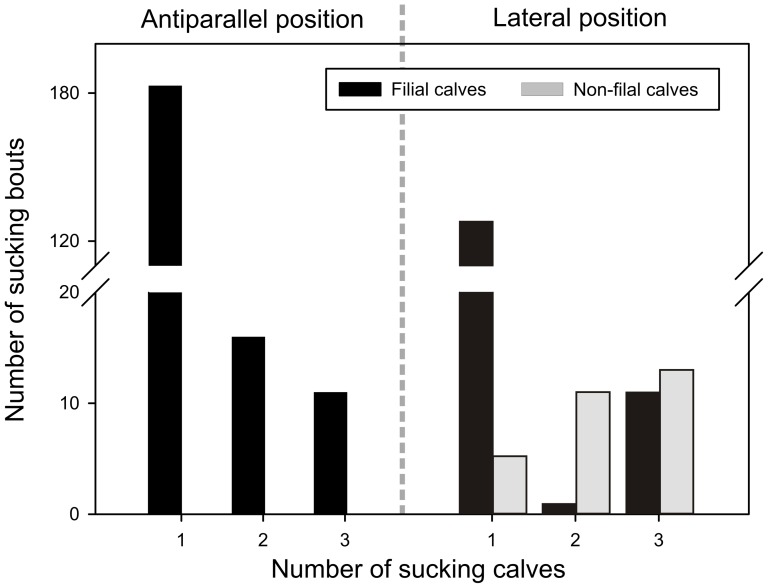
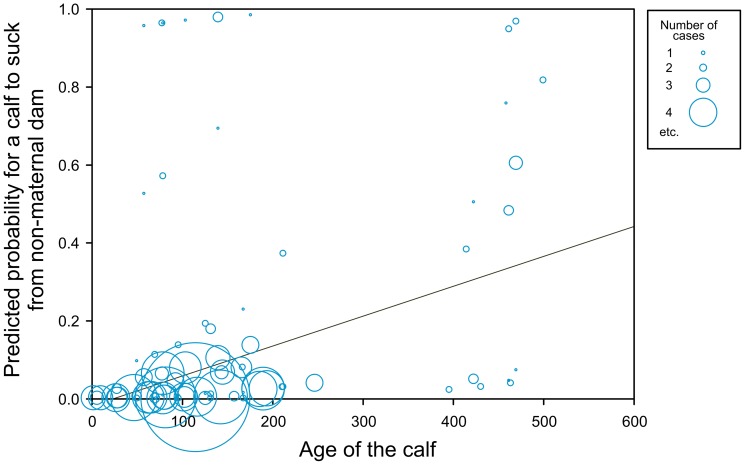
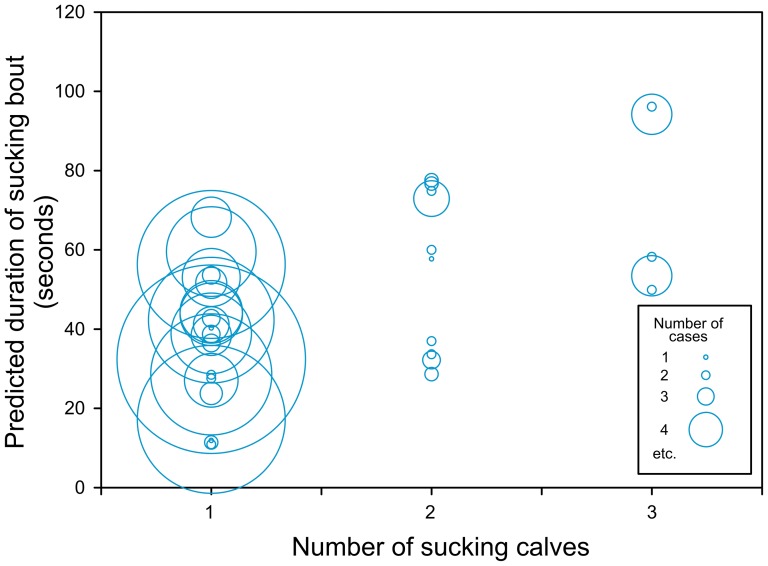
Allosuckling is a situation when a female nurses a non-filial offspring. It was described in various ungulate species; however for camels this is the first description of this behaviour. The aim of the study was to assess the occurrence of allosuckling in captive camels (Camelus bactrianus) and to test whether it can be explained as a 'milk-theft' (opportunistic behaviour of calves) or alternatively as an altruistic behaviour of females. During 2005 and 2007, nine camel females and ten calves in four zoological gardens in the Czech Republic were observed. In total, 373 sucking bouts were recorded, from which 32 were non-filial (the calf sucked from the non-maternal female). Allosuckling regularly appeared in captive camel herds. As predicted for the milk-theft explanation, the non-filial calves sucked more often in the lateral position and even did not suck in the antiparallel position at all. The non-filial calves preferably joined the filial calf when sucking but in five cases (15.6% of non-filial sucking bouts) the calves sucked from non-maternal dam without the presence of filial calf. We then expected the differences in terminations of sucking bouts by females but did not find any difference in sucking terminations for filial and non-filial calves. As the calves were getting older, the incidence of allosucking increased. This was probably because skills of the calf to outwit the non-maternal dam increased and/or the older calves might be more motivated for allosucking due to the weaning process. Finally, duration of a sucking bout was shorter with non-filial than filial calves. The results of the study support the hypothesis of 'milk theft', being mostly performed by calves behaving as opportunistic parasites, but we cannot reject certain level of altruism from the allonursing females or their increased degree of tolerance to non-filial calves.
混哺是指雌性动物为非亲生后代哺乳的一种情况。这种现象在各种有蹄类动物中都有描述,但这是首次在骆驼中描述这种行为。本研究的目的是评估圈养骆驼(双峰驼)中混哺的发生情况,并检验其是否可以解释为“偷奶”(幼仔的机会主义行为),或者相反,是雌性的利他行为。在 2005 年至 2007 年期间,在捷克共和国的四个动物园中观察了九只雌性骆驼和十只幼仔。总共记录了 373 次哺乳事件,其中 32 次是非亲子关系(幼仔从非母性雌性动物那里吸吮)。混哺在圈养骆驼群中经常出现。正如“偷奶”解释所预测的那样,非亲子幼仔在侧位吸吮的频率更高,甚至根本不在对向位吸吮。非亲子幼仔在吸吮时更喜欢加入亲子幼仔,但在五种情况下(非亲子吸吮事件的 15.6%),幼仔在没有亲子幼仔在场的情况下从非母性母驼那里吸吮。我们原本预计雌性动物在结束哺乳时会有差异,但没有发现亲子和非亲子幼仔在结束哺乳方面有任何差异。随着幼仔年龄的增长,混哺的发生率增加。这可能是因为幼仔欺骗非母性母驼的技能提高了,或者由于断奶过程,年龄较大的幼仔可能更有动机进行混哺。最后,非亲子幼仔的吸吮持续时间比亲子幼仔短。研究结果支持“偷奶”的假说,即主要由表现为机会主义寄生虫的幼仔进行,但我们不能排除来自混哺雌性动物的某种程度的利他主义,或者它们对非亲子幼仔的容忍度增加。