Research Institute for Medicines and Pharmaceutical Sciences iMed.UL, Faculty of Pharmacy, University of Lisbon, Lisbon, Portugal.
PLoS One. 2013;8(1):e53394. doi: 10.1371/journal.pone.0053394. Epub 2013 Jan 10.
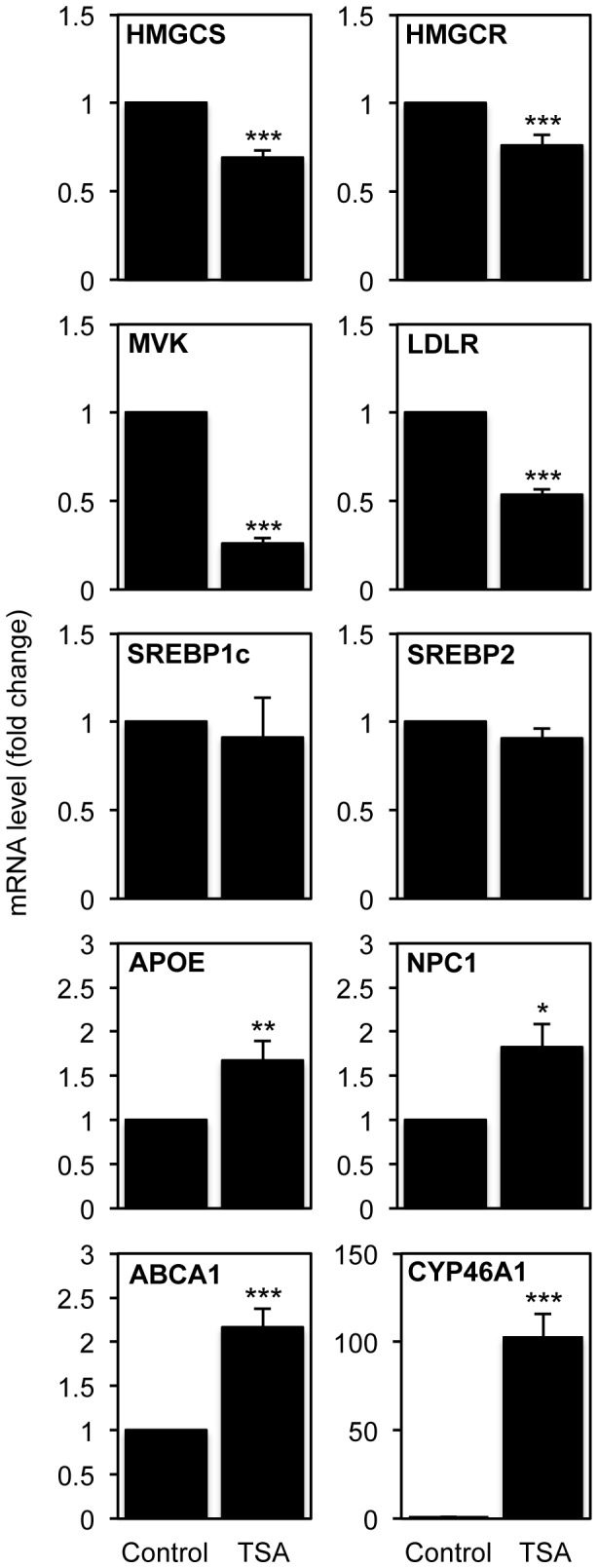
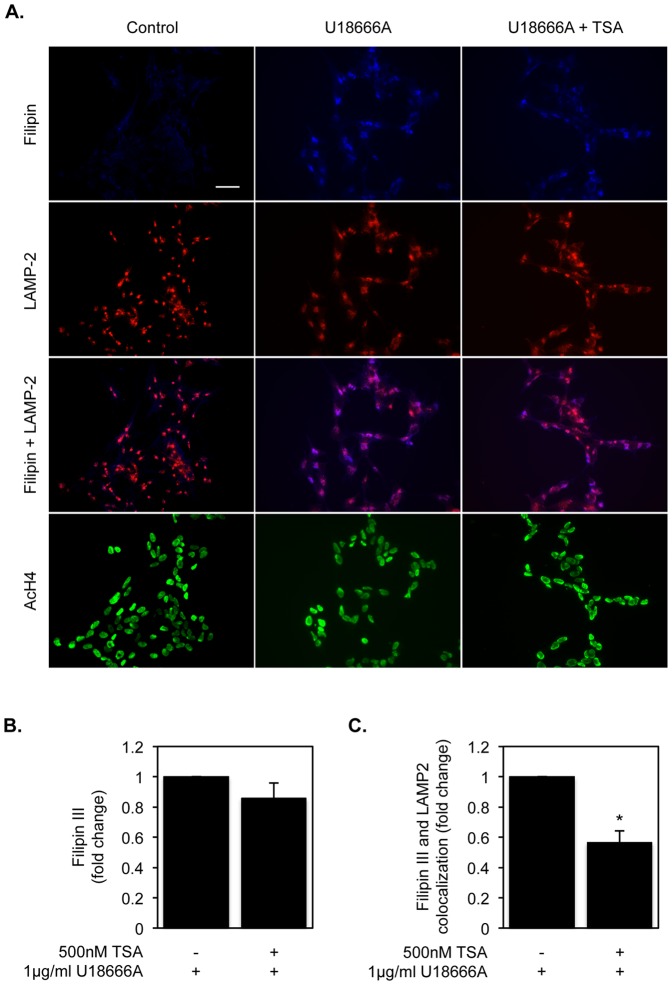
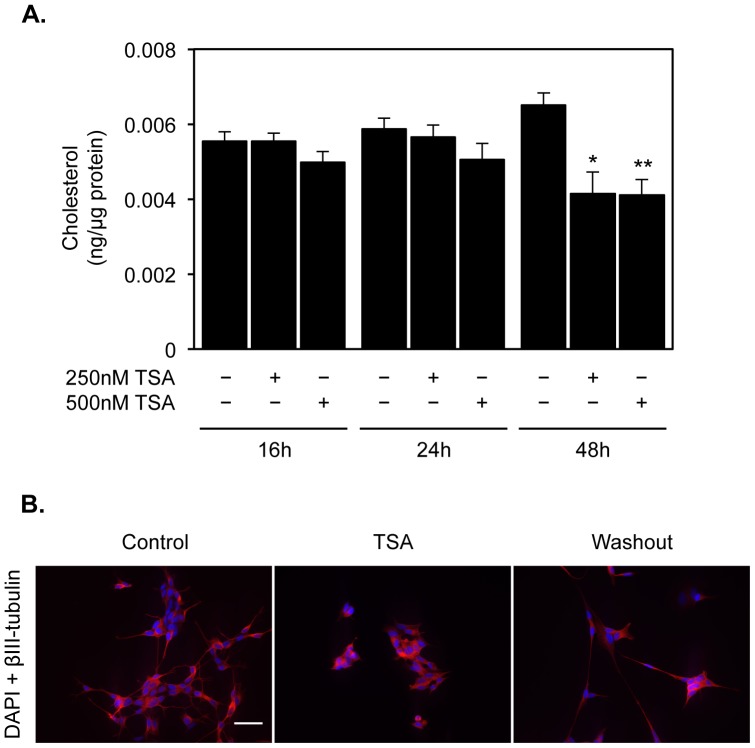
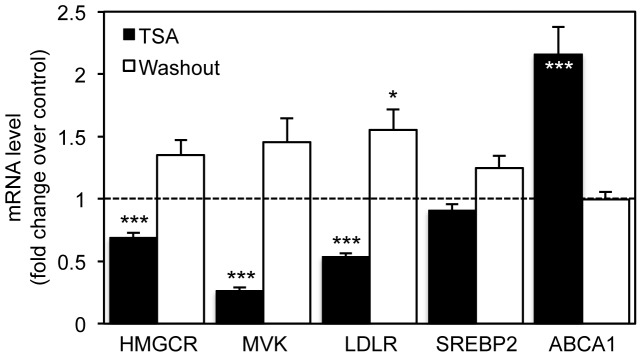
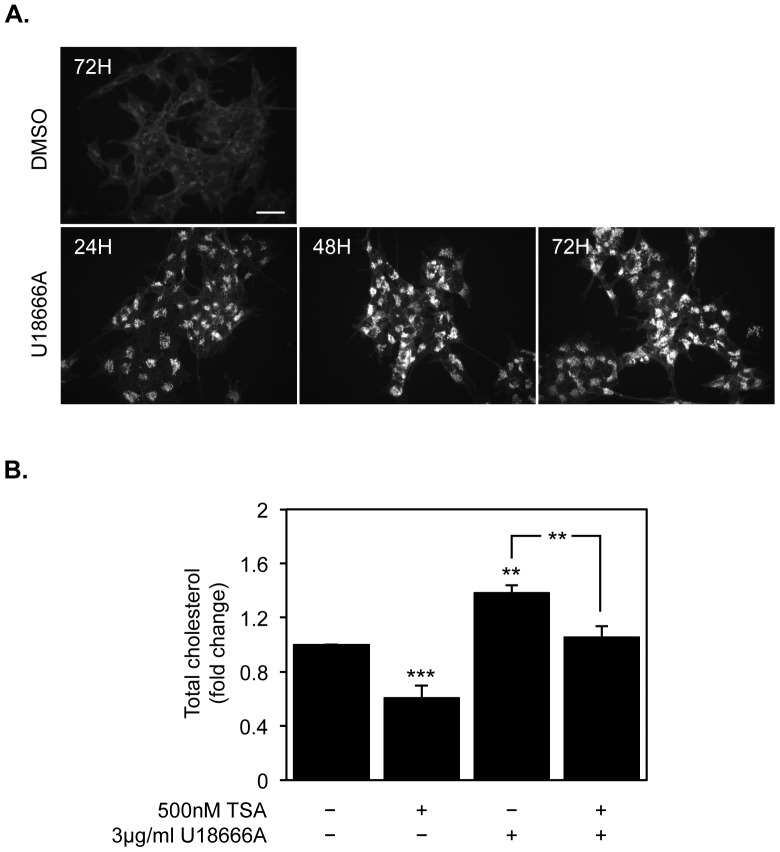
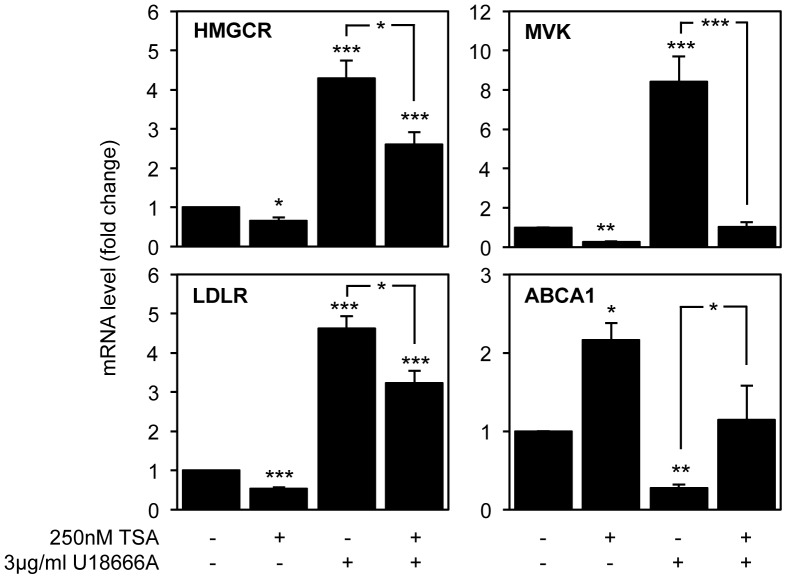
Cholesterol is an essential component of the central nervous system and increasing evidence suggests an association between brain cholesterol metabolism dysfunction and the onset of neurodegenerative disorders. Interestingly, histone deacetylase inhibitors (HDACi) such as trichostatin A (TSA) are emerging as promising therapeutic approaches in neurodegenerative diseases, but their effect on brain cholesterol metabolism is poorly understood. We have previously demonstrated that HDACi up-regulate CYP46A1 gene transcription, a key enzyme in neuronal cholesterol homeostasis. In this study, TSA was shown to modulate the transcription of other genes involved in cholesterol metabolism in human neuroblastoma cells, namely by up-regulating genes that control cholesterol efflux and down-regulating genes involved in cholesterol synthesis and uptake, thus leading to an overall decrease in total cholesterol content. Furthermore, co-treatment with the amphipathic drug U18666A that can mimic the intracellular cholesterol accumulation observed in cells of Niemman-Pick type C patients, revealed that TSA can ameliorate the phenotype induced by pathological cholesterol accumulation, by restoring the expression of key genes involved in cholesterol synthesis, uptake and efflux and promoting lysosomal cholesterol redistribution. These results clarify the role of TSA in the modulation of neuronal cholesterol metabolism at the transcriptional level, and emphasize the idea of HDAC inhibition as a promising therapeutic tool in neurodegenerative disorders with impaired cholesterol metabolism.
胆固醇是中枢神经系统的重要组成部分,越来越多的证据表明,脑胆固醇代谢功能障碍与神经退行性疾病的发生之间存在关联。有趣的是,组蛋白去乙酰化酶抑制剂(HDACi),如曲古抑菌素 A(TSA),在神经退行性疾病中作为有前途的治疗方法正在出现,但它们对脑胆固醇代谢的影响知之甚少。我们之前已经证明,HDACi 可上调 CYP46A1 基因转录,这是神经元胆固醇稳态的关键酶。在这项研究中,TSA 被证明可调节人神经母细胞瘤细胞中其他参与胆固醇代谢的基因的转录,即通过上调控制胆固醇外排的基因和下调参与胆固醇合成和摄取的基因,从而导致总胆固醇含量总体下降。此外,用可以模拟尼曼-匹克 C 型患者细胞中观察到的细胞内胆固醇积累的两亲性药物 U18666A 共同处理,表明 TSA 可以通过恢复参与胆固醇合成、摄取和外排的关键基因的表达并促进溶酶体胆固醇再分布来改善由病理性胆固醇积累引起的表型。这些结果阐明了 TSA 在转录水平调节神经元胆固醇代谢的作用,并强调了 HDAC 抑制作为一种有前途的治疗工具,可用于胆固醇代谢受损的神经退行性疾病。