Department of Optometry and Vision Science, University of Auckland, Auckland, New Zealand.
PLoS One. 2013;8(1):e53458. doi: 10.1371/journal.pone.0053458. Epub 2013 Jan 9.
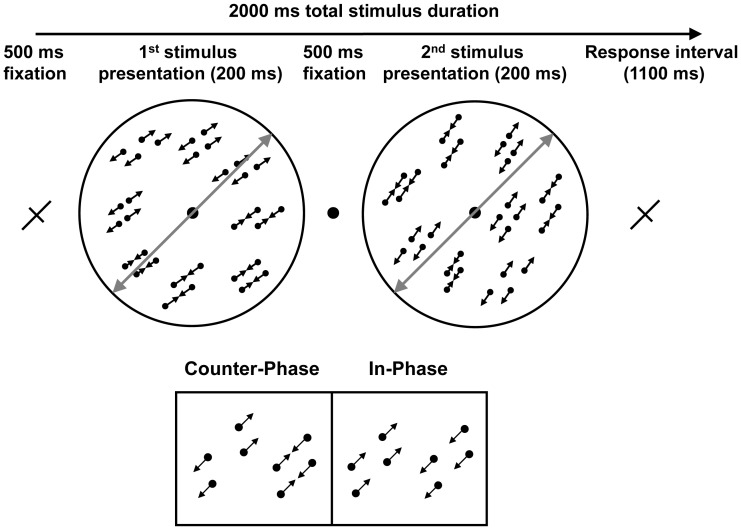
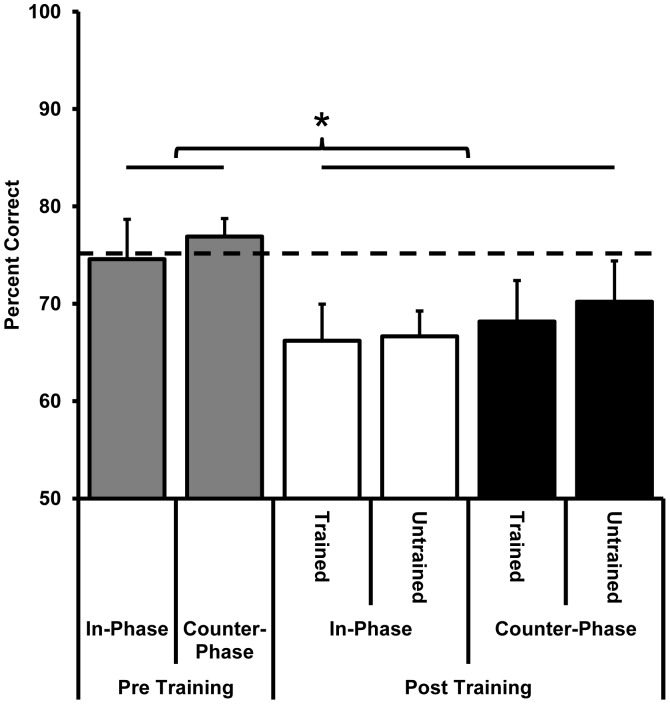
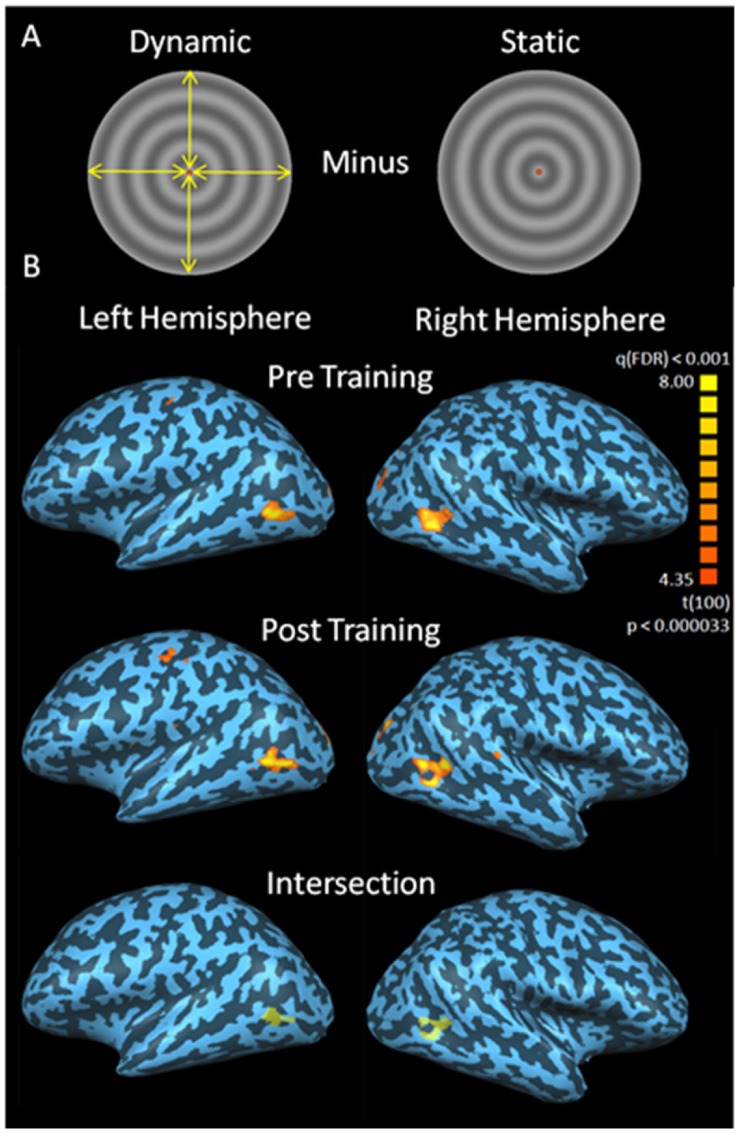
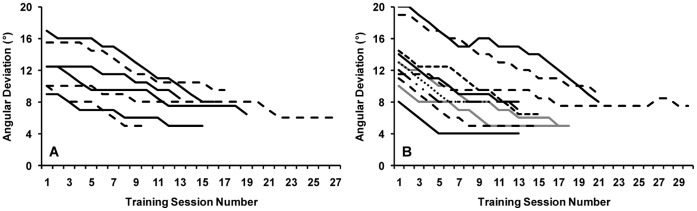
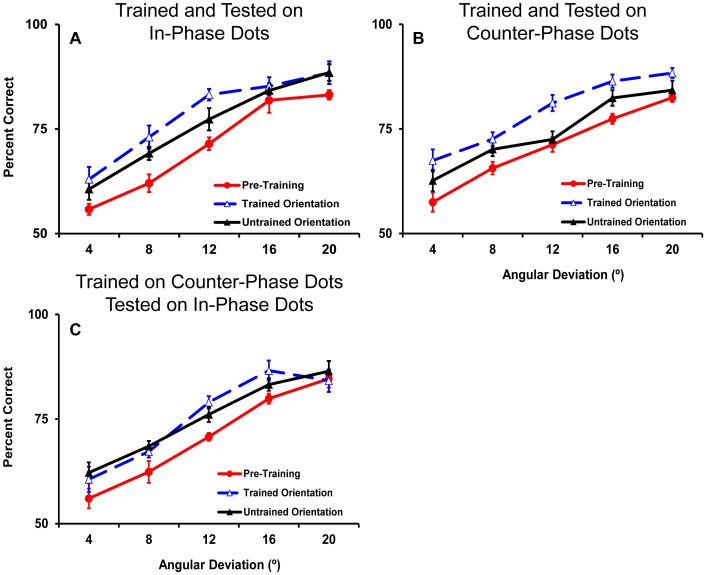
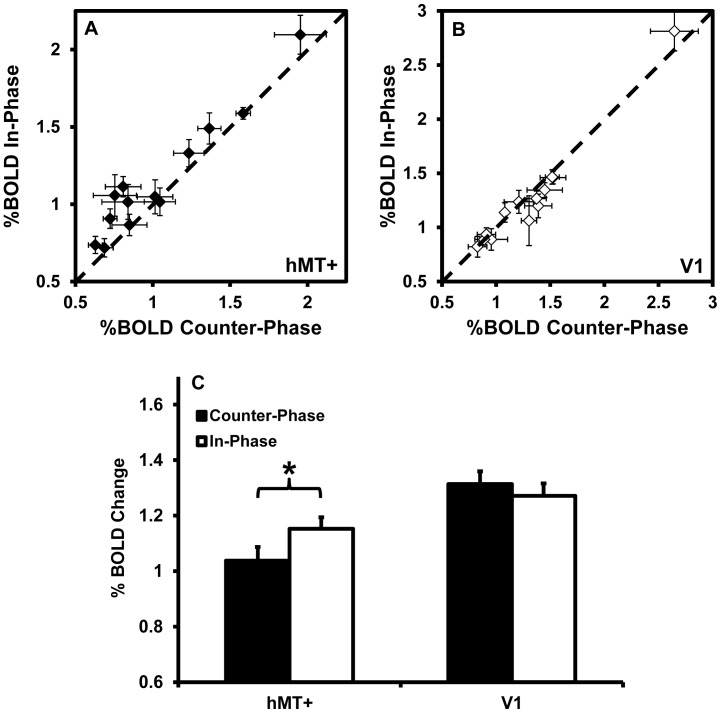
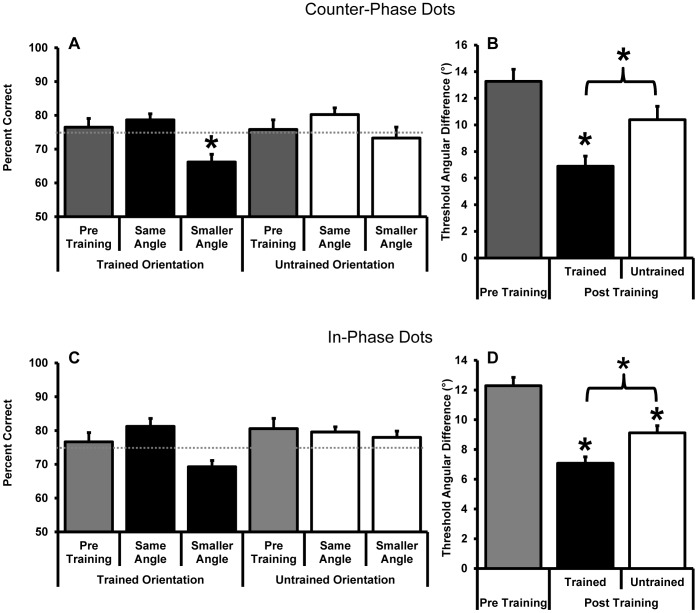
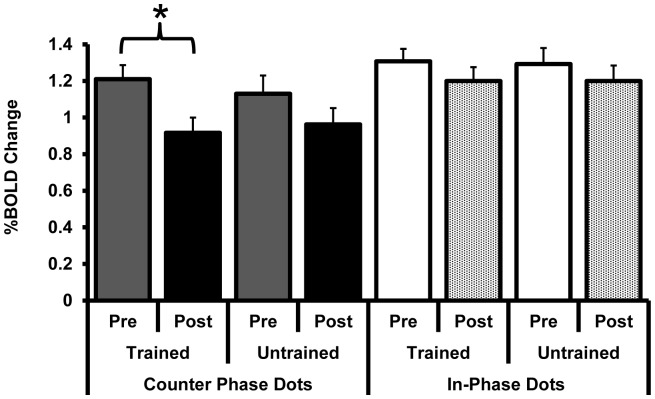
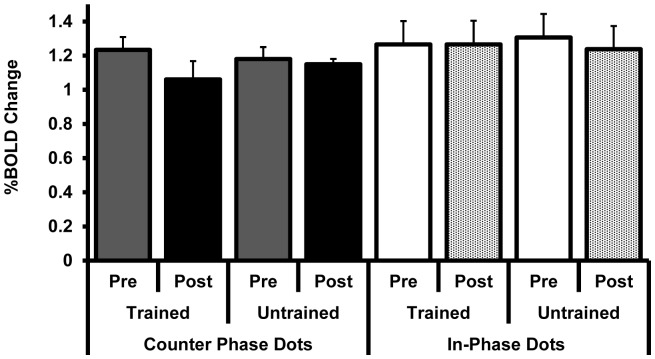
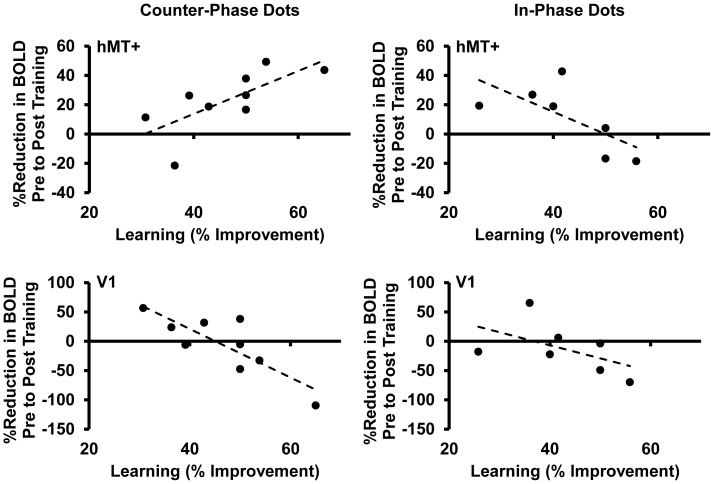
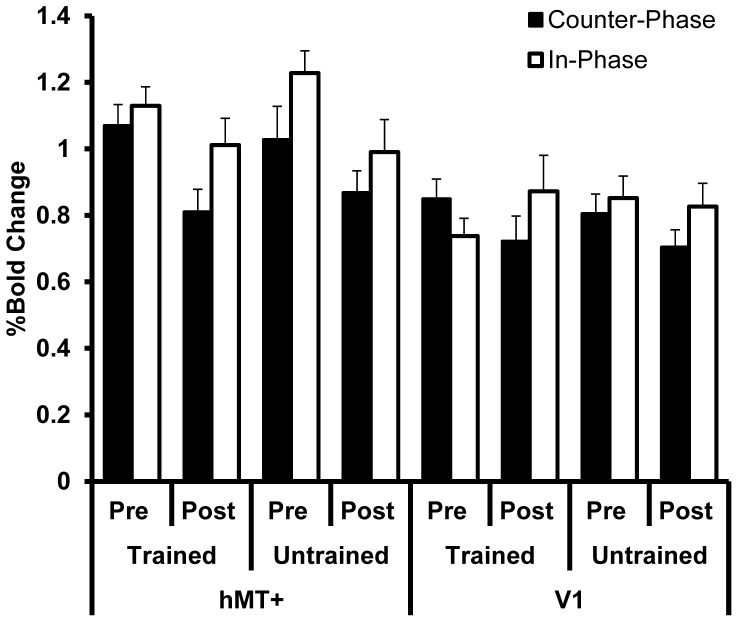
The middle temporal area of the extrastriate visual cortex (area MT) is integral to motion perception and is thought to play a key role in the perceptual learning of motion tasks. We have previously found, however, that perceptual learning of a motion discrimination task is possible even when the training stimulus contains locally balanced, motion opponent signals that putatively suppress the response of MT. Assuming at least partial suppression of MT, possible explanations for this learning are that 1) training made MT more responsive by reducing motion opponency, 2) MT remained suppressed and alternative visual areas such as V1 enabled learning and/or 3) suppression of MT increased with training, possibly to reduce noise. Here we used fMRI to test these possibilities. We first confirmed that the motion opponent stimulus did indeed suppress the BOLD response within hMT+ compared to an almost identical stimulus without locally balanced motion signals. We then trained participants on motion opponent or non-opponent stimuli. Training with the motion opponent stimulus reduced the BOLD response within hMT+ and greater reductions in BOLD response were correlated with greater amounts of learning. The opposite relationship between BOLD and behaviour was found at V1 for the group trained on the motion-opponent stimulus and at both V1 and hMT+ for the group trained on the non-opponent motion stimulus. As the average response of many cells within MT to motion opponent stimuli is the same as their response to non-directional flickering noise, the reduced activation of hMT+ after training may reflect noise reduction.
外侧纹状视觉皮层的颞中区域(MT 区)是运动知觉的重要组成部分,被认为在运动任务的知觉学习中发挥着关键作用。然而,我们之前发现,即使在训练刺激包含局部平衡、运动拮抗信号的情况下,运动辨别任务的知觉学习也是可能的,这些信号据称会抑制 MT 的反应。假设 MT 至少部分受到抑制,那么这种学习的可能解释是:1)通过减少运动拮抗作用,使 MT 更具反应性;2)MT 仍然受到抑制,而替代的视觉区域(如 V1)能够进行学习;3)随着训练的进行,MT 的抑制作用增加,可能是为了减少噪声。在这里,我们使用 fMRI 来测试这些可能性。我们首先证实,运动拮抗刺激确实会抑制 hMT+中的 BOLD 反应,与没有局部平衡运动信号的几乎相同刺激相比。然后,我们让参与者接受运动拮抗或非拮抗刺激的训练。用运动拮抗刺激进行训练会降低 hMT+中的 BOLD 反应,而 BOLD 反应的减少与学习量的增加呈正相关。对于接受运动拮抗刺激训练的组,在 V1 中发现了 BOLD 与行为之间的相反关系,而对于接受非拮抗运动刺激训练的组,在 V1 和 hMT+中都发现了这种关系。由于 MT 中许多细胞对运动拮抗刺激的平均反应与它们对非定向闪烁噪声的反应相同,因此训练后 hMT+的激活减少可能反映了噪声的减少。