Department of Psychiatry, University of San Diego, La Jolla, California, United States of America.
PLoS One. 2013;8(1):e53804. doi: 10.1371/journal.pone.0053804. Epub 2013 Jan 10.
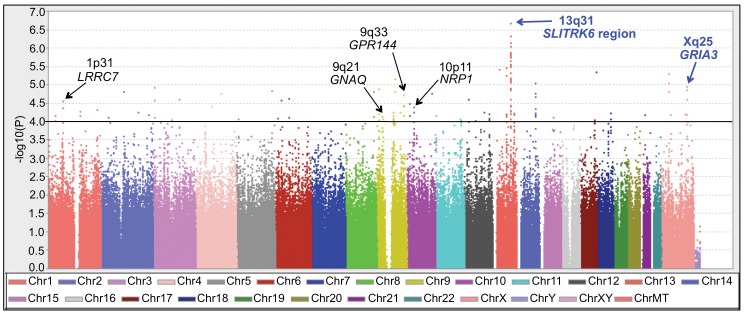
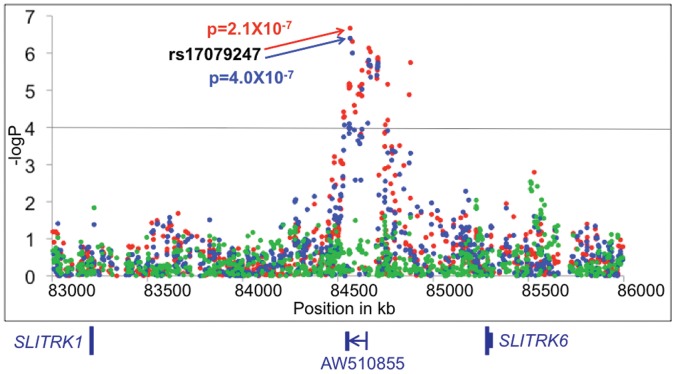
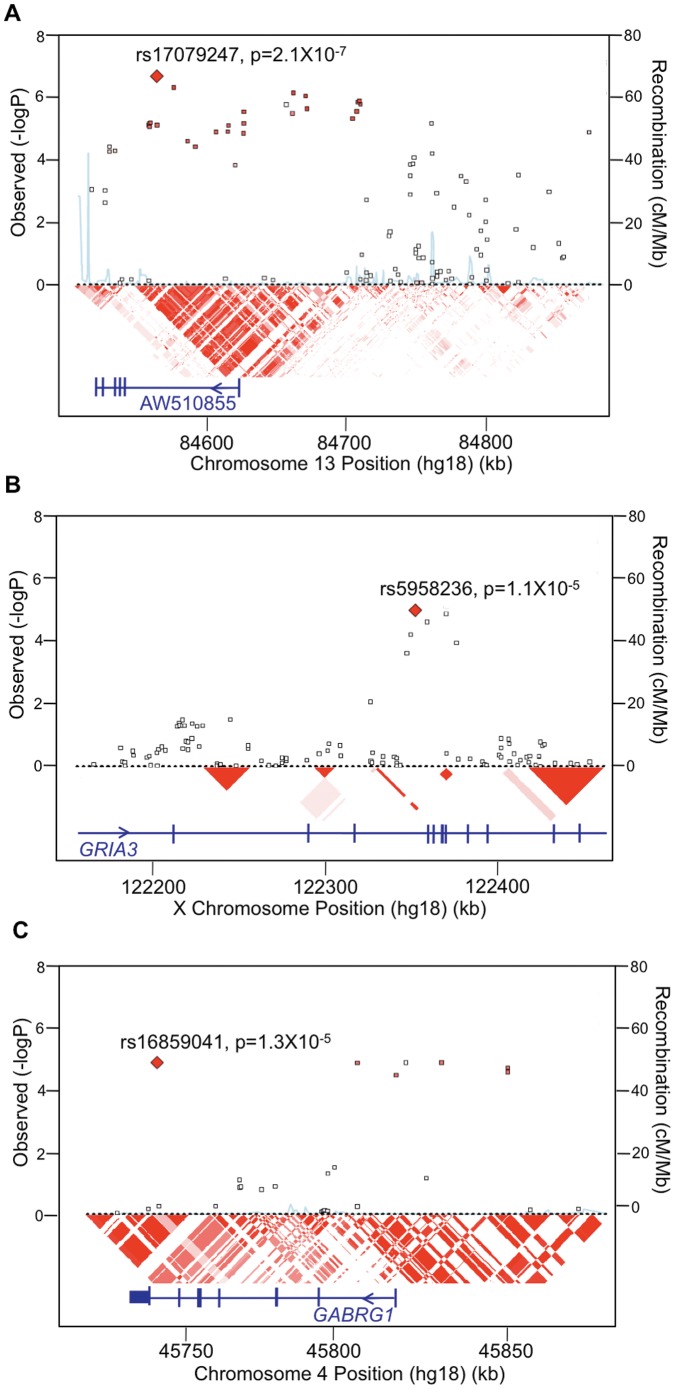
The use of clinical features to define subtypes of a disorder may aid in gene identification for complex diseases. In particular, clinical subtypes of mania may distinguish phenotypic subgroups of bipolar subjects that may also differ genetically. To assess this possibility, we performed a genome-wide association study using genotype data from the Bipolar Genome Study (BiGS) and subjects that were categorized as having either irritable or elated mania during their most severe episode. A bipolar case-only analysis in the GAIN bipolar sample identified several genomic regions that differed between irritable and elated subjects, the most significant of which was for 33 SNPs on chromosome 13q31 (peak p = 2×10(-7)). This broad peak is in a relative gene desert over an unknown EST and between the SLITRK1 and SLITRK6 genes. Evidence for association to this region came predominantly from subjects in the sample that were originally collected as part of a family-based bipolar linkage study, rather than those collected as bipolar singletons. We then genotyped an additional sample of bipolar singleton cases and controls, and the analysis of irritable vs. elated mania in this new sample did not replicate our previous findings. However, this lack of replication is likely due to the presence of significant differences in terms of clinical co-morbity that were identified between these singleton bipolar cases and those that were selected from families segregating the disorder. Despite these clinical differences, analysis of the combined sample provided continued support for 13q31 and other regions from our initial analysis. Though genome-wide significance was not achieved, our results suggest that irritable mania results from a distinct set of genes, including a region on chromosome 13q31.
使用临床特征来定义疾病亚型可能有助于鉴定复杂疾病的基因。特别是,躁狂的临床亚型可能会区分双相患者的表型亚组,这些亚组在基因上也可能不同。为了评估这种可能性,我们使用来自双相基因组研究(BiGS)的基因型数据和在其最严重发作期间被归类为具有易激惹或欣快躁狂的受试者进行了全基因组关联研究。GAIN 双相样本中的双相病例仅分析在易激惹和欣快受试者之间确定了几个基因组区域存在差异,其中最显著的是染色体 13q31 上的 33 个 SNP(峰 p=2×10(-7))。这个广泛的峰位于一个未知的 EST 之间,并且在 SLITRK1 和 SLITRK6 基因之间,是一个相对的基因荒漠。该区域的关联证据主要来自最初作为基于家族的双相连锁研究一部分收集的样本中的受试者,而不是作为双相单体收集的样本。然后,我们对另外一个双相单体病例和对照样本进行了基因分型,并且在这个新样本中对易激惹与欣快躁狂的分析没有复制我们之前的发现。然而,这种缺乏复制很可能是由于这些单体双相病例与那些从分离疾病的家庭中选择的病例之间存在显著的临床共病差异所致。尽管存在这些临床差异,但对合并样本的分析为我们最初分析的 13q31 和其他区域提供了持续的支持。尽管没有达到全基因组的显著性,但我们的结果表明,易激惹躁狂是由一组不同的基因引起的,包括染色体 13q31 上的一个区域。