Universidad Austral de Chile, Instituto de Ciencias Marinas y Limnológicas, Laboratorio Costero de Recursos Acuáticos Calfuco, Campus Isla Teja, Valdivia, Chile.
PLoS One. 2013;8(1):e54159. doi: 10.1371/journal.pone.0054159. Epub 2013 Jan 11.
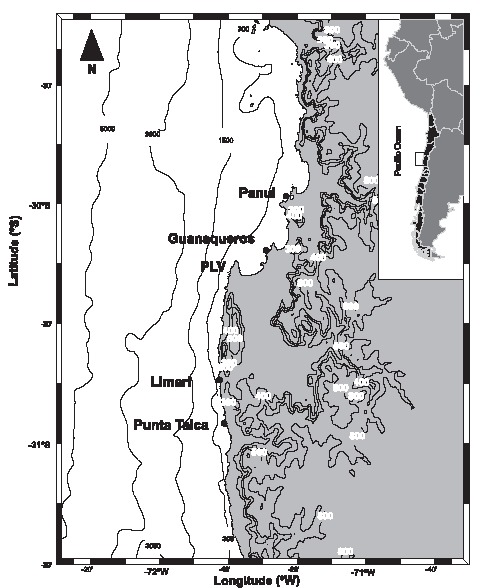
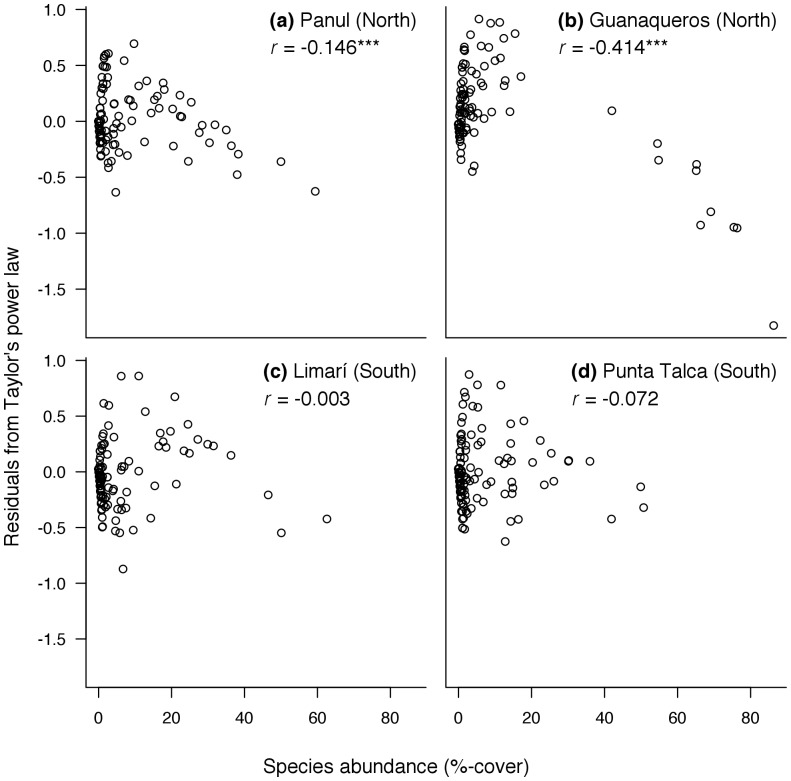
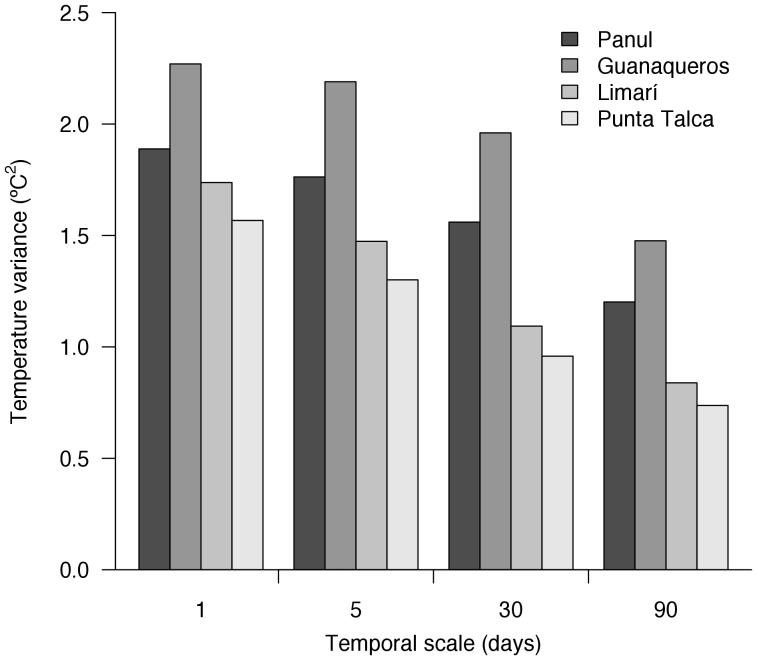
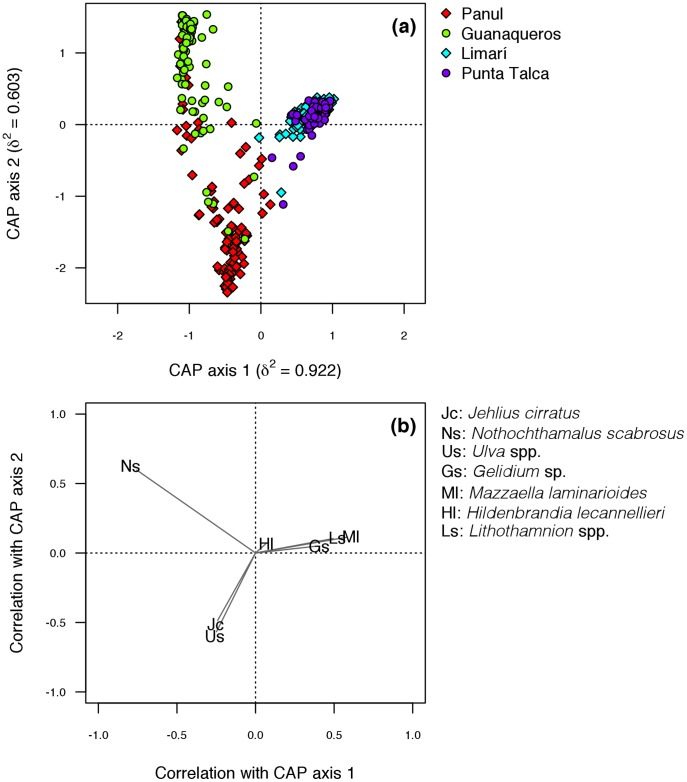
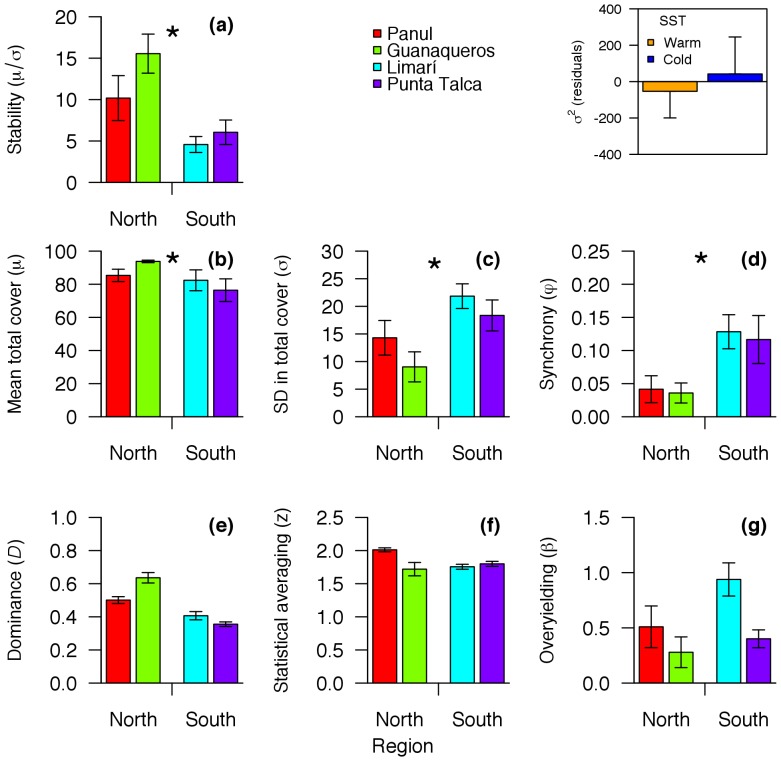
Environmental fluctuations can generate asynchronous species' fluctuations and community stability, due to compensatory dynamics of species with different environmental tolerances. We tested this hypothesis in intertidal hard-bottom communities of north-central Chile, where a persistent upwelling centre maintains a mosaic in sea surface temperatures (SST) over 10s of kilometres along the shore. Coastal upwelling implies colder and temporally more stable SST relative to downstream sites. Uni- and multivariate analyses of multiyear timeseries of SST and species abundances showed more asynchronous fluctuations and higher stability in sites characterised by warmer and more variable SST. Nevertheless, these effects were weakened after including data obtained in sites affected by less persistent upwelling centres. Further, dominant species were more stable in sites exposed to high SST variability. The strength of other processes that can influence community stability, chiefly statistical averaging and overyielding, did not vary significantly between SST regimes. Our results provide observational evidence supporting the idea that exogenously driven compensatory dynamics and the stabilising effects of dominant species can determine the stability of ecosystems facing environmental fluctuations.
环境波动会导致不同环境容忍度的物种产生非同步波动和群落稳定性,这是由于物种的补偿性动态。我们在智利中北部的潮间带硬底群落中检验了这一假设,在那里,一个持续的上升流中心在沿着海岸的数十公里范围内维持着海面温度(SST)的镶嵌模式。与下游站点相比,沿海上升流意味着更冷和更稳定的 SST。基于 SST 和物种丰度的多年时间序列的单变量和多变量分析表明,在 SST 更温暖且更具多变性的站点中,波动更具有异步性,稳定性更高。然而,在包括受上升流中心影响较小的站点的数据后,这些影响会减弱。此外,在暴露于高 SST 变异性的站点中,优势物种更稳定。影响群落稳定性的其他过程(主要是统计平均和超产)的强度在 SST 区系之间没有显著差异。我们的研究结果提供了观测证据,支持了这样一种观点,即由外部驱动的补偿性动态和优势物种的稳定作用可以决定面临环境波动的生态系统的稳定性。