Department for Molecular Biomedical Research, Unit of Molecular Signal Transduction in Inflammation, VIB, Zwijnaarde (Ghent), Belgium.
Biochem Pharmacol. 2013 Apr 1;85(7):873-80. doi: 10.1016/j.bcp.2013.01.007. Epub 2013 Jan 17.
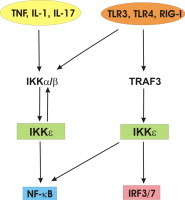
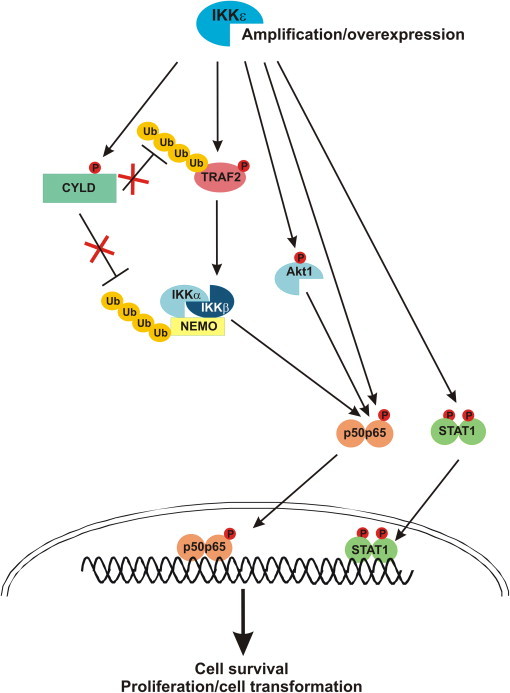
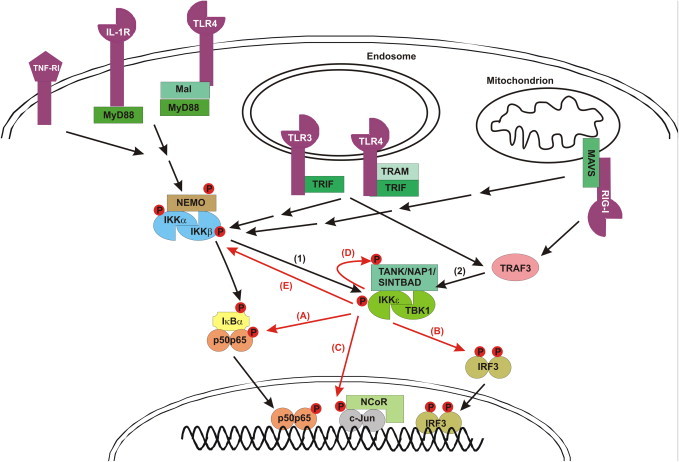
The innate immune system forms our first line of defense against invading pathogens and relies for a major part on the activation of two transcription factors, NF-κB and IRF3. Signaling pathways that activate these transcription factors are intertwined at the level of the canonical IκB kinases (IKKα, IKKβ) and non-canonical IKK-related kinases (IKKε, TBK1). Recently, significant progress has been made in understanding the function and mechanism of action of IKKε in immune signaling. In addition, IKKε impacts on cell proliferation and transformation, and is thereby also classified as an oncogene. Studies with IKKε knockout mice have illustrated a key role for IKKε in inflammatory and metabolic diseases. In this review we will highlight the mechanisms by which IKKε impacts on signaling pathways involved in disease development and discuss its potential as a novel therapeutic target.
先天免疫系统是我们抵御入侵病原体的第一道防线,主要依赖于两种转录因子 NF-κB 和 IRF3 的激活。激活这些转录因子的信号通路在经典的 IκB 激酶 (IKKα、IKKβ) 和非经典的 IKK 相关激酶 (IKKε、TBK1) 水平上交织在一起。最近,人们在理解 IKKε 在免疫信号中的功能和作用机制方面取得了重大进展。此外,IKKε 还影响细胞增殖和转化,因此也被归类为致癌基因。用 IKKε 基因敲除小鼠进行的研究表明,IKKε 在炎症和代谢性疾病中起着关键作用。在这篇综述中,我们将重点介绍 IKKε 影响疾病发展相关信号通路的机制,并讨论其作为新型治疗靶点的潜力。