Department of Experimental Medical Science, Lund University Lund, Sweden.
Front Neural Circuits. 2013 Jan 17;6:120. doi: 10.3389/fncir.2012.00120. eCollection 2012.
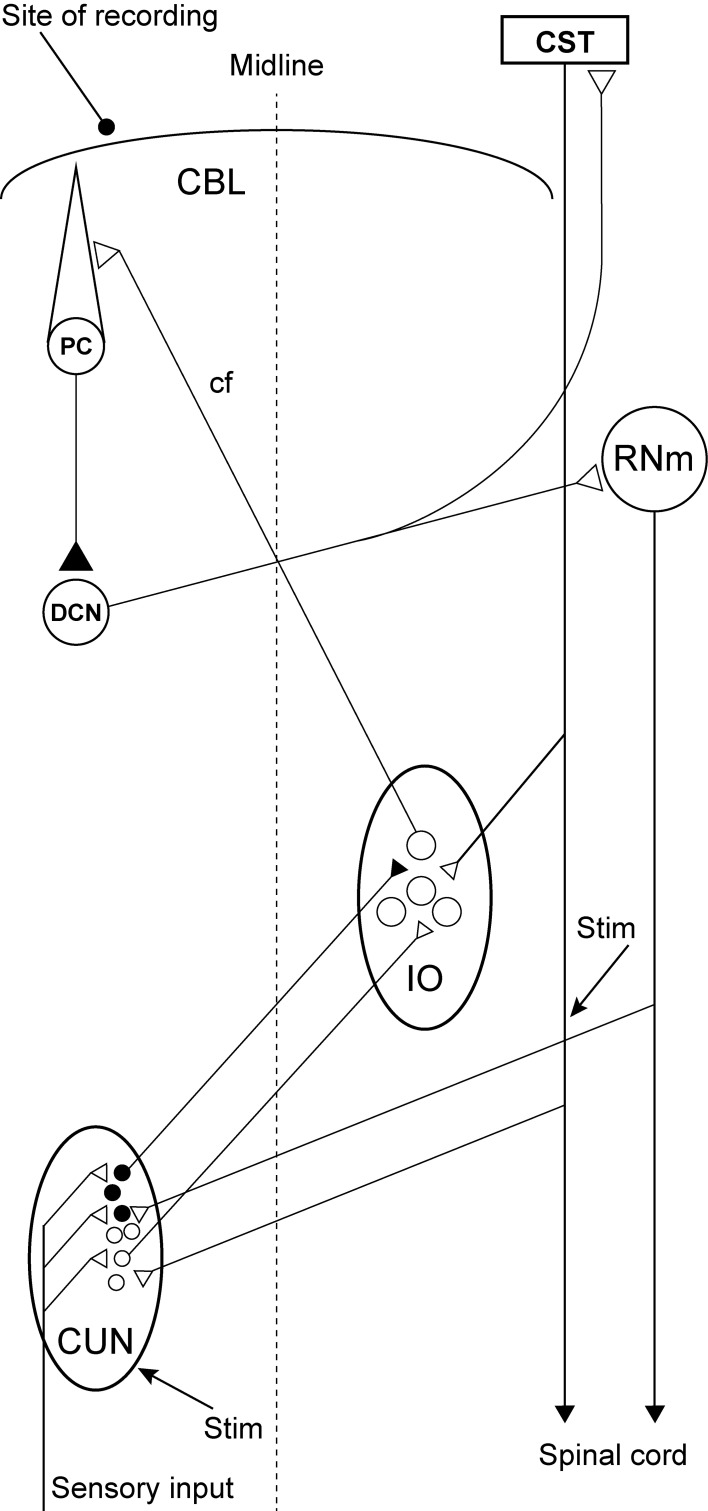
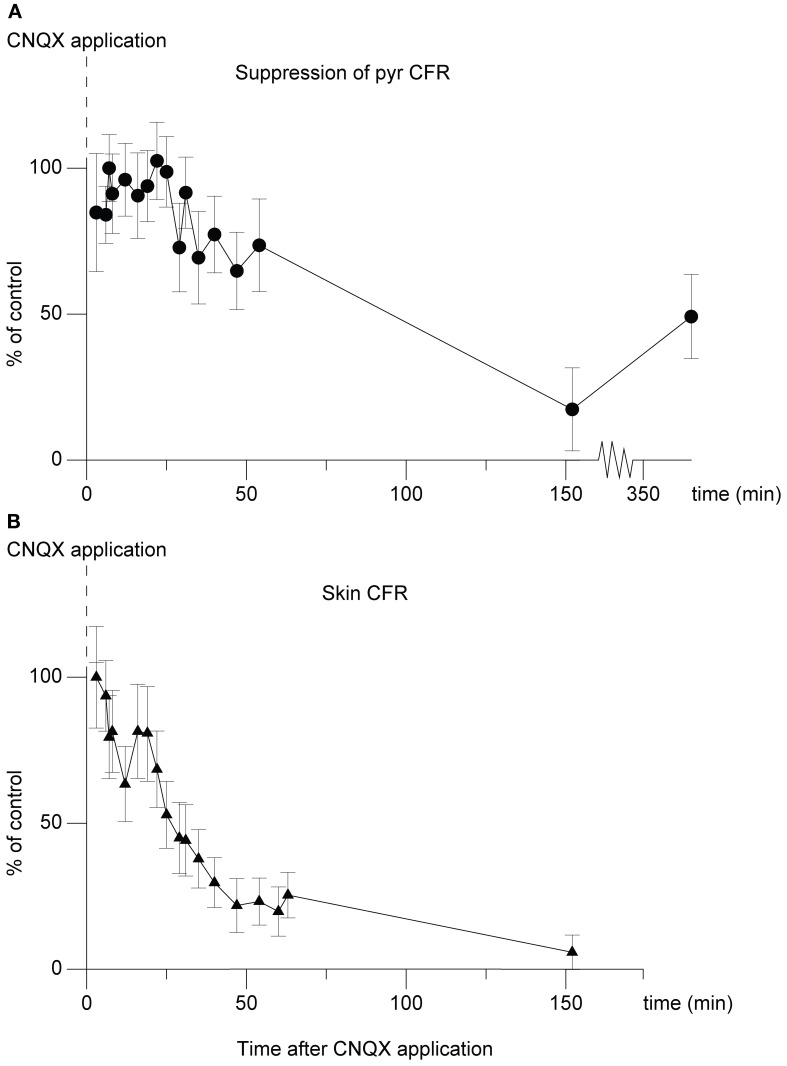
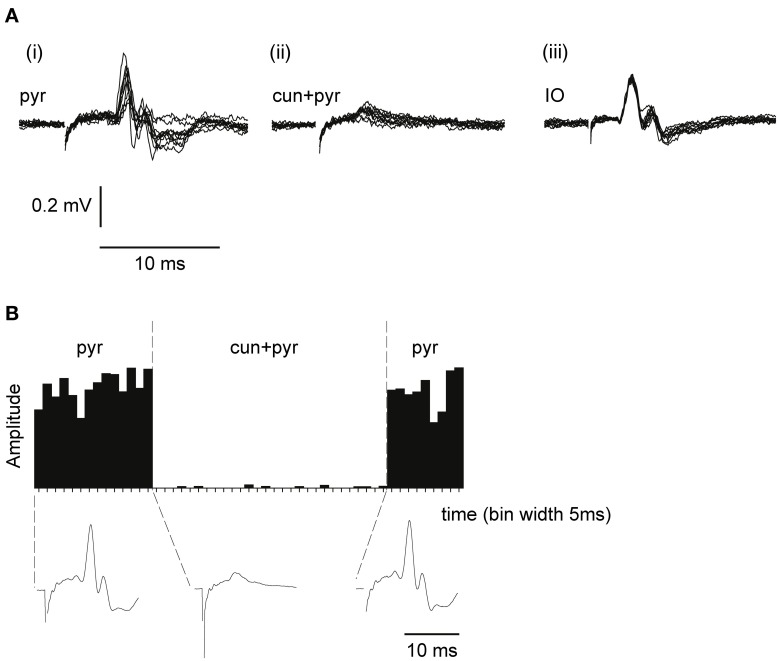
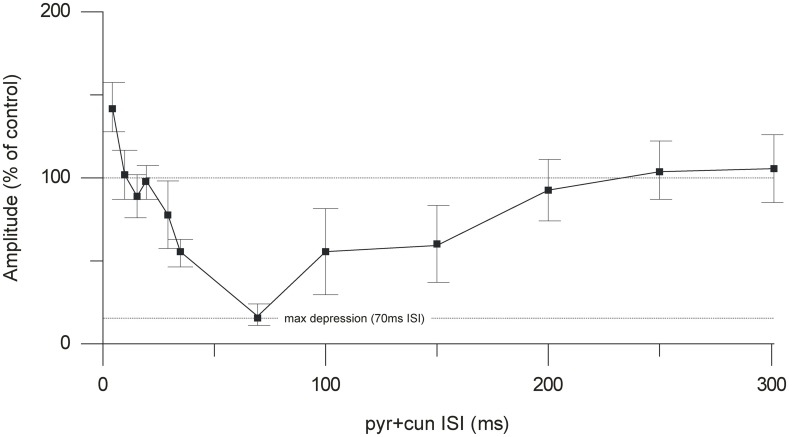
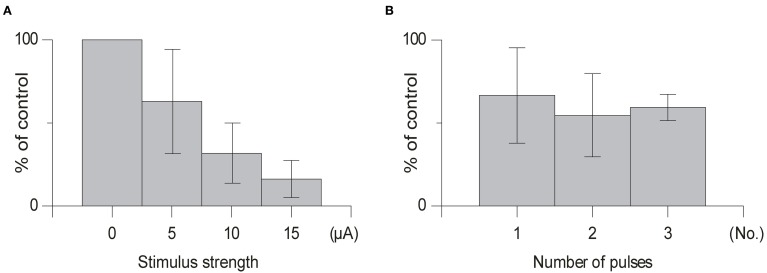
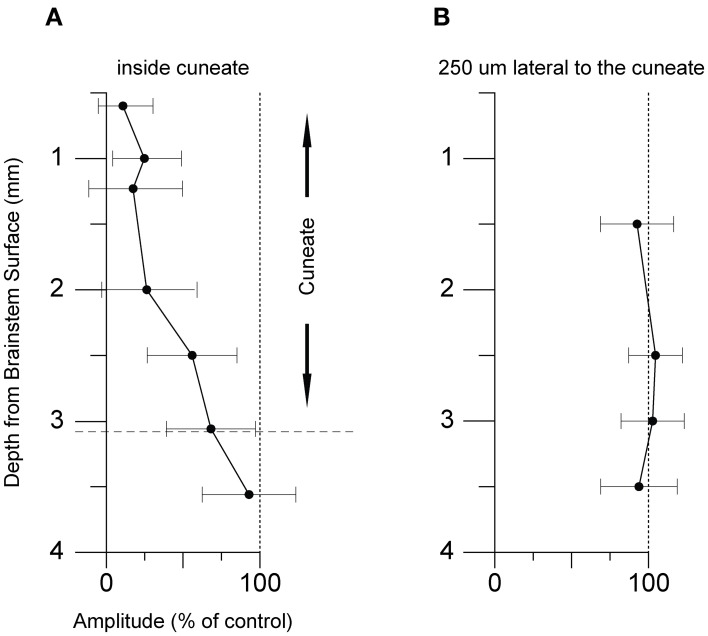
Several lines of research have shown that the excitability of the inferior olive is suppressed during different phases of movement. A number of different structures like the cerebral cortex, the red nucleus, and the cerebellum have been suggested as candidate structures for mediating this gating. The inhibition of the responses of the inferior olivary neurons from the red nucleus has been studied extensively and anatomical studies have found specific areas within the cuneate nucleus to be target areas for projections from the magnocellular red nucleus. In addition, GABA-ergic cells projecting from the cuneate nucleus to the inferior olive have been found. We therefore tested if direct stimulation of the cuneate nucleus had inhibitory effects on a climbing fiber field response, evoked by electrical stimulation of the pyramidal tract, recorded on the surface of the cerebellum. When the pyramidal tract stimulation was preceded by weak electrical stimulation (5-20 μA) within the cuneate nucleus, the amplitude of the climbing fiber field potential was strongly suppressed (approx. 90% reduction). The time course of this suppression was similar to that found after red nucleus stimulation, with a peak suppression occurring at 70 ms after the cuneate stimulation. Application of CNQX (6-cyano-7-nitroquinoxaline-2,3-dione, disodium salt) on the cuneate nucleus blocked the suppression almost completely. We conclude that a relay through the cuneate nucleus is a possible pathway for movement-related suppression of climbing fiber excitability.
多项研究表明,橄榄下核在运动的不同阶段兴奋性受到抑制。许多不同的结构,如大脑皮层、红核和小脑,被认为是介导这种门控的候选结构。红核对橄榄下神经元反应的抑制作用已经被广泛研究,解剖学研究发现,从红核到小脑楔状核的特定区域是来自大细胞红核的投射的靶区。此外,还发现了从楔状核投射到橄榄下核的 GABA 能细胞。因此,我们测试了直接刺激楔状核是否对通过电刺激锥体束在小脑表面诱发的 climbing fiber 场反应产生抑制作用。当在楔状核内进行弱电刺激(5-20 μA)时, climbing fiber 场电位的幅度被强烈抑制(约 90%减少)。这种抑制的时程与红核刺激后发现的时程相似,在楔状核刺激后 70 ms 时出现抑制峰值。在楔状核上应用 CNQX(6-氰基-7-硝基喹喔啉-2,3-二酮,二钠盐)几乎完全阻断了抑制作用。我们的结论是,通过楔状核的中继是运动相关抑制 climbing fiber 兴奋性的一种可能途径。