Department of Biochemistry and Molecular Biology, St. Louis University School of Medicine, St. Louis, MO 63104, USA.
J Cell Biol. 2013 Jan 21;200(2):187-202. doi: 10.1083/jcb.201204053.
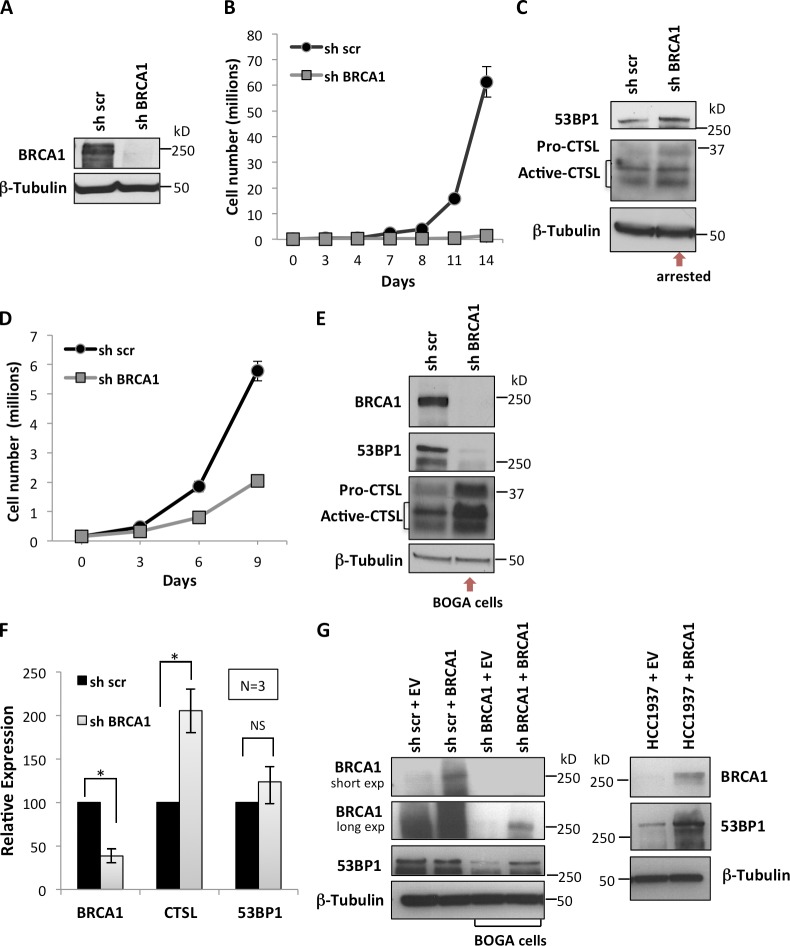
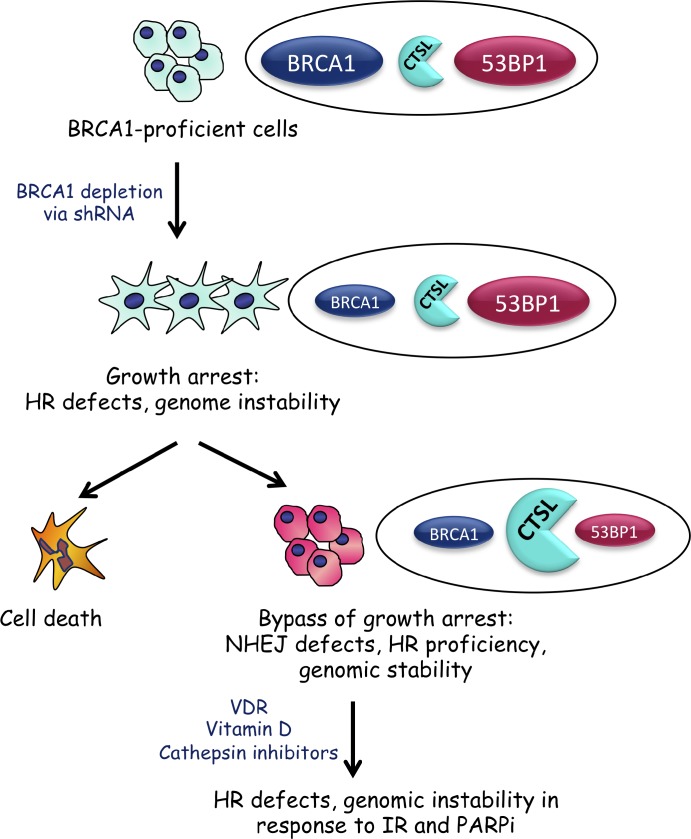
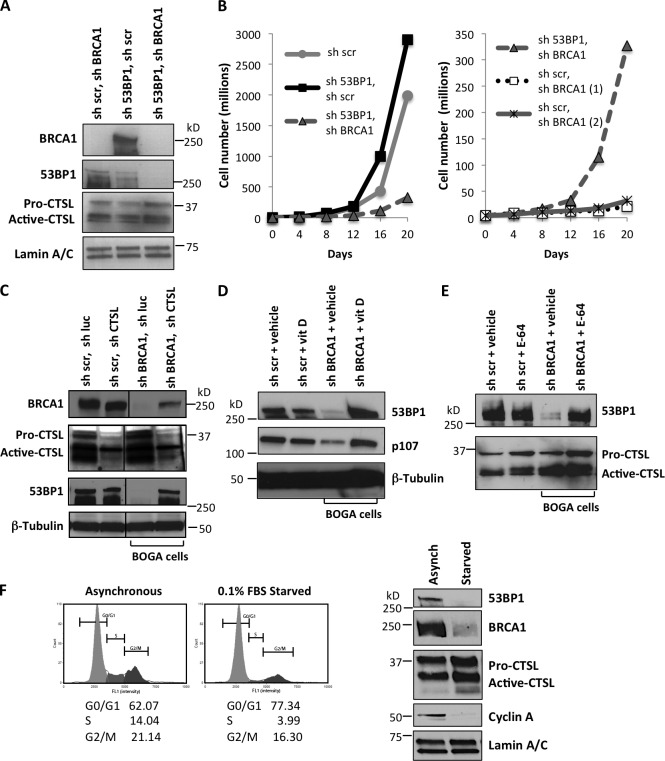
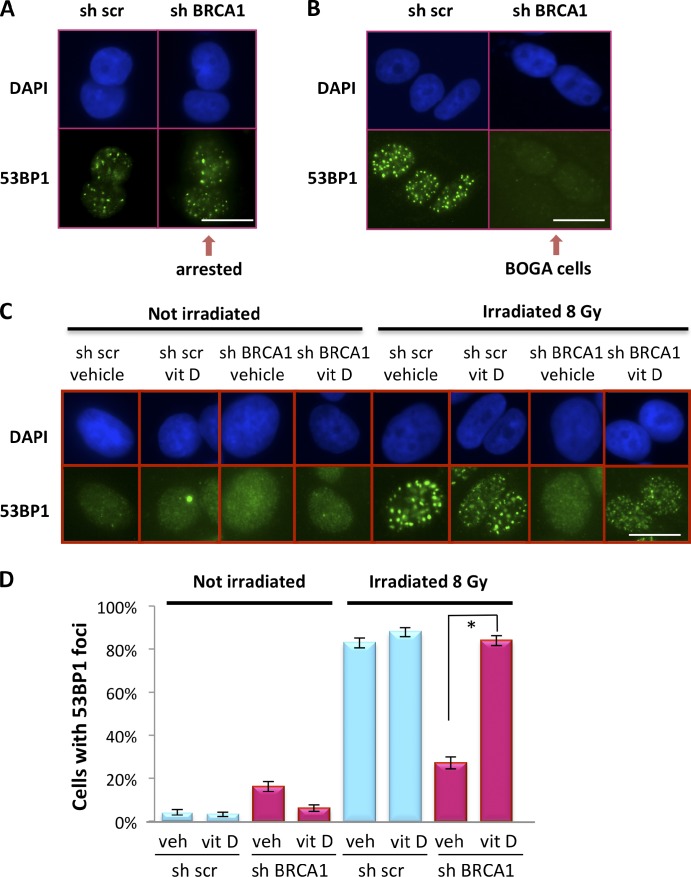
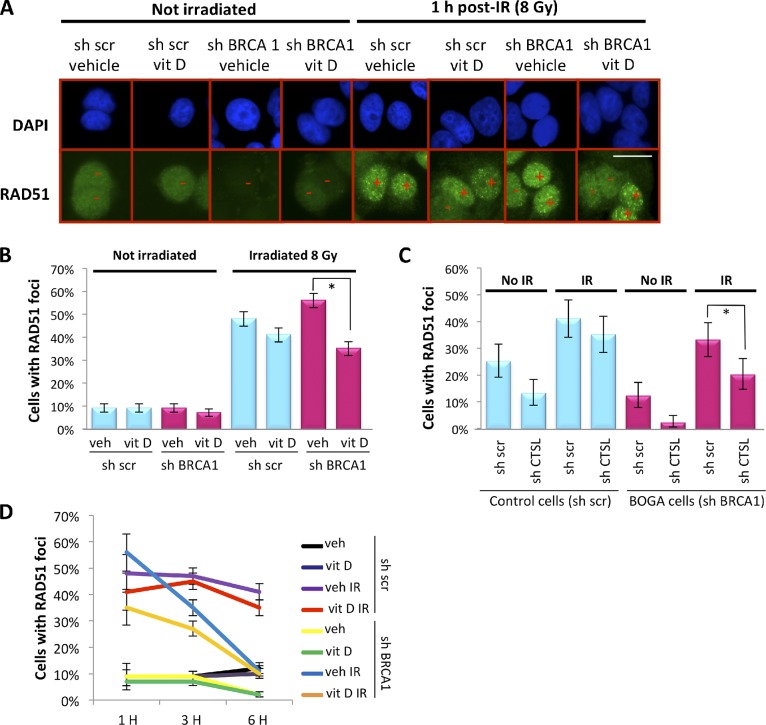
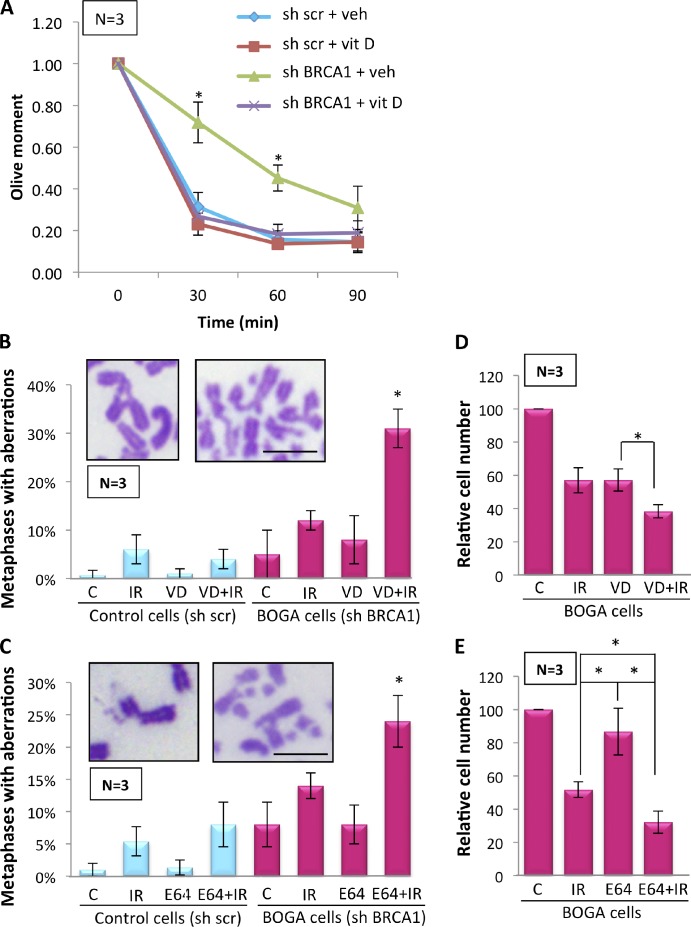
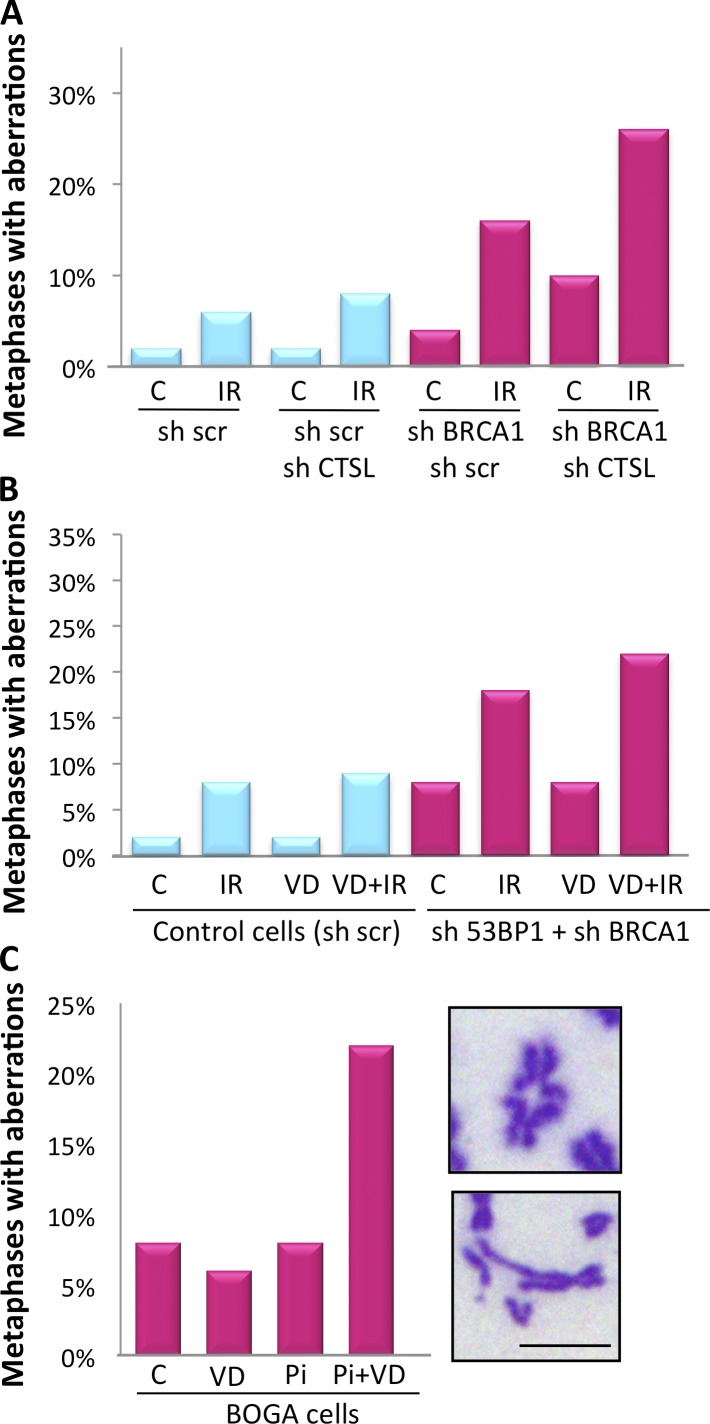
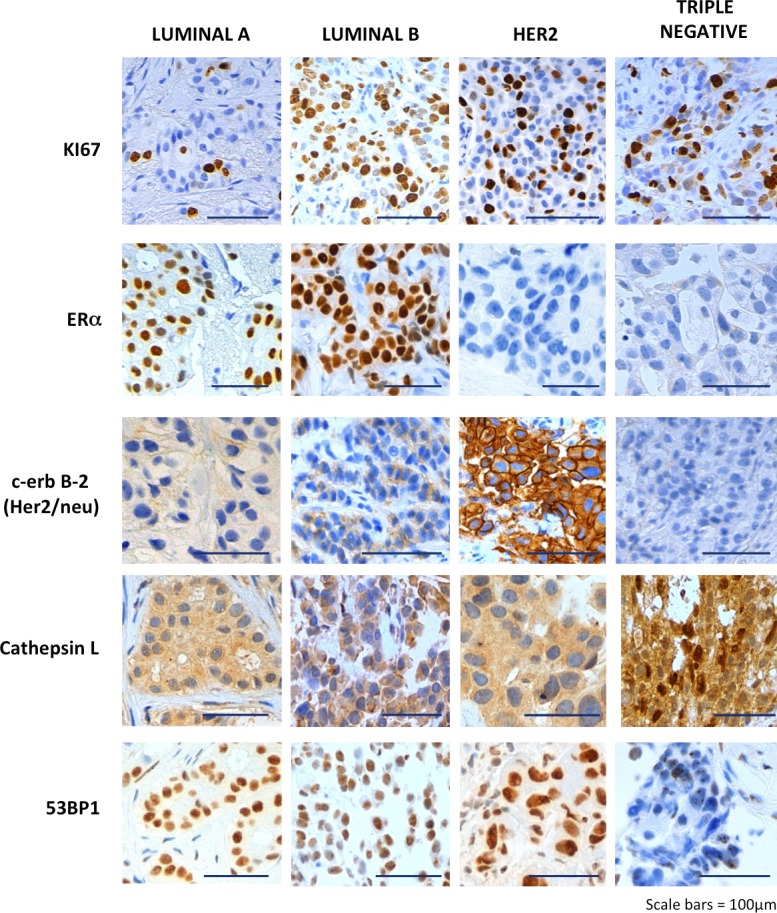
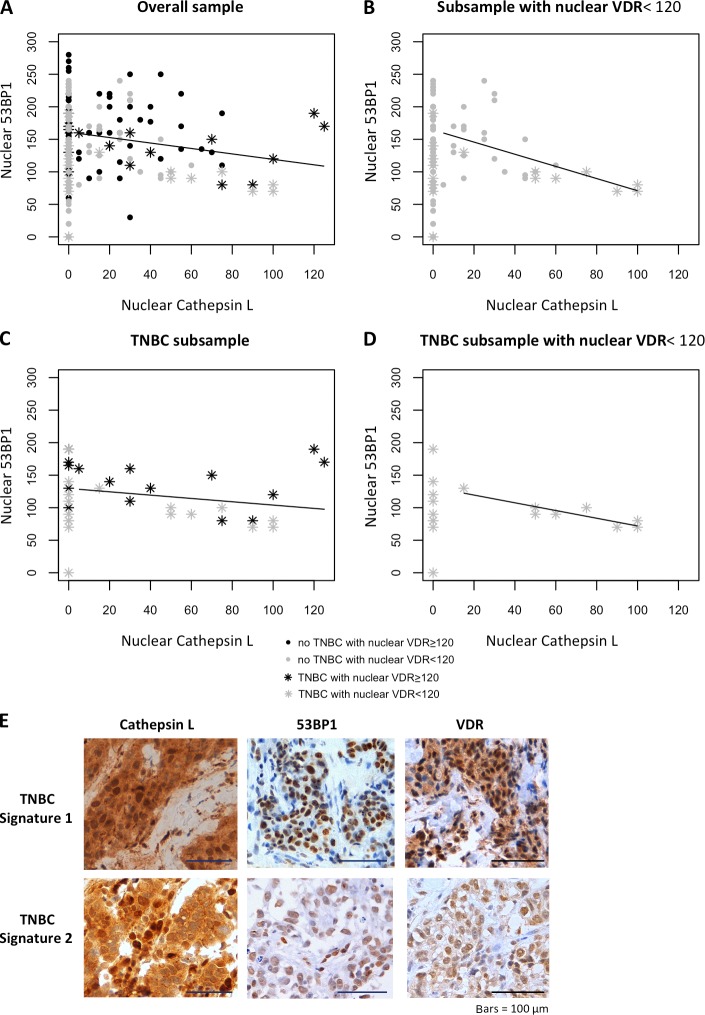
Loss of 53BP1 rescues BRCA1 deficiency and is associated with BRCA1-deficient and triple-negative breast cancers (TNBC) and with resistance to genotoxic drugs. The mechanisms responsible for decreased 53BP1 transcript and protein levels in tumors remain unknown. Here, we demonstrate that BRCA1 loss activates cathepsin L (CTSL)-mediated degradation of 53BP1. Activation of this pathway rescued homologous recombination repair and allowed BRCA1-deficient cells to bypass growth arrest. Importantly, depletion or inhibition of CTSL with vitamin D or specific inhibitors stabilized 53BP1 and increased genomic instability in response to radiation and poly(adenosine diphosphate-ribose) polymerase inhibitors, compromising proliferation. Analysis of human breast tumors identified nuclear CTSL as a positive biomarker for TNBC, which correlated inversely with 53BP1. Importantly, nuclear levels of CTSL, vitamin D receptor, and 53BP1 emerged as a novel triple biomarker signature for stratification of patients with BRCA1-mutated tumors and TNBC, with potential predictive value for drug response. We identify here a novel pathway with prospective relevance for diagnosis and customization of breast cancer therapy.
53BP1 的缺失可挽救 BRCA1 缺陷,并与 BRCA1 缺陷型和三阴性乳腺癌(TNBC)相关,也与对遗传毒性药物的耐药性相关。导致肿瘤中 53BP1 转录本和蛋白水平降低的机制尚不清楚。在这里,我们证明 BRCA1 缺失会激活组织蛋白酶 L(CTSL)介导的 53BP1 降解。该途径的激活挽救了同源重组修复,并使 BRCA1 缺陷型细胞能够绕过生长停滞。重要的是,用维生素 D 或特异性抑制剂耗尽或抑制 CTSL 可稳定 53BP1,并增加对辐射和聚(腺苷二磷酸核糖)聚合酶抑制剂的基因组不稳定性,从而损害增殖。对人类乳腺癌肿瘤的分析确定核 CTSL 为 TNBC 的阳性生物标志物,其与 53BP1 呈负相关。重要的是,CTSL、维生素 D 受体和 53BP1 的核水平作为 BRCA1 突变型肿瘤和 TNBC 患者分层的新型三重生物标志物特征出现,具有潜在的药物反应预测价值。我们在这里确定了一种具有诊断和定制乳腺癌治疗的潜在相关性的新途径。