Kuroiwa Keita, Masaki Yoshitaka, Koga Yuko, Deming Timothy J
Department of Nanoscience, Faculty of Engineering, Sojo University, 4-22-1 Ikeda, Nishi-ku, Kumamoto 860-0082, Japan.
Int J Mol Sci. 2013 Jan 21;14(1):2022-35. doi: 10.3390/ijms14012022.
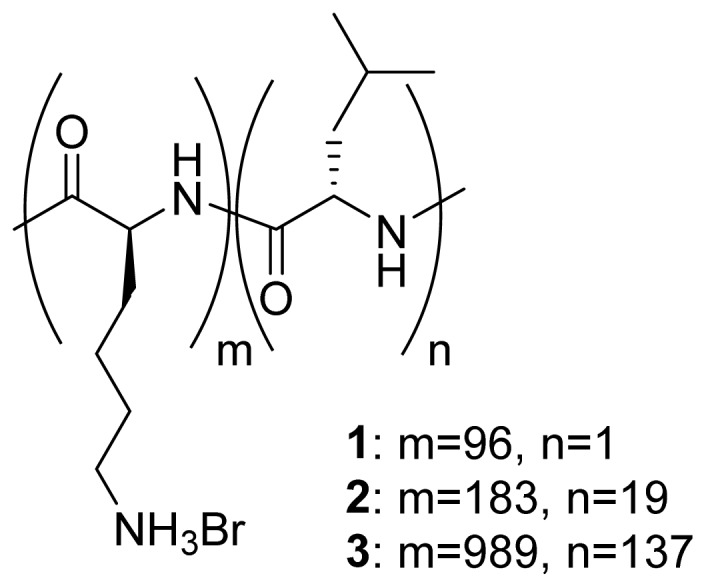
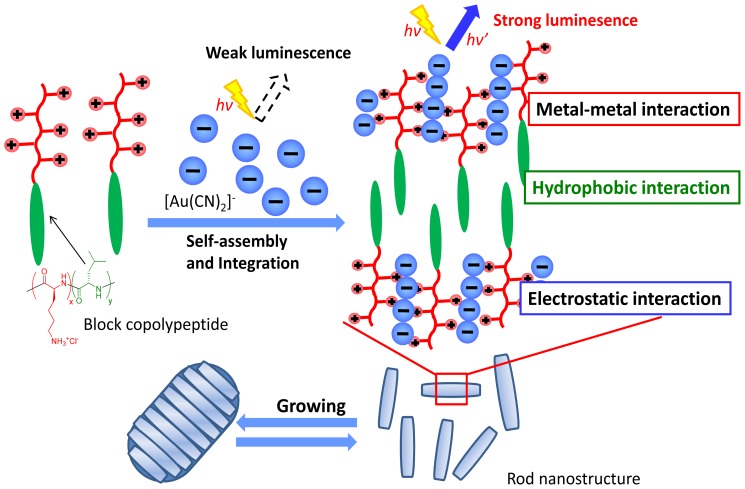
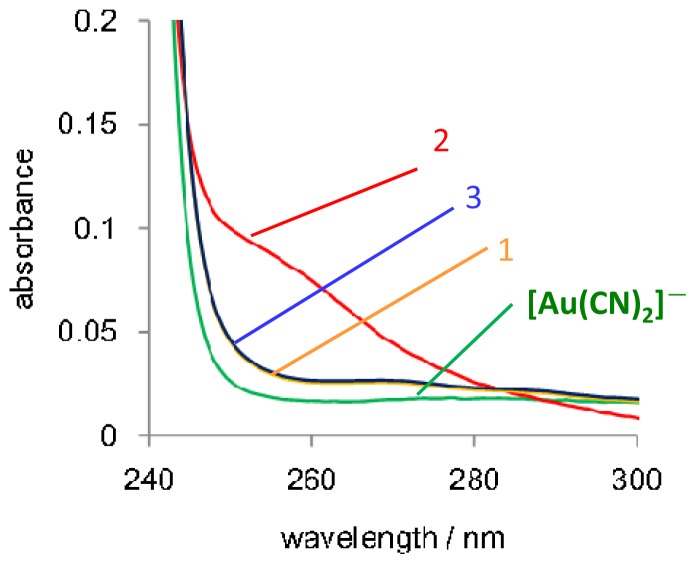
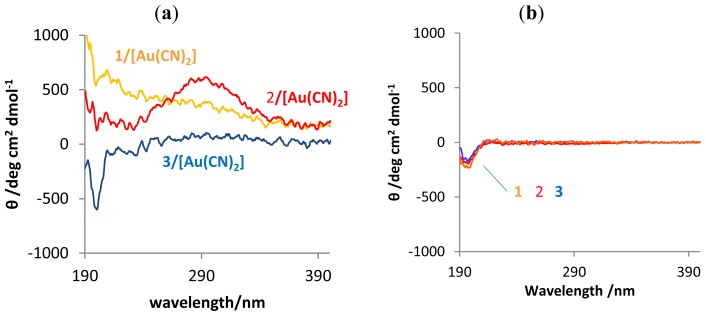
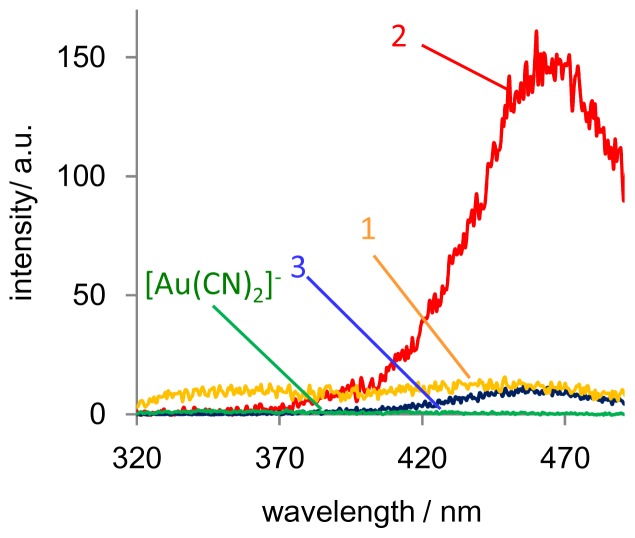
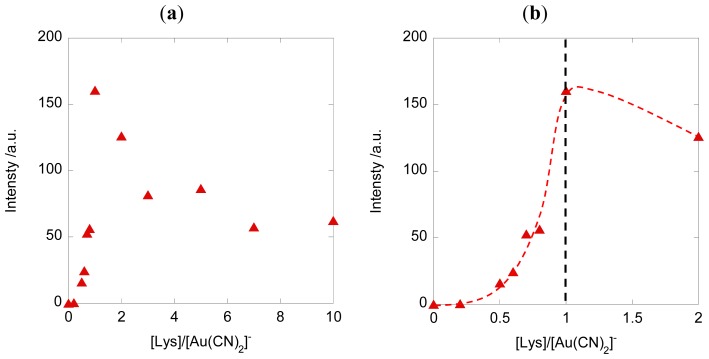
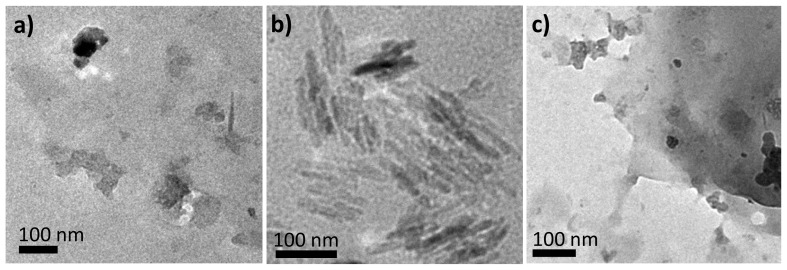
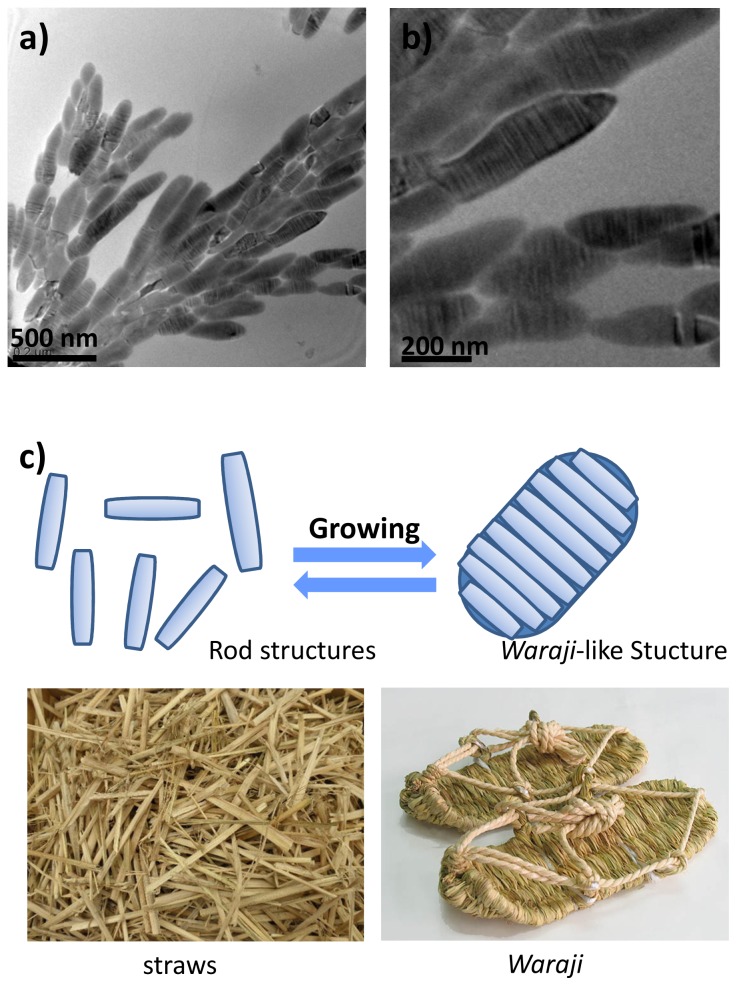
The integration of discrete metal complexes has been attracting significant interest due to the potential of these materials for soft metal-metal interactions and supramolecular assembly. Additionally, block copolypeptide amphiphiles have been investigated concerning their capacity for self-assembly into structures such as nanoparticles, nanosheets and nanofibers. In this study, we combined these two concepts by investigating the self-assembly of discrete metal complexes in aqueous solution using block copolypeptides. Normally, discrete metal complexes such as [Au(CN)(2)]-, when molecularly dispersed in water, cannot interact with one another. Our results demonstrated, however, that the addition of block copolypeptide amphiphiles such as K(183)L(19) to [Au(CN)(2)]- solutions induced one-dimensional integration of the discrete metal complex, resulting in photoluminescence originating from multinuclear complexes with metal-metal interactions. Transmission electron microscopy (TEM) showed a fibrous nanostructure with lengths and widths of approximately 100 and 20 nm, respectively, which grew to form advanced nanoarchitectures, including those resembling the weave patterns of Waraji (traditional Japanese straw sandals). This concept of combining block copolypeptide amphiphiles with discrete coordination compounds allows the design of flexible and functional supramolecular coordination systems in water.
离散金属配合物的整合因其在软金属-金属相互作用和超分子组装方面的潜力而备受关注。此外,嵌段共多肽两亲物因其自组装成纳米颗粒、纳米片和纳米纤维等结构的能力而受到研究。在本研究中,我们通过使用嵌段共多肽研究离散金属配合物在水溶液中的自组装,将这两个概念结合起来。通常,像[Au(CN)(2)]-这样的离散金属配合物,当分子分散在水中时,彼此之间不会相互作用。然而,我们的结果表明,向[Au(CN)(2)]-溶液中加入嵌段共多肽两亲物,如K(183)L(19),会诱导离散金属配合物的一维整合,从而产生源于具有金属-金属相互作用的多核配合物的光致发光。透射电子显微镜(TEM)显示出一种纤维状纳米结构,其长度和宽度分别约为100和20纳米,这些纳米结构生长形成了高级纳米结构,包括类似日本传统草鞋(和纸)编织图案的结构。将嵌段共多肽两亲物与离散配位化合物相结合的这一概念,使得在水中设计灵活且功能性的超分子配位系统成为可能。