School of Informatics and Computing, Indiana University, Bloomington, IN 47408, USA.
BMC Evol Biol. 2013 Jan 22;13:16. doi: 10.1186/1471-2148-13-16.
Integron systems are now recognized as important agents of bacterial evolution and are prevalent in most environments. One of the human pathogens known to harbor chromosomal integrons, the Treponema spirochetes are the only clade among spirochete species found to carry integrons. With the recent release of many new Treponema genomes, we were able to study the distribution of chromosomal integrons in this genus.
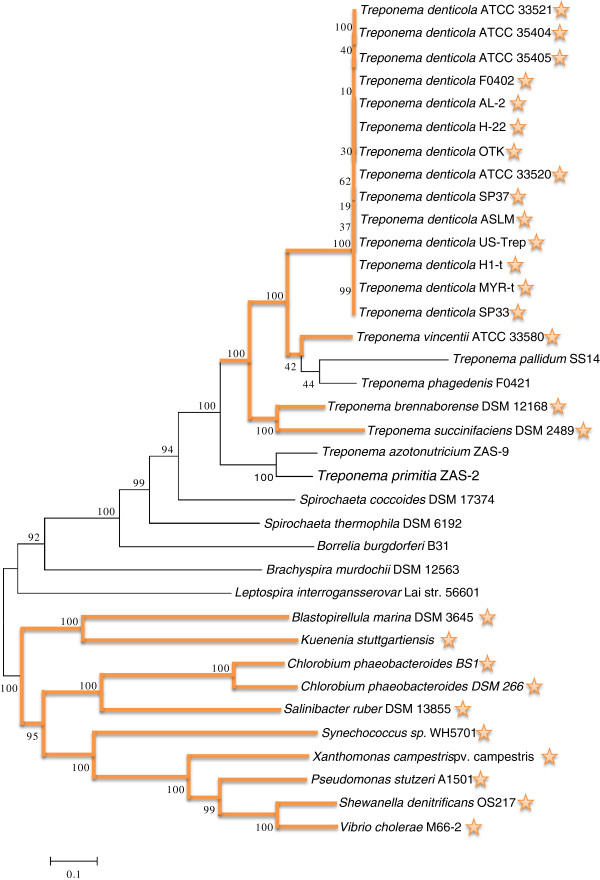
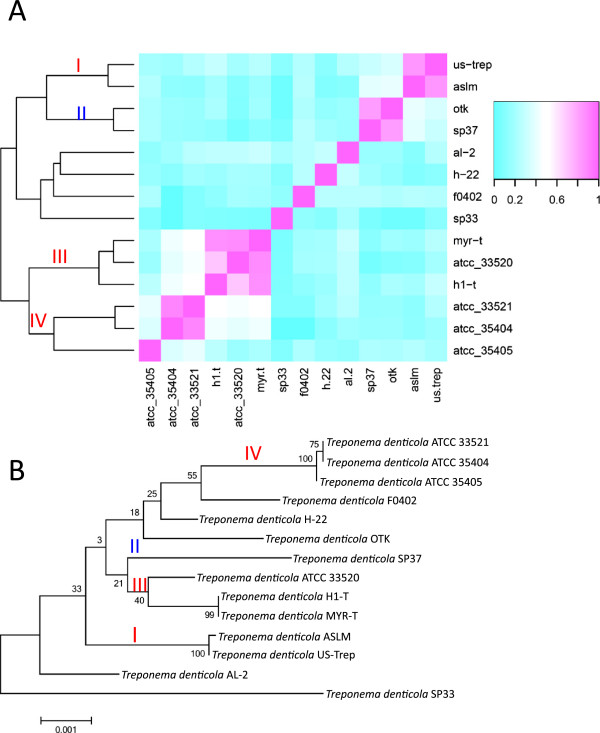
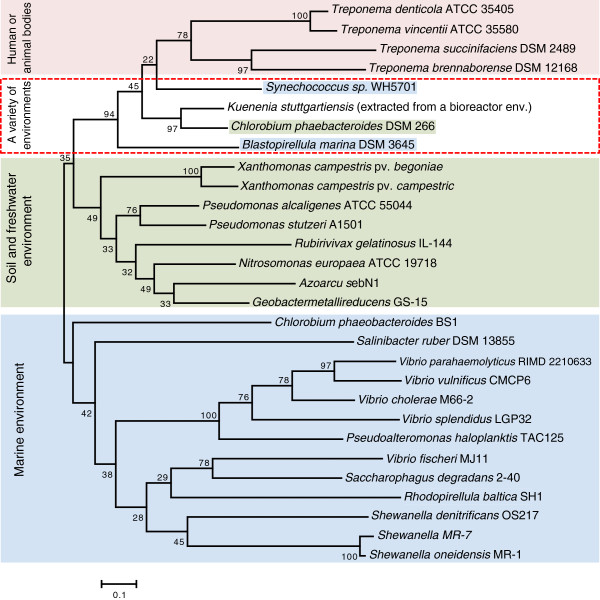
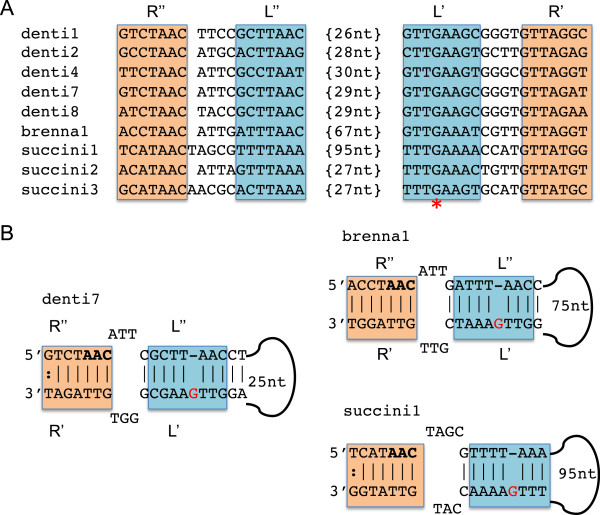
We find that the Treponema spirochetes implicated in human periodontal diseases and those isolated from cow and swine intestines contain chromosomal integrons, but not the Treponema species isolated from termite guts. By examining the species tree of selected spirochetes (based on 31 phylogenetic marker genes) and the phylogenetic tree of predicted integron integrases, and assisted by our analysis of predicted integron recombination sites, we found that all integron systems identified in Treponema spirochetes are likely to have evolved from a common ancestor--a horizontal gain into the clade. Subsequent to this event, the integron system was lost in the branch leading to the speciation of T. pallidum and T. phagedenis (the Treponema sps. implicated in sexually transmitted diseases). We also find that the lengths of the integron attC sites shortened through Treponema speciation, and that the integron gene cassettes of T. denticola are highly strain specific.
This is the first comprehensive study to characterize the chromosomal integron systems in Treponema species. By characterizing integron distribution and cassette contents in the Treponema sps., we link the integrons to the speciation of the various species, especially to the pathogens T. pallidum and T. phagedenis.
整合子系统现在被认为是细菌进化的重要因素,存在于大多数环境中。已知携带染色体整合子的人类病原体之一是螺旋体属细菌,是唯一携带整合子的螺旋体物种。随着最近许多新的密螺旋体基因组的发布,我们能够研究该属中染色体整合子的分布。
我们发现,与人类牙周病有关的螺旋体属细菌以及从牛和猪肠道中分离出的螺旋体属细菌含有染色体整合子,但从白蚁肠道中分离出的螺旋体属细菌则没有。通过检查选定螺旋体(基于 31 个系统发育标记基因)的种系发生树和预测整合子整合酶的系统发育树,并通过对预测整合子重组位点的分析,我们发现,螺旋体属细菌中鉴定的所有整合子系统都可能是从一个共同的祖先进化而来的——一种水平获得的进化。在此事件之后,整合子系统在导致梅毒螺旋体和密螺旋体属(与性传播疾病有关的螺旋体属)特化的分支中丢失。我们还发现,整合子 attC 位点的长度通过螺旋体属的特化而缩短,并且齿密螺旋体的整合子基因盒具有高度的菌株特异性。
这是首次对密螺旋体属的染色体整合子系统进行全面描述的研究。通过对密螺旋体属中整合子的分布和盒内容进行描述,我们将整合子与各种物种的特化联系起来,特别是与梅毒螺旋体和密螺旋体属病原体联系起来。