Department of Thoracic Surgery, the Affiliated Hospital of Medical College Qingdao University, 19 Jiangsu Road, Qingdao, Shandong, 266001, China.
World J Surg Oncol. 2013 Jan 22;11:12. doi: 10.1186/1477-7819-11-12.
The role of tumor necrosis factor alpha (TNF-α) in cancer is complex with both apoptotic and anti-apoptotic roles proposed. However the mechanism is not clear. In the study, we designed to investigate the effect of TNF-α on the activation and expression of nuclear factor kappa B (NF-κB)/p65/SLUG/PUMA/Bcl-2 levels in human lung cancer A549 cell line, and in conditions of TNF-α-induced apoptosis.
We have engineered three A549 cell lines that were transiently transfected with PUMA siRNA, SLUG siRNA and Bcl-2 siRNA, respectively. We have measured the in vitro effects of siRNA on apoptosis, and sensitivity to 20 ng/ml of TNF-α treatment for 24-48 h.
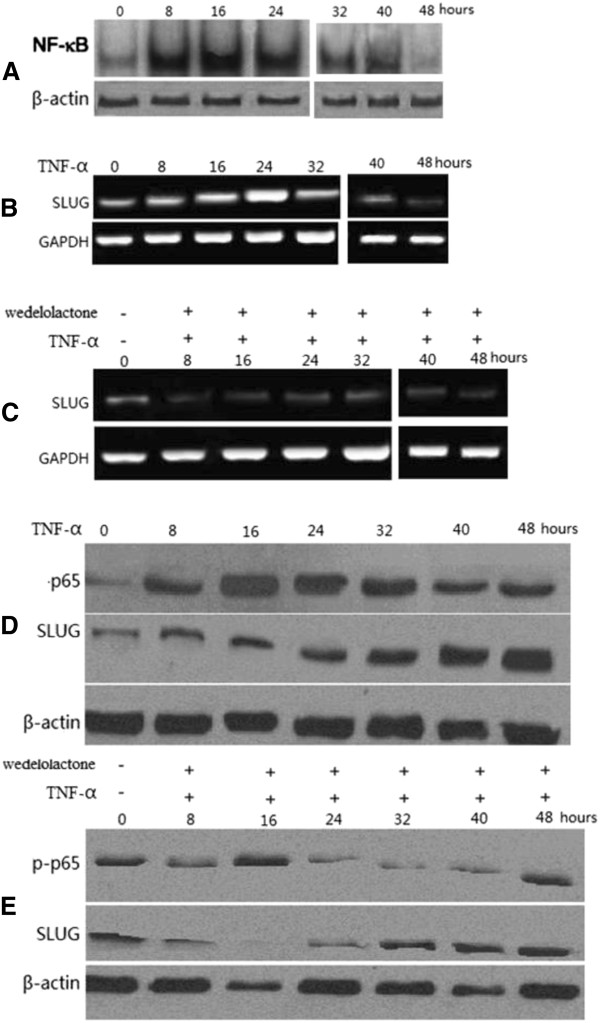
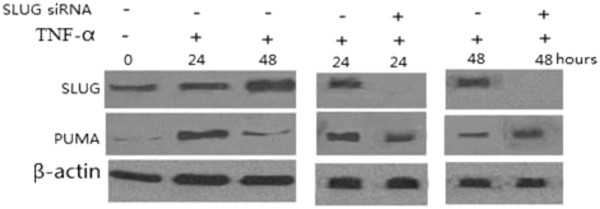
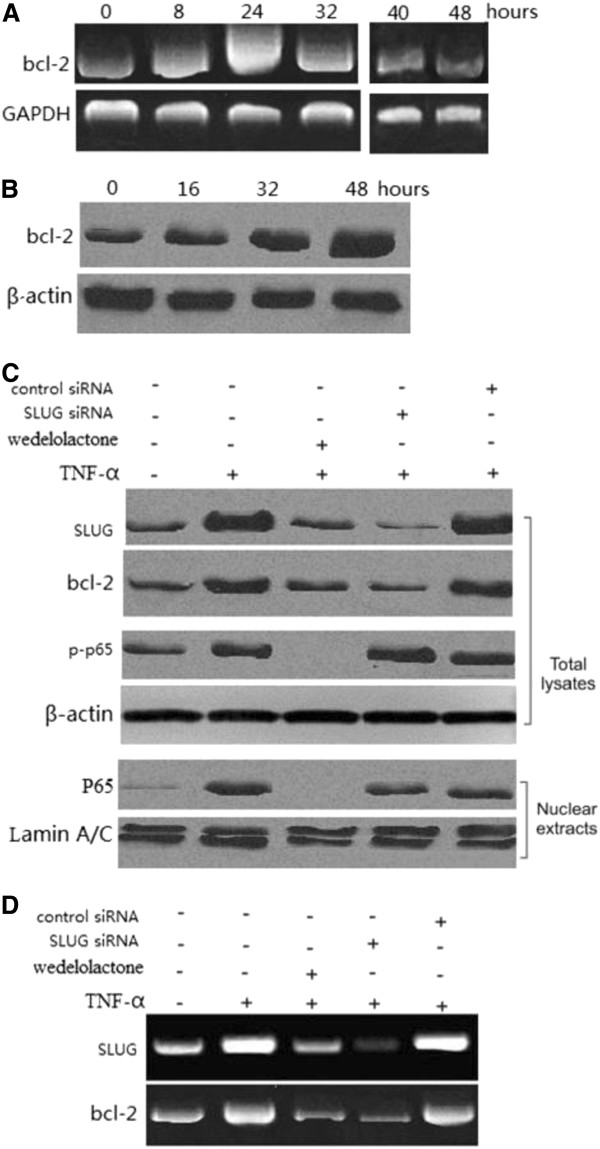
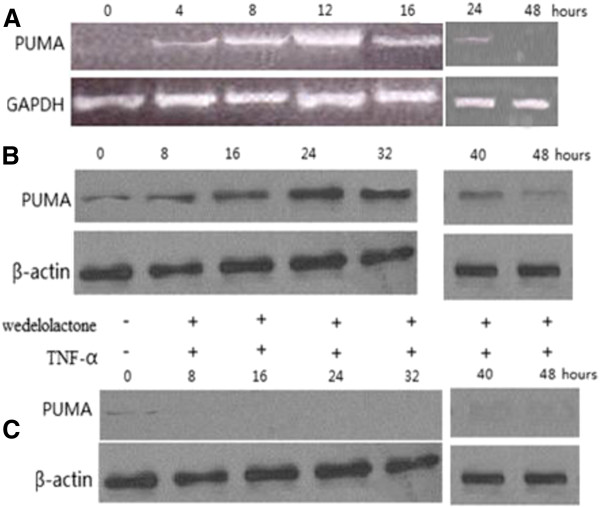
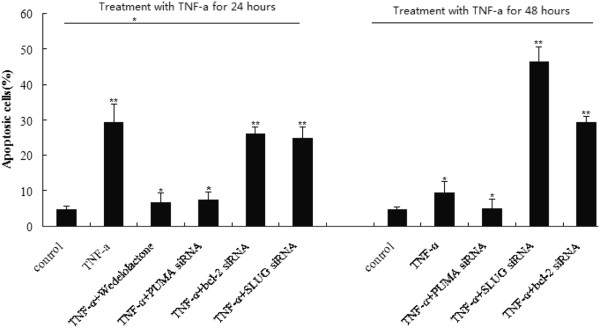
We found the NF-κB activity and PUMA mRNA/protein was significantly increased after treatment of TNF-α for 24 h in untreated A549 cells, and led to a significant increase in TNF-α-induced apoptosis, no significant increase of SLUG and Bcl-2 level was shown. However, after treatment of TNF-α for 48 h in untreated A549 cells, SLUG and Bcl-2 level was significant increased, and PUMA level was significant decreased, and TNF-α-induced apoptosis was significantly decreased compared to the apoptosis level after treatment of TNF-α for 24 h. Inhibition of the NF-κB activity could effectively decrease the PUMA level and increase the SLUG and Bcl-2 level. PUMA silencing by siRNA led to a significant decrease in TNF-α-induced apoptosis after treatment of TNF-α for 24 h. Bcl-2 and SLUG silencing by siRNA led to a significant increase in TNF-α-induced apoptosis for 48 h. Furthermore, SLUG silencing increased PUMA level and decreased Bcl-2 level.
The findings suggested that TNF-α treatment promoted apoptosis via the NF-κB-dependent PUMA pathway. The anti-apoptotic role of TNF-α was via NF-κB-dependent SLUG and Bcl-2 pathway at a later time.
肿瘤坏死因子-α(TNF-α)在癌症中的作用复杂,既有凋亡作用,也有抗凋亡作用。然而,其机制尚不清楚。在这项研究中,我们设计了研究 TNF-α对人肺癌 A549 细胞系中核因子 kappa B(NF-κB)/p65/SLUG/PUMA/Bcl-2 水平的激活和表达的影响,以及 TNF-α诱导细胞凋亡的情况下。
我们构建了三个 A549 细胞系,分别瞬时转染了 PUMA siRNA、SLUG siRNA 和 Bcl-2 siRNA。我们测量了 siRNA 对细胞凋亡的体外影响,以及对 20ng/ml TNF-α处理 24-48 小时的敏感性。
我们发现,未经处理的 A549 细胞经 TNF-α处理 24 小时后,NF-κB 活性和 PUMA mRNA/蛋白显著增加,导致 TNF-α诱导的细胞凋亡显著增加,SLUG 和 Bcl-2 水平无明显增加。然而,未经处理的 A549 细胞经 TNF-α处理 48 小时后,SLUG 和 Bcl-2 水平显著增加,PUMA 水平显著降低,与 TNF-α处理 24 小时后的凋亡水平相比,TNF-α诱导的细胞凋亡显著降低。抑制 NF-κB 活性可有效降低 PUMA 水平,增加 SLUG 和 Bcl-2 水平。PUMA 沉默 siRNA 可显著降低 TNF-α处理 24 小时后的 TNF-α诱导的细胞凋亡。Bcl-2 和 SLUG 沉默 siRNA 可显著增加 48 小时的 TNF-α诱导的细胞凋亡。此外,SLUG 沉默增加了 PUMA 水平,降低了 Bcl-2 水平。
研究结果表明,TNF-α 治疗通过 NF-κB 依赖性 PUMA 途径促进细胞凋亡。TNF-α 的抗凋亡作用是通过 NF-κB 依赖性 SLUG 和 Bcl-2 途径在稍后时间发挥作用的。