Varga Dominic, Deniz Miriam, Schwentner Lukas, Wiesmüller Lisa
Department of Gynecology and Obstetrics, University Ulm, Germany, Prittwitzstraße 43, 89075 Ulm, Germany.
Int J Mol Sci. 2013 Jan 4;14(1):640-73. doi: 10.3390/ijms14010640.
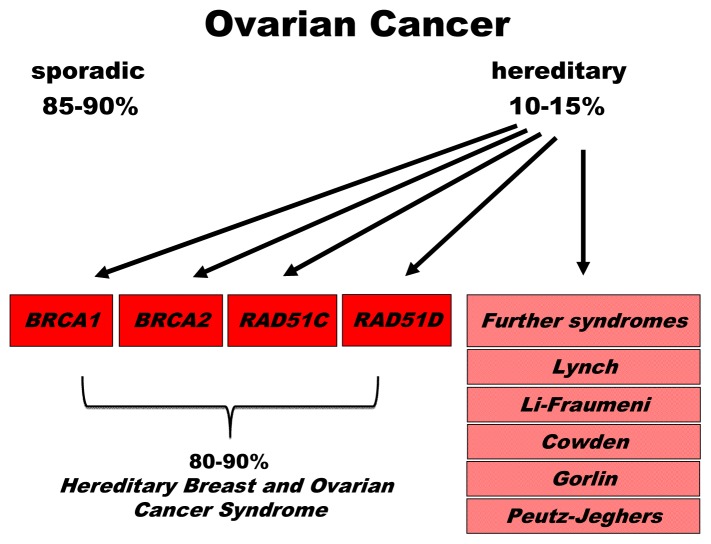
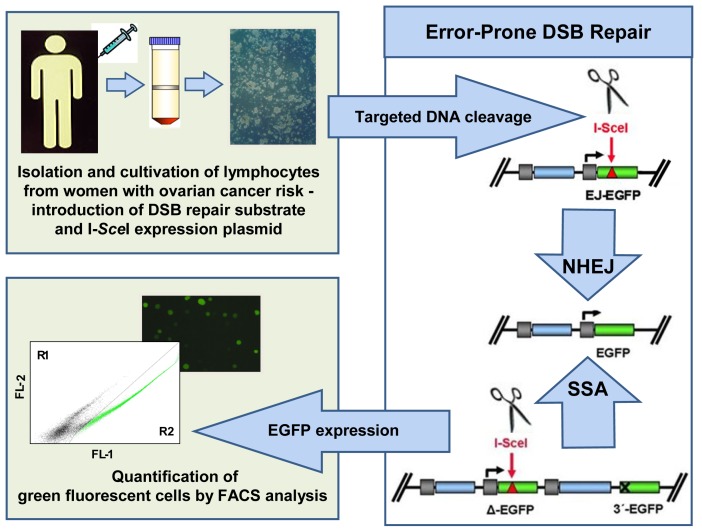
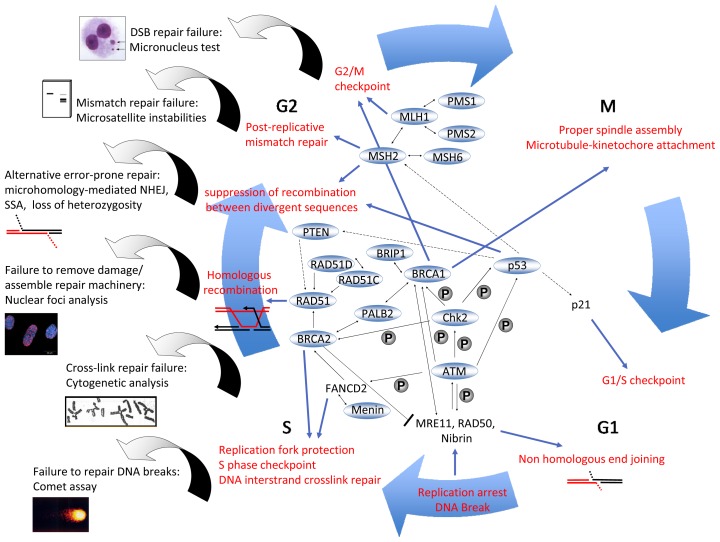
Ovarian cancer is the fifth most common female cancer in the Western world, and the deadliest gynecological malignancy. The overall poor prognosis for ovarian cancer patients is a consequence of aggressive biological behavior and a lack of adequate diagnostic tools for early detection. In fact, approximately 70% of all patients with epithelial ovarian cancer are diagnosed at advanced tumor stages. These facts highlight a significant clinical need for reliable and accurate detection methods for ovarian cancer, especially for patients at high risk. Because CA125 has not achieved satisfactory sensitivity and specificity in detecting ovarian cancer, numerous efforts, including those based on single and combined molecule detection and "omics" approaches, have been made to identify new biomarkers. Intriguingly, more than 10% of all ovarian cancer cases are of familial origin. BRCA1 and BRCA2 germline mutations are the most common genetic defects underlying hereditary ovarian cancer, which is why ovarian cancer risk assessment in developed countries, aside from pedigree analysis, relies on genetic testing of BRCA1 and BRCA2. Because not only BRCA1 and BRCA2 but also other susceptibility genes are tightly linked with ovarian cancer-specific DNA repair defects, another possible approach for defining susceptibility might be patient cell-based functional testing, a concept for which support came from a recent case-control study. This principle would be applicable to risk assessment and the prediction of responsiveness to conventional regimens involving platinum-based drugs and targeted therapies involving poly (ADP-ribose) polymerase (PARP) inhibitors.
卵巢癌是西方世界第五大常见的女性癌症,也是最致命的妇科恶性肿瘤。卵巢癌患者总体预后较差,这是其侵袭性生物学行为以及缺乏足够的早期诊断工具所致。事实上,约70%的上皮性卵巢癌患者在肿瘤晚期才被诊断出来。这些事实凸显了临床上对可靠、准确的卵巢癌检测方法的迫切需求,尤其是针对高危患者。由于CA125在检测卵巢癌时未达到令人满意的敏感性和特异性,人们已经做出了许多努力,包括基于单一和联合分子检测以及“组学”方法来寻找新的生物标志物。有趣的是,所有卵巢癌病例中有超过10%是家族性起源。BRCA1和BRCA2种系突变是遗传性卵巢癌最常见的遗传缺陷,这就是为什么在发达国家,除了系谱分析外,卵巢癌风险评估还依赖于BRCA1和BRCA2的基因检测。因为不仅BRCA1和BRCA2,其他易感基因也与卵巢癌特异性DNA修复缺陷紧密相关,另一种确定易感性的可能方法可能是基于患者细胞的功能测试,这一概念得到了最近一项病例对照研究的支持。这一原则将适用于风险评估以及对涉及铂类药物的传统治疗方案和涉及聚(ADP - 核糖)聚合酶(PARP)抑制剂的靶向治疗反应性的预测。