Department of Emergency Medicine, Tongji Hospital, Tongji Medical College, Huazhong University of Science and Technology, 1095 Jiefang Avenue, Wuhan 430030, Hubei, China.
Molecules. 2013 Jan 17;18(1):1214-26. doi: 10.3390/molecules18011214.
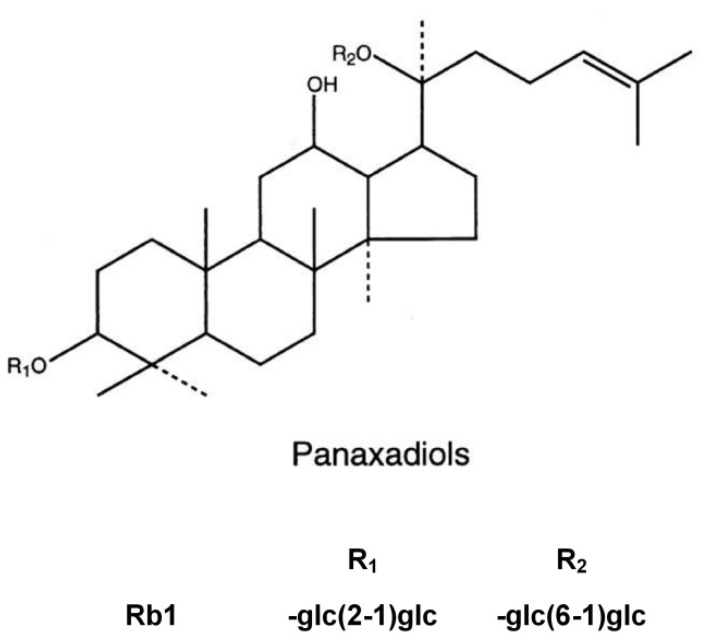
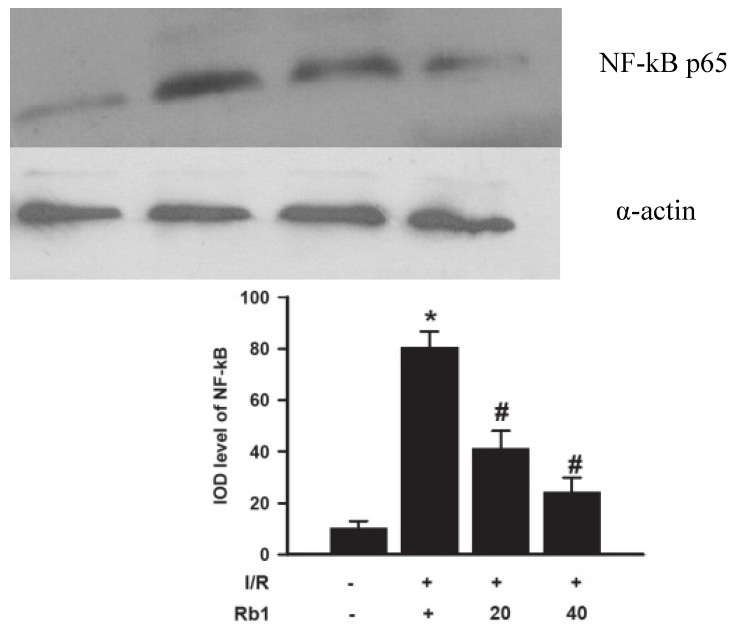
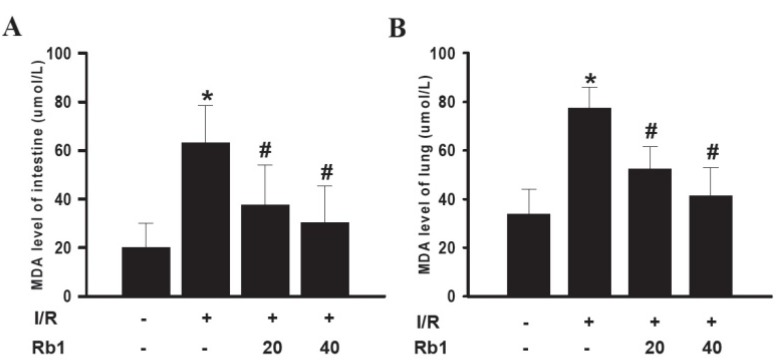
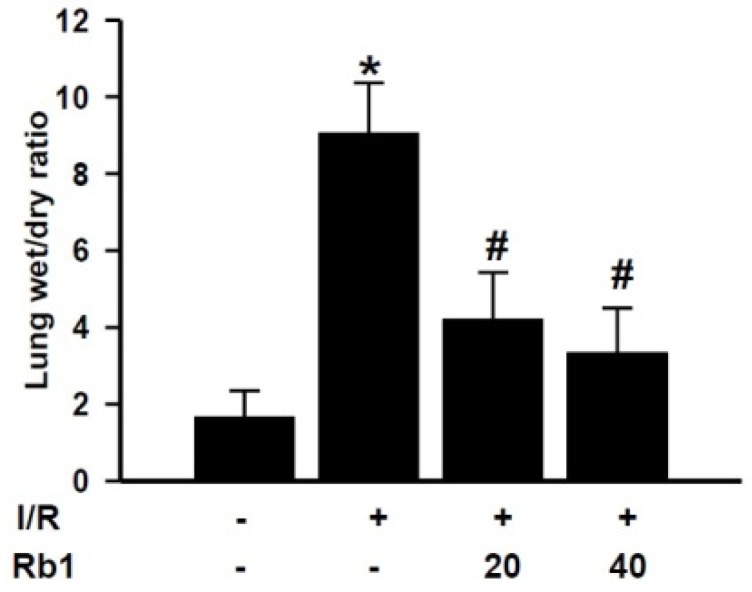
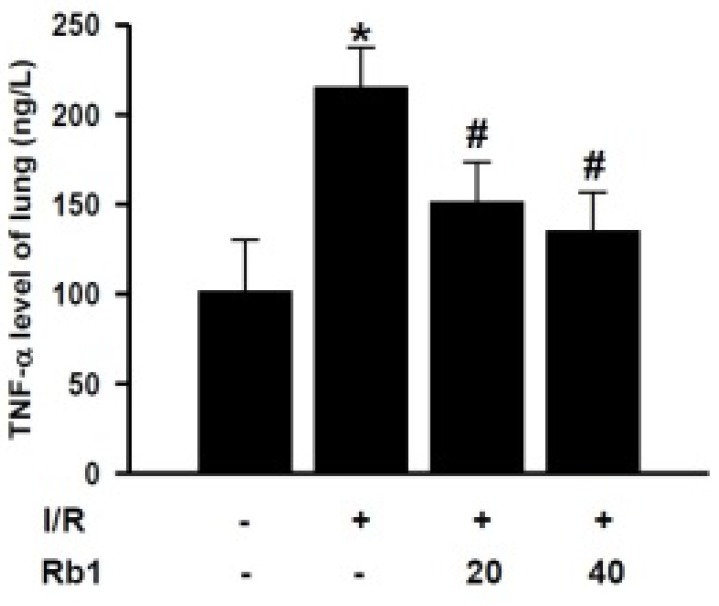
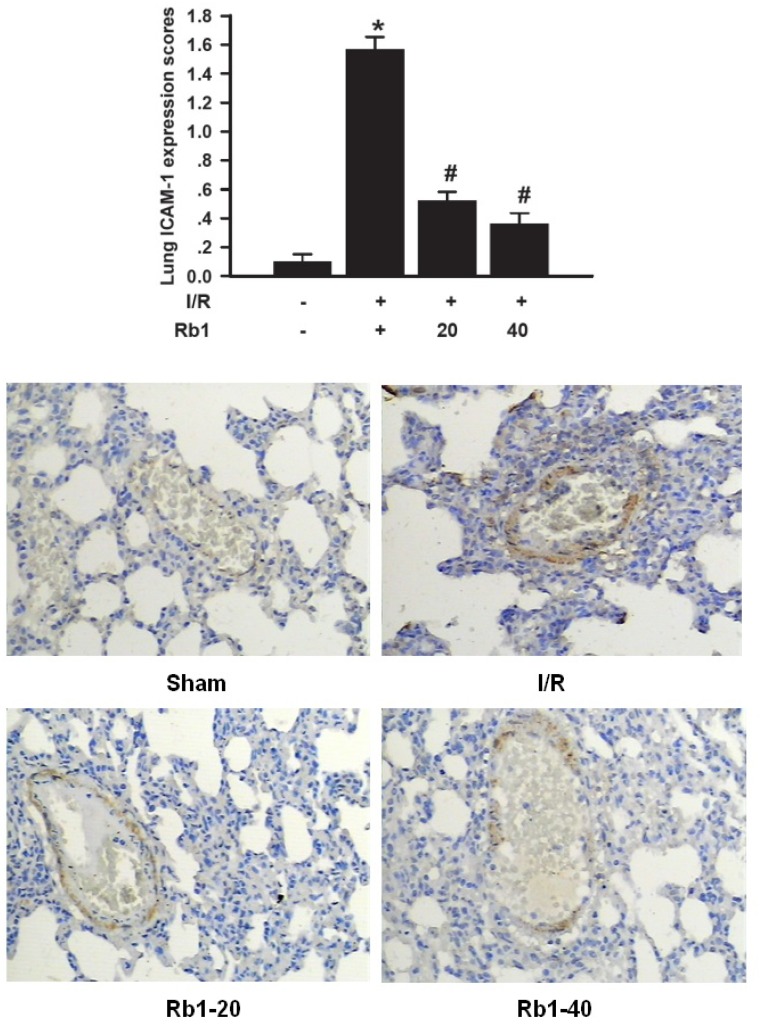
Intestinal ischemia-reperfusion (I/R) is a critical event in the pathogenesis of multiple organ dysfunction syndromes (MODS). The lungs are some of the most vulnerable organs that are impacted by intestinal I/R. The aim of this study is to investigate whether ginsenoside Rb1 can ameliorate remote lung injury induced by intestinal I/R. Adult male Wistar rats were randomly divided into four groups: (1) a control, sham-operated group (sham group); (2) an intestinal I/R group subjected to 1 h intestinal ischemia and 2 h reperfusion (I/R group); (3) a group treated with 20 mg/kg ginsenoside Rb1 before reperfusion (Rb1-20 group); and (4) a group treated with 40 mg/kg ginsenoside Rb1 before reperfusion (Rb1-40 group). Intestinal and lung histology was observed. The malondialdehyde (MDA) levels in intestinal tissues were measured. Myeloperoxidase (MPO), TNF-α, MDA levels, wet/dry weight ratio and immunohistochemical expression of intracellular adhesion molecule-1 (ICAM-1) in lung tissues were assayed. In addition, a western blot of lung NF-kB was performed. Results indicated that intestinal I/R induced intestinal and lung injury, which was characterized by increase of MDA levels and pathological scores in intestinal tissues and MPO, TNF-α , MDA levels, wet/dry weight ratio and ICAM-1, NF-kB expression in the lung tissues. Ginsenoside Rb1 (20, 40 mg/kg) ameliorated intestinal and lung injury, decreased MPO, TNF-α, MDA levels, wet/dry weight ratio, ICAM-1 and NF-kB expression in lung tissues. In conclusion, ginsenoside Rb1 ameliorated the lung injuries by decreasing the NF-kB activation-induced inflammatory response.
肠缺血再灌注(I/R)是多器官功能障碍综合征(MODS)发病机制中的一个关键事件。肺部是受肠 I/R 影响最脆弱的器官之一。本研究旨在探讨人参皂苷 Rb1 是否可以改善肠 I/R 引起的远隔肺损伤。成年雄性 Wistar 大鼠随机分为四组:(1)对照组,假手术组(假手术组);(2)肠缺血 1 小时和再灌注 2 小时的肠 I/R 组(I/R 组);(3)再灌注前给予 20mg/kg 人参皂苷 Rb1 的组(Rb1-20 组);和(4)再灌注前给予 40mg/kg 人参皂苷 Rb1 的组(Rb1-40 组)。观察肠和肺组织学变化。测量肠组织丙二醛(MDA)水平。测定肺组织髓过氧化物酶(MPO)、TNF-α、MDA 水平、湿/干重比和细胞间黏附分子-1(ICAM-1)的免疫组织化学表达。此外,还进行了肺 NF-kB 的 Western blot。结果表明,肠 I/R 引起肠和肺损伤,其特征是肠组织 MDA 水平和病理评分升高,肺组织 MPO、TNF-α、MDA 水平、湿/干重比和 ICAM-1、NF-kB 表达增加。人参皂苷 Rb1(20、40mg/kg)改善了肠和肺损伤,降低了肺组织 MPO、TNF-α、MDA 水平、湿/干重比、ICAM-1 和 NF-kB 表达。结论:人参皂苷 Rb1 通过降低 NF-kB 激活诱导的炎症反应改善了肺损伤。