Department of Breast Surgery, The Third Affiliated Hospital of Harbin Medical University, Harbin, Heilongjiang, China.
PLoS One. 2013;8(1):e53931. doi: 10.1371/journal.pone.0053931. Epub 2013 Jan 21.
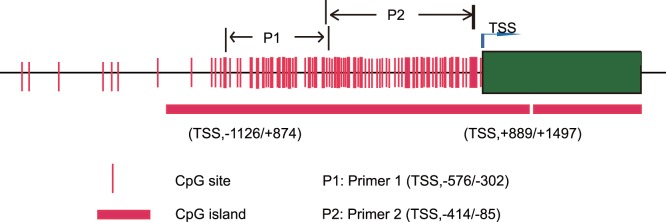
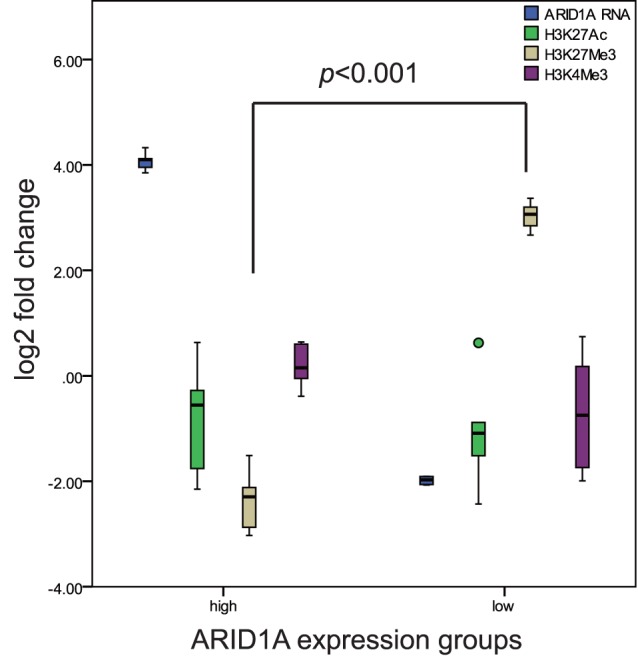
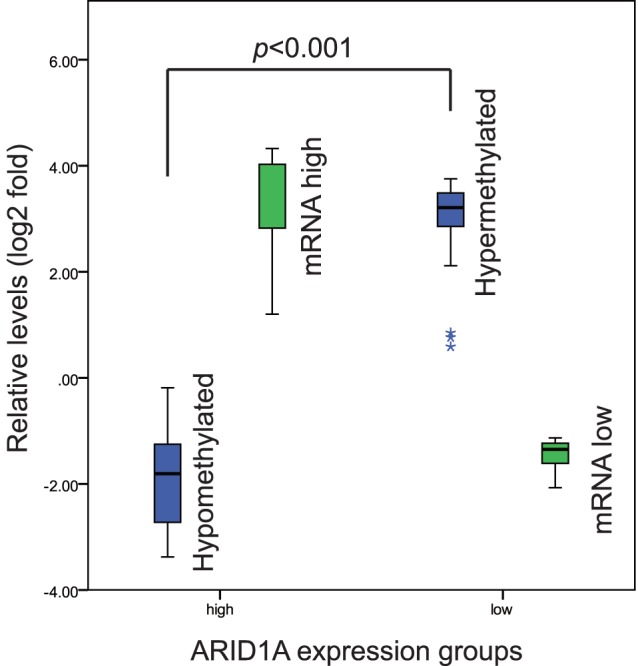
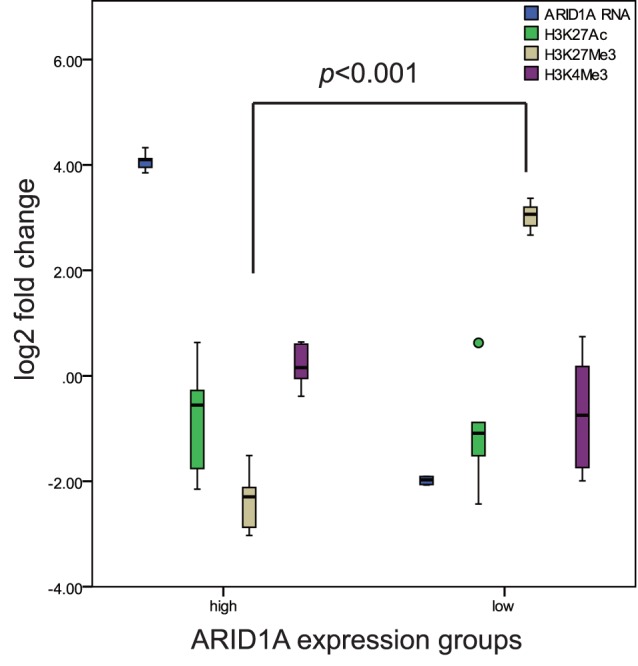
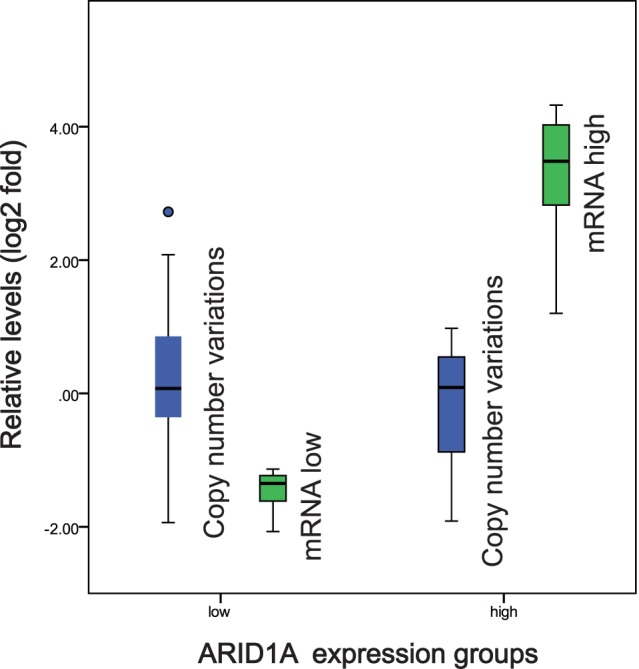
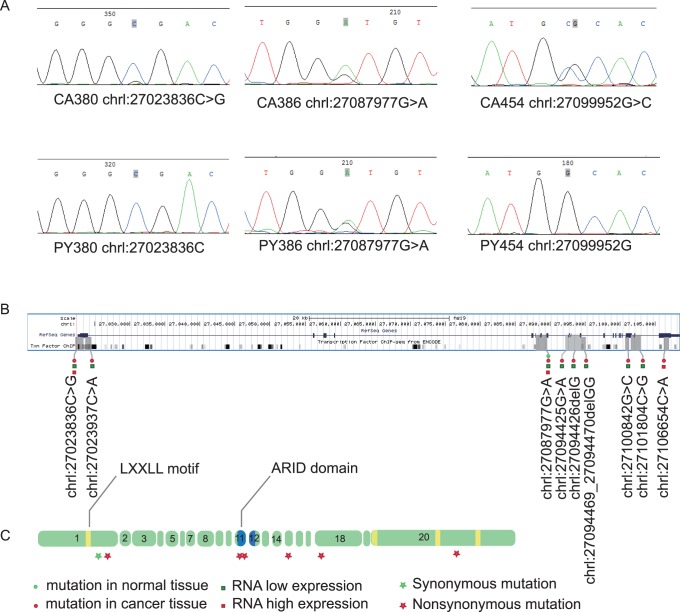
ARID1A (AT-rich interactive domain 1A) has recently been identified as a tumor suppressor gene. Its mRNA expression is significantly low in many breast cancers; this is often associated with more aggressive phenotypes. However, the underlying molecular mechanism for its low expression has not been fully understood. This study was undertaken to evaluate the contribution of gene copy number variation, mutations, promoter methylation and histone modification to ARID1A's low expression. 38 pairs of breast invasive ductal carcinomas and their normal breast tissue counterparts from the same patients were randomly selected for gene expression and copy number variation detection. Promoter methylation and histone modification levels were evaluated by MeDIP-qPCR and ChIP-qPCR, respectively. PCR product Sanger sequencing was carried out to detect the exon mutation rate. Twenty-two out of 38 invasive ductal carcinomas in the study (57.9%) revealed ARID1A mRNA low expression by realtime RT-PCR. The relative promoter methylation level was, significantly higher in ARID1A mRNA low expression group compared with its high expression group (p<0.001). In the low expression group, nineteen out of 22 invasive ductal carcinomas (86.4%) exhibited ARID1A promoter hypermthylation. In addition, the promoter hypermethylation was accompanied with repressive histone modification (H3K27Me3). Although five out of 38 invasive ductal carcinomas (13.2%) exhibited loss of ARID1A gene copy number by realtime PCR and nine exon novel mutations are seen from eight out of 33 invasive ductal carcinomas (24.2%), there was no statistically significant difference in both ARID1A mRNA low and high expression groups (p=0.25,and p=0.68, respectively). We demonstrate that promoter hypermethylation was the main culprit for ARID1A mRNA low expression in invasive ductal carcinomas. The influence of mutation and copy number variation on the expression were statistically insignificant at mRNA level, and were, therefore, not considered the main causes for ARID1A mRNA low expression in invasive breast cancer.
ARID1A(富含 AT 的相互作用域 1A)最近被鉴定为一种肿瘤抑制基因。其 mRNA 在许多乳腺癌中表达明显降低;这通常与更具侵袭性的表型相关。然而,其低表达的潜在分子机制尚未完全理解。本研究旨在评估基因拷贝数变异、突变、启动子甲基化和组蛋白修饰对 ARID1A 低表达的贡献。随机选择 38 对来自同一患者的乳腺浸润性导管癌及其正常乳腺组织进行基因表达和拷贝数变异检测。通过 MeDIP-qPCR 和 ChIP-qPCR 分别评估启动子甲基化和组蛋白修饰水平。通过 PCR 产物 Sanger 测序检测外显子突变率。通过实时 RT-PCR 发现研究中的 38 例浸润性导管癌中有 22 例(57.9%)显示 ARID1A mRNA 低表达。与高表达组相比,ARID1A mRNA 低表达组的相对启动子甲基化水平显著升高(p<0.001)。在低表达组中,22 例浸润性导管癌中有 19 例(86.4%)表现出 ARID1A 启动子过度甲基化。此外,启动子过度甲基化伴随着抑制性组蛋白修饰(H3K27Me3)。尽管实时 PCR 显示 38 例浸润性导管癌中有 5 例(13.2%)表现出 ARID1A 基因拷贝数缺失,从 33 例浸润性导管癌中的 8 例(24.2%)中可见 9 个外显子新突变,但在 ARID1A mRNA 低表达和高表达组中均无统计学差异(p=0.25,p=0.68)。我们证明启动子过度甲基化是浸润性导管癌中 ARID1A mRNA 低表达的主要原因。突变和拷贝数变异对表达的影响在 mRNA 水平上无统计学意义,因此,不是浸润性乳腺癌中 ARID1A mRNA 低表达的主要原因。