Institute of Molecular Systems Biomedicine, China Medical University, Taichung, Taiwan, Republic of China.
PLoS One. 2013;8(1):e54485. doi: 10.1371/journal.pone.0054485. Epub 2013 Jan 22.
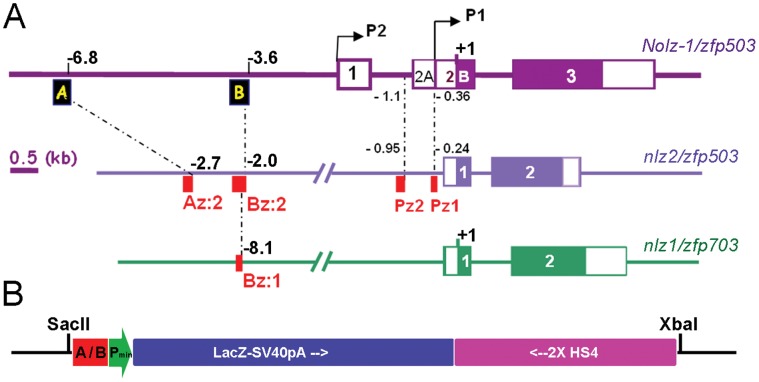
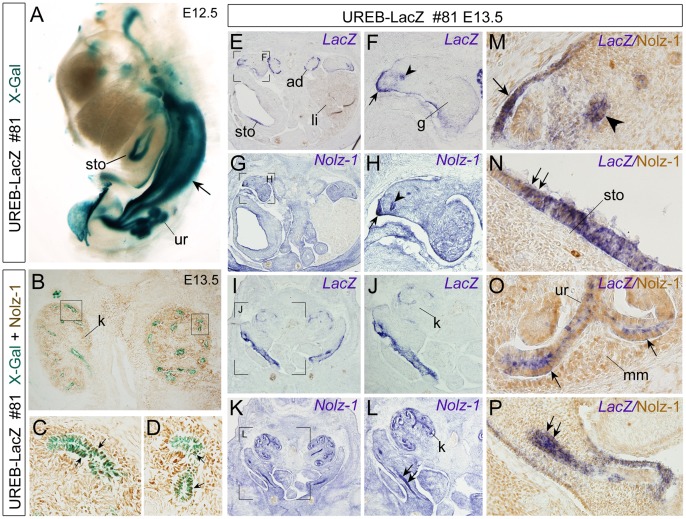
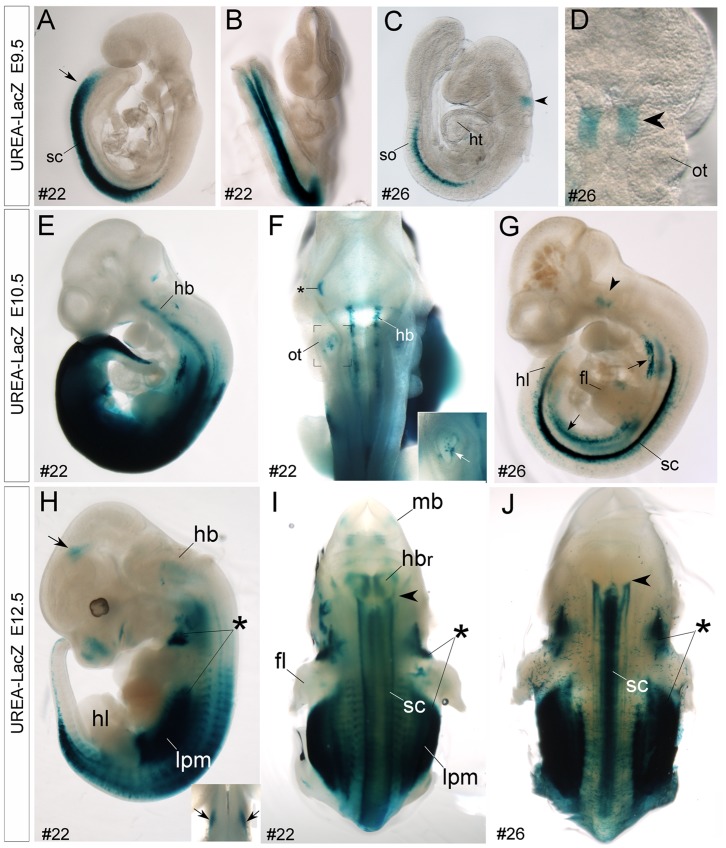
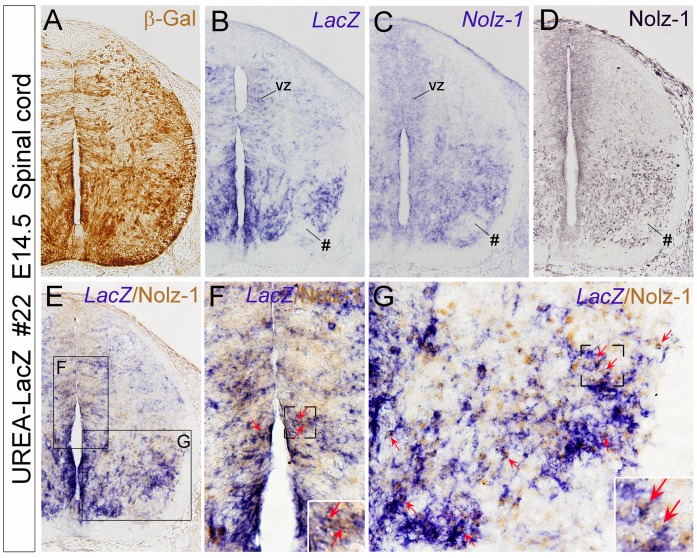
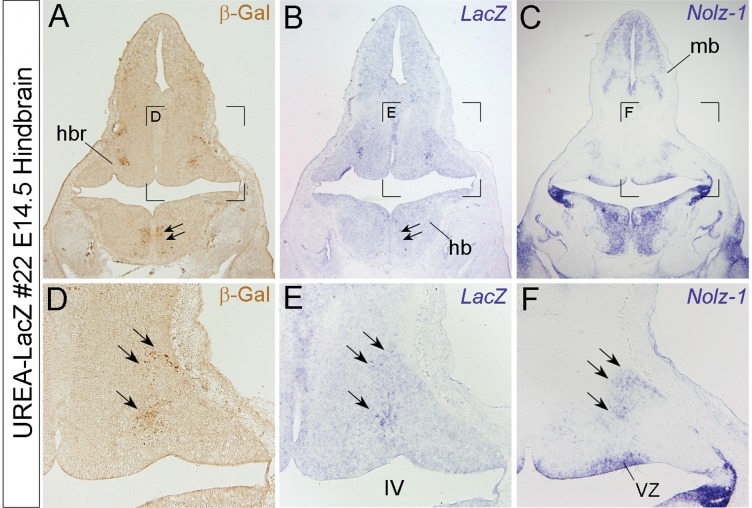
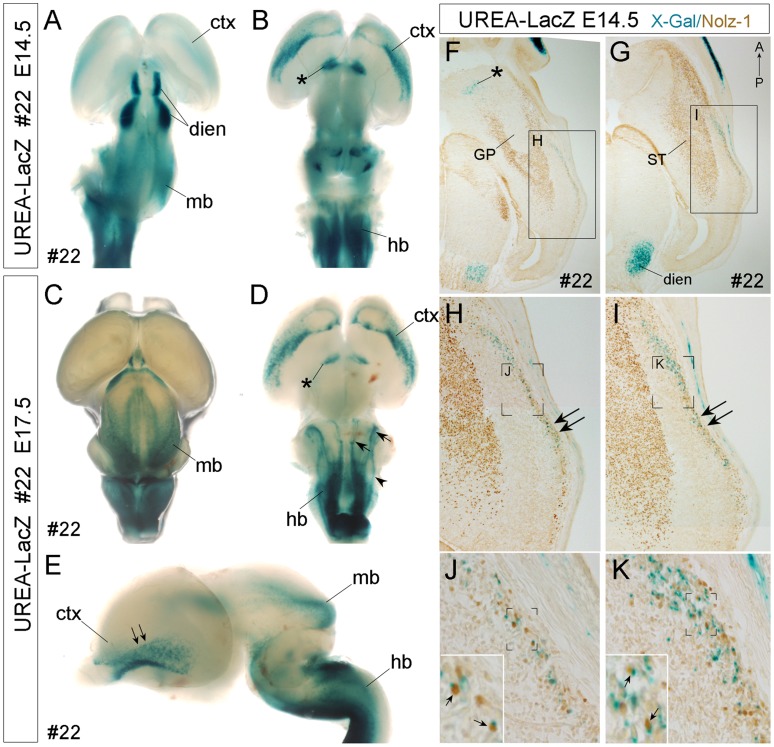
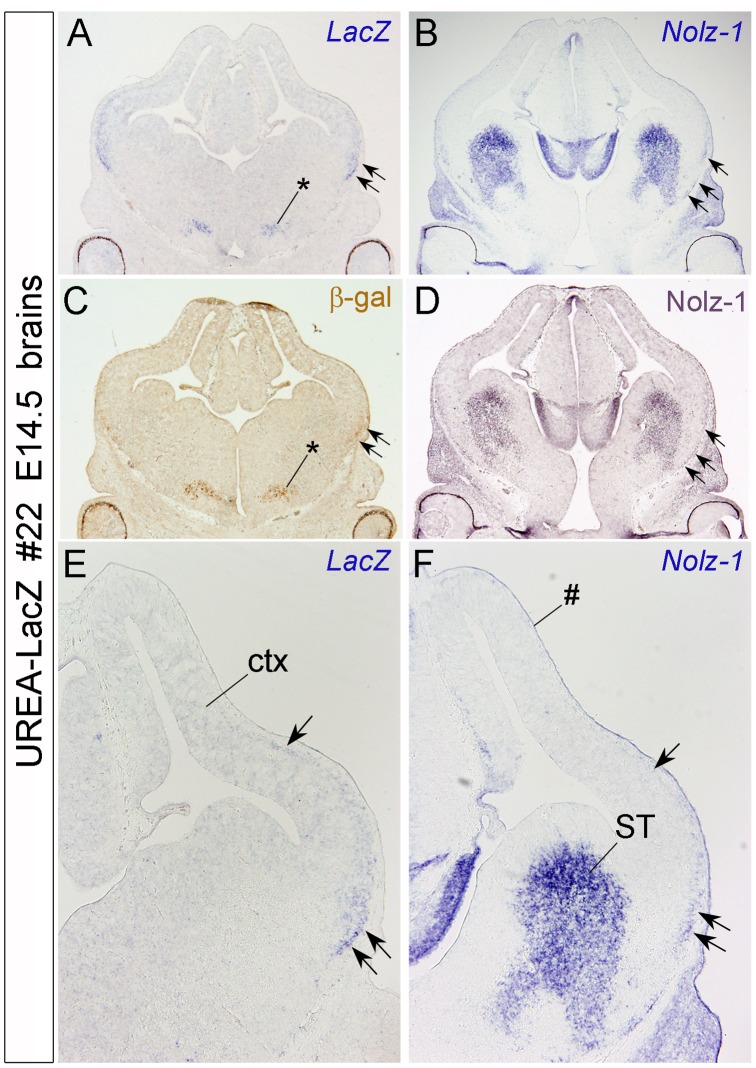
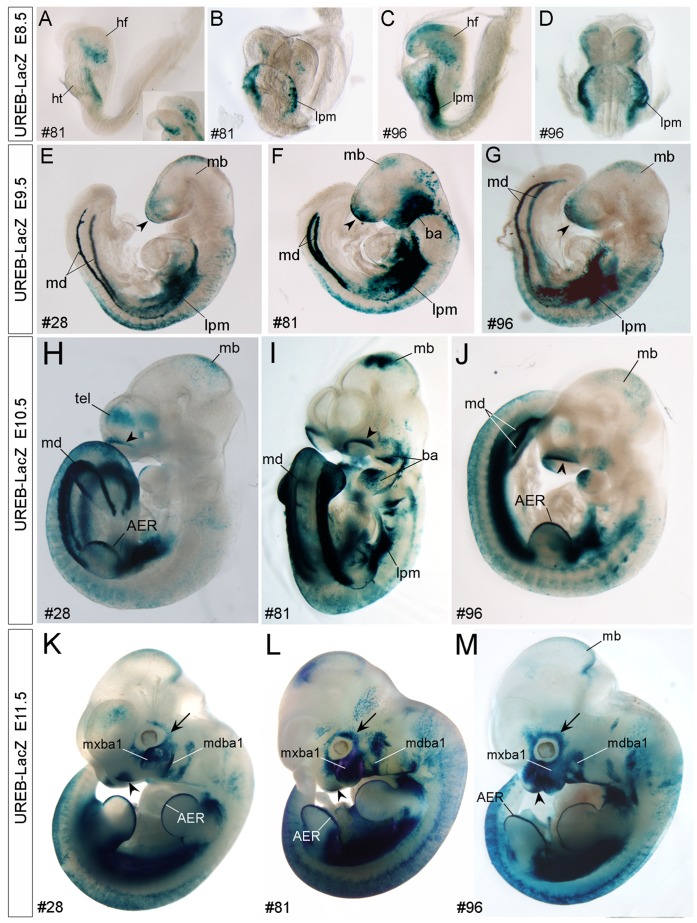
Proper development of vertebrate embryos depends not only on the crucial funtions of key evolutionarily conserved transcriptional regulators, but also on the precisely spatiotemporal expression of these transcriptional regulators. The mouse Nolz-1/Znf503/Zfp503 gene is a mammalian member of the conserved zinc-finger containing NET family. The expression pattern of Nolz-1 in mouse embryos is highly correlated with that of its homologues in different species. To study the spatiotemporal regulation of Nolz-1, we first identified two evolutionarily conserved cis-elements, UREA and UREB, in 5' upstream regions of mouse Nolz-1 locus. We then generated UREA-LacZ and UREB-LacZ transgenic reporter mice to characterize the putative enhancer activity of UREA and UREB. The results indicated that both UREA and UREB contained tissue-specific enhancer activity for directing LacZ expression in selective tissue organs during mouse embryogensis. UREA directed LacZ expression preferentially in selective regions of developing central nervous system, including the forebrain, hindbrain and spinal cord, whereas UREB directed LacZ expression mainly in other developing tissue organs such as the Nolz-1 expressing branchial arches and its derivatives, the apical ectodermal ridge of limb buds and the urogenital tissues. Both UREA and UREB directed strong LacZ expression in the lateral plate mesoderm where endogenous Nolz-1 was also expressed. Despite that the LacZ expression pattern did not full recapitulated the endogenous Nolz-1 expression and some mismatched expression patterns were observed, co-expression of LacZ and Nolz-1 did occur in many cells of selective tissue organs, such as in the ventrolateral cortex and ventral spinal cord of UREA-LacZ embryos, and the urogenital tubes of UREB-LacZ embryos. Taken together, our study suggests that UREA and UREB may function as evolutionarily conserved cis-regulatory elements that coordinate with other cis-elements to regulate spatiotemporal expression of Nolz-1 in different tissue organs during mouse embryogenesis.
脊椎动物胚胎的正常发育不仅依赖于关键进化保守转录调控因子的关键功能,还依赖于这些转录调控因子在时空上的精确表达。小鼠 Nolz-1/Znf503/Zfp503 基因是保守含锌指 NET 家族的哺乳动物成员。Nolz-1 在小鼠胚胎中的表达模式与不同物种的同源物高度相关。为了研究 Nolz-1 的时空调控,我们首先在小鼠 Nolz-1 基因座的 5'上游区域鉴定了两个进化保守的顺式元件 UREA 和 UREB。然后,我们生成了 UREA-LacZ 和 UREB-LacZ 转基因报告小鼠,以表征 UREA 和 UREB 的潜在增强子活性。结果表明,UREA 和 UREB 都包含组织特异性增强子活性,可在小鼠胚胎发生过程中指导 LacZ 在选择性组织器官中的表达。UREA 优先在发育中的中枢神经系统的选择性区域指导 LacZ 表达,包括前脑、后脑和脊髓,而 UREB 主要在其他发育中的组织器官中指导 LacZ 表达,如 Nolz-1 表达的鳃弓及其衍生物、肢芽的顶外胚层嵴和泌尿生殖组织。UREA 和 UREB 都在侧中胚层中强烈指导 LacZ 表达,内源性 Nolz-1 也在此处表达。尽管 LacZ 表达模式没有完全重现内源性 Nolz-1 的表达,并且观察到一些不匹配的表达模式,但 LacZ 和 Nolz-1 的共表达确实发生在许多选择性组织器官的细胞中,如 UREA-LacZ 胚胎的腹外侧皮质和腹侧脊髓,以及 UREB-LacZ 胚胎的泌尿生殖管。总之,我们的研究表明,UREA 和 UREB 可能作为进化保守的顺式调节元件发挥作用,与其他顺式元件一起协调调控 Nolz-1 在小鼠胚胎发生过程中不同组织器官中的时空表达。