School of Psychological Sciences, The University of Manchester Manchester, UK.
Front Psychol. 2013 Jan 18;3:600. doi: 10.3389/fpsyg.2012.00600. eCollection 2012.
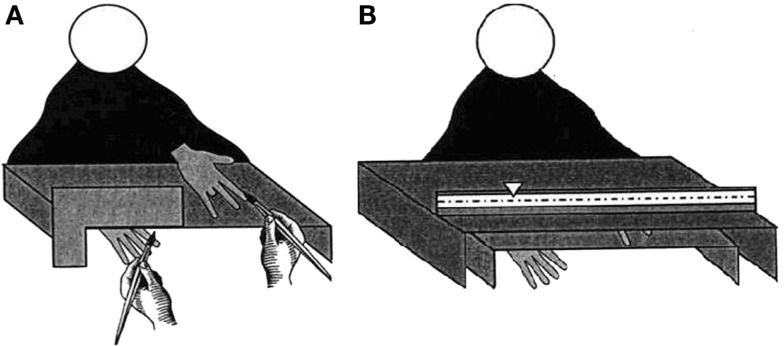
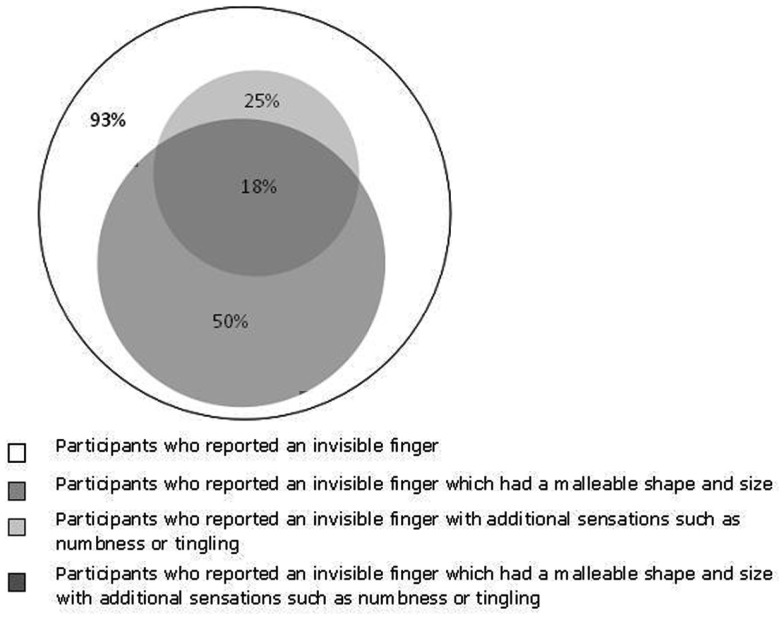
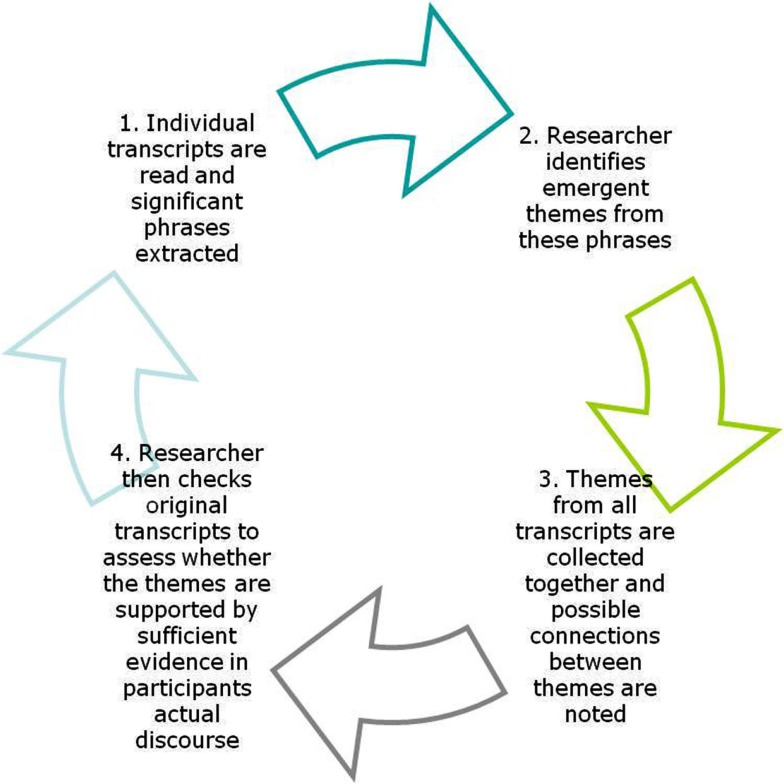
Following the amputation of a limb, many amputees report that they can still vividly perceive its presence despite conscious knowledge that it is not physically there. However, our ability to probe the mental representation of this experience is limited by the intractable and often distressing pain associated with amputation. Here, we present a method for eliciting phantom-like experiences in non-amputees using a variation of the rubber hand illusion in which a finger has been removed from the rubber hand. An interpretative phenomenological analysis revealed that the structure of this experience shares a wide range of sensory attributes with subjective reports of phantom limb experience. For example, when the space where the ring finger should have been on the rubber hand was stroked, 93% of participants (i.e., 28/30) reported the vivid presence of a finger that they could not see and a total of 57% (16/28) of participants who felt that the finger was present reported one or more additional sensory qualities such as tingling or numbness (25%; 7/28) and alteration in the perceived size of the finger (50%; 14/28). These experiences indicate the adaptability of body experience and share some characteristics of the way that phantom limbs are described. Participants attributed changes to the shape and size of their "missing" finger to the way in which the experimenter mimed stroking in the area occupied by the missing finger. This alteration of body perception is similar to the phenomenon of telescoping experienced by people with phantom limbs and suggests that our sense of embodiment not only depends on internal body representations but on perceptual information coming from peripersonal space.
截肢后,许多截肢者报告说,尽管他们清楚地知道肢体已经不存在了,但他们仍然能生动地感觉到它的存在。然而,我们对这种体验的心理表象进行探究的能力受到与截肢相关的难以处理且常常令人痛苦的疼痛的限制。在这里,我们提出了一种在非截肢者中诱发幻影般体验的方法,该方法利用了橡胶手错觉的变体,其中从橡胶手上移除了一个手指。解释性现象学分析表明,这种体验的结构与主观报告的幻肢体验在广泛的感觉属性上共享。例如,当应在橡胶手上的无名指被触摸时,93%的参与者(即 28/30)报告说,他们无法看到的手指生动地存在着,总共有 57%(16/28)的参与者感觉到手指存在,报告了一个或多个额外的感觉品质,如刺痛或麻木(25%;7/28)和手指感知大小的改变(50%;14/28)。这些体验表明身体体验具有适应性,并共享了描述幻肢的方式的一些特征。参与者将他们“缺失”的手指的形状和大小的变化归因于实验者在缺失手指所在区域模拟触摸的方式。这种身体感知的改变类似于幻影肢体患者所经历的伸缩现象,这表明我们的身体感不仅取决于内部身体表象,还取决于来自身体周围空间的感知信息。