Department of Pharmacology and Experimental Therapeutics, Thomas Jefferson University, Philadelphia, PA 19107, USA.
Trends Endocrinol Metab. 2013 Apr;24(4):165-73. doi: 10.1016/j.tem.2013.01.001. Epub 2013 Jan 29.
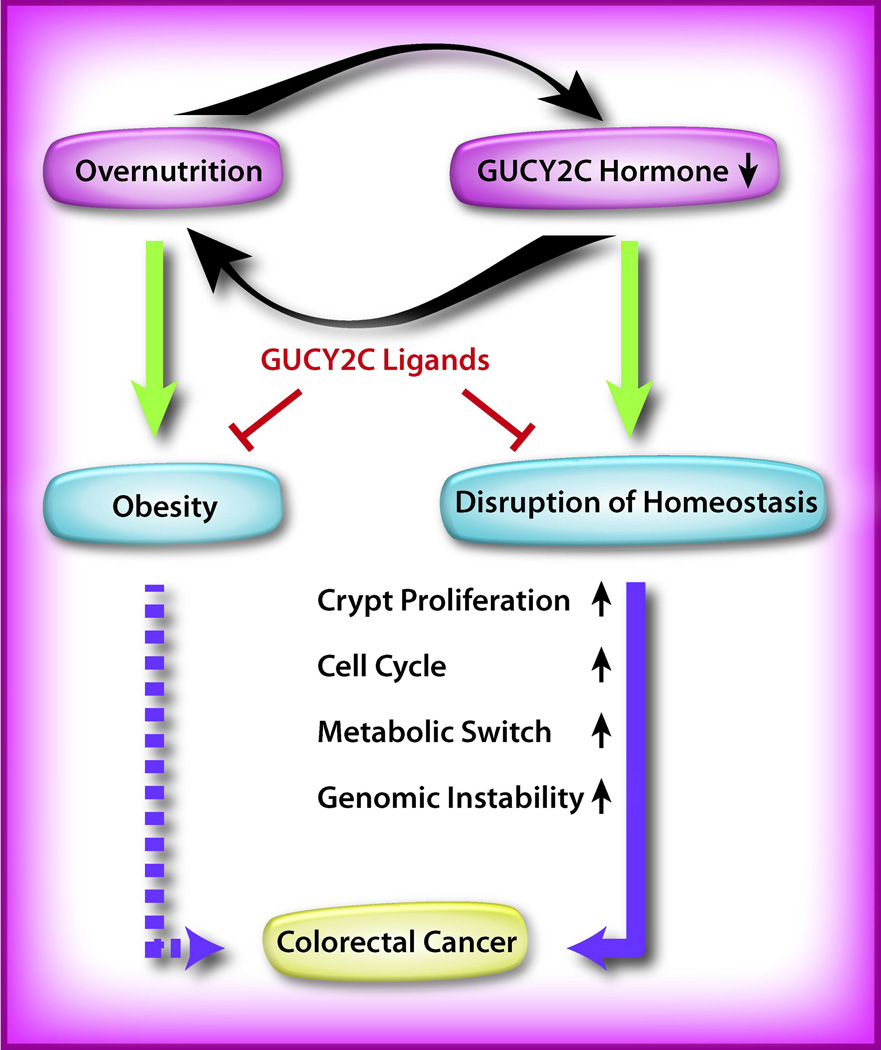
Guanylyl cyclase C (GUCY2C) has canonical centrality in defense of key intestinal homeostatic mechanisms, encompassing fluid and electrolyte balance, epithelial dynamics, antitumorigenesis, and intestinal barrier function. Recent discoveries expand the homeostatic role of GUCY2C to reveal a novel gut-brain endocrine axis regulating appetite, anchored by hypothalamic GUCY2C which is responsive to intestine-derived uroguanylin. Thus, GUCY2C may represent a new target for anti-obesity pharmacotherapy. Moreover, the coincident regulation of energy balance and tumor suppression by a single hormone receptor system suggests that the GUCY2C axis might contribute to the established relationship between obesity and colorectal cancer. This confluence suggests that hormone supplementation to reconstitute GUCY2C signaling may be an elegant strategy to reverse both pathophysiologic processes.
鸟苷酸环化酶 C(GUCY2C)在保护关键的肠道稳态机制方面具有典型的中心地位,包括液体和电解质平衡、上皮动力学、抗肿瘤发生和肠道屏障功能。最近的发现扩展了 GUCY2C 的稳态作用,揭示了一个新的肠道-脑内分泌轴,通过下丘脑 GUCY2C 调节食欲,GUCY2C 对肠道来源的尿鸟苷素敏感。因此,GUCY2C 可能代表一种新的抗肥胖药物治疗靶点。此外,能量平衡和肿瘤抑制的同时调节由单个激素受体系统提示 GUCY2C 轴可能有助于肥胖与结直肠癌之间的既定关系。这种汇合表明,激素补充以重建 GUCY2C 信号可能是逆转这两种病理生理过程的一种优雅策略。