Wellcome Trust Centre for Cell-Matrix Research, Faculty of Life Sciences, University of Manchester, Manchester, UK.
Mol Cell. 2013 Mar 7;49(5):959-71. doi: 10.1016/j.molcel.2012.12.022. Epub 2013 Jan 31.
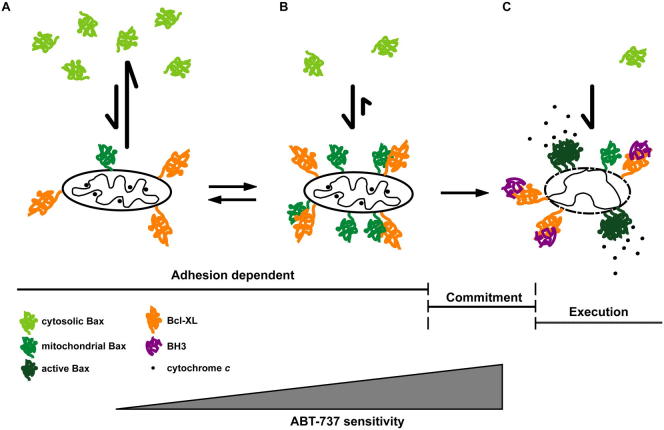
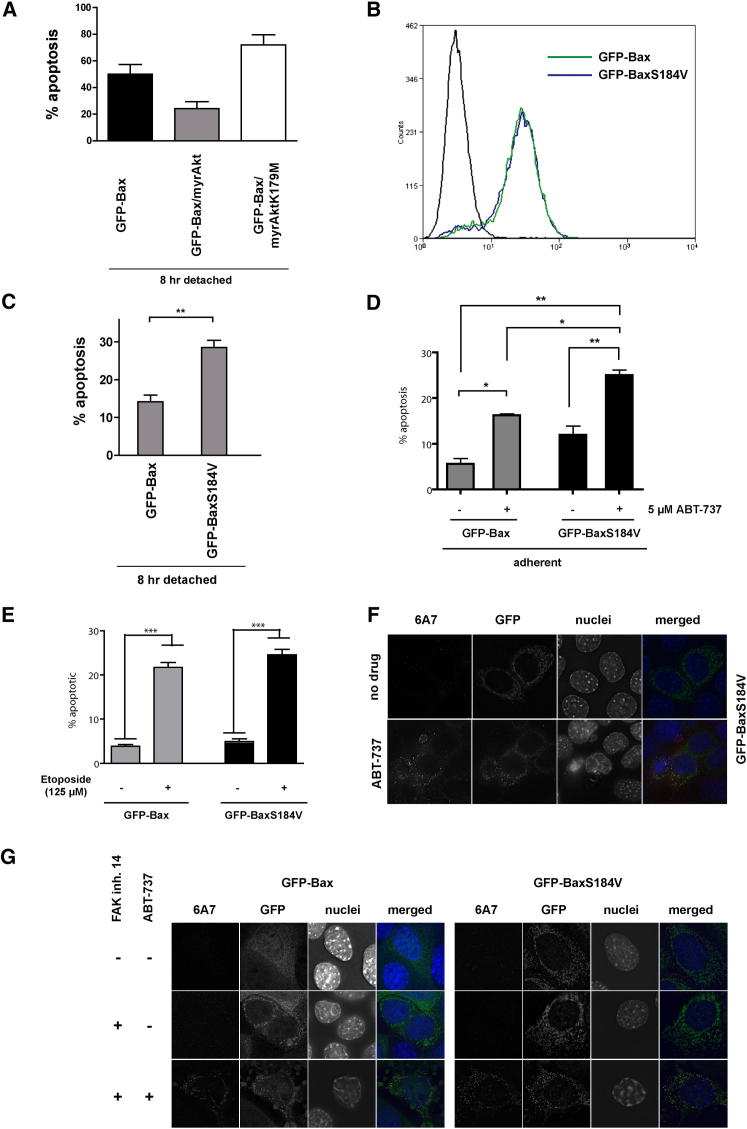
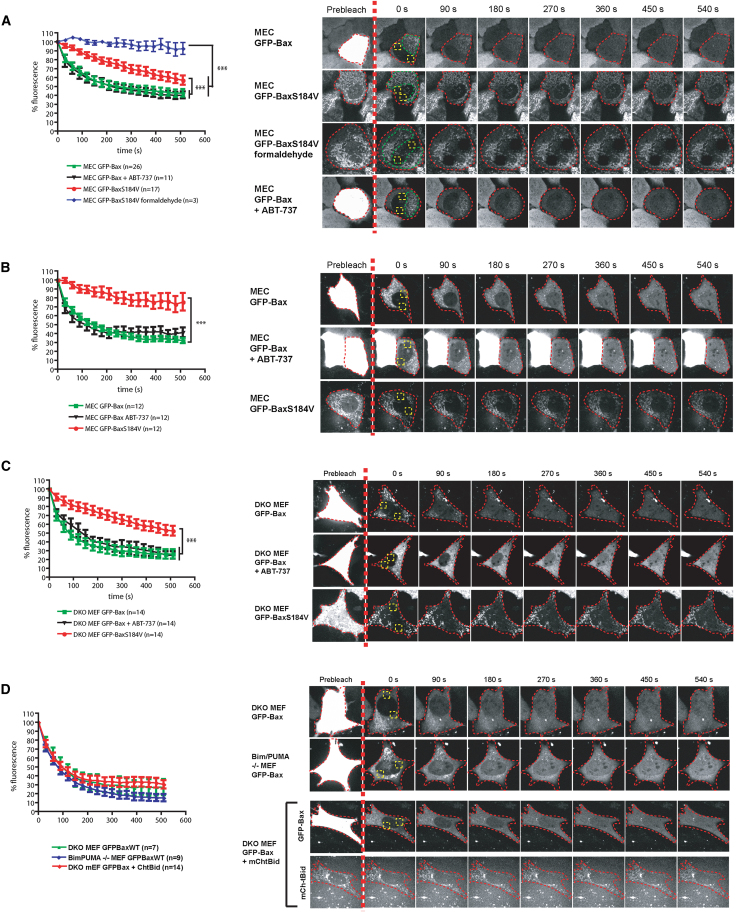
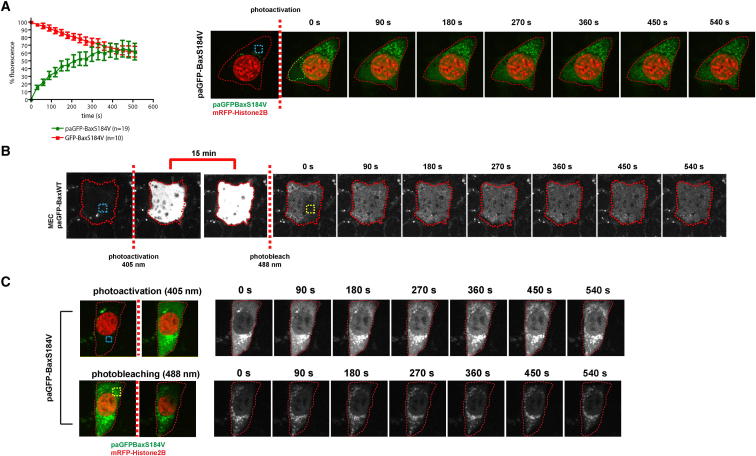
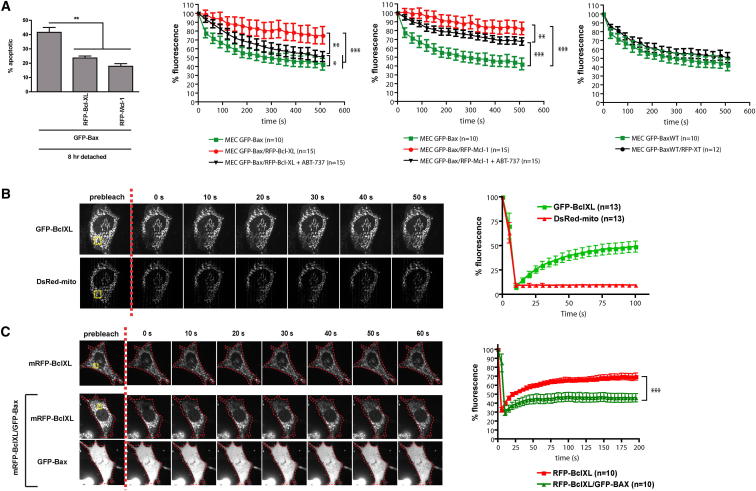
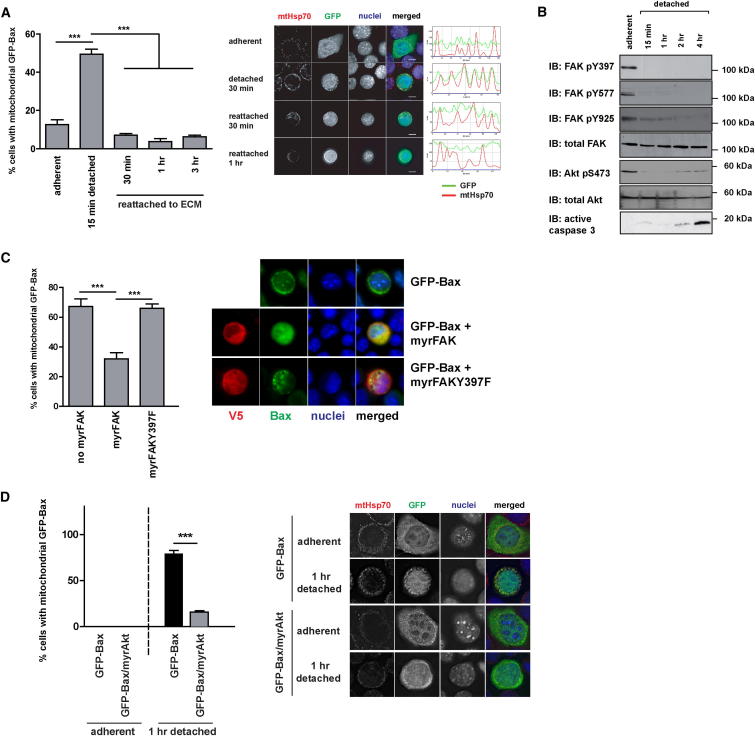
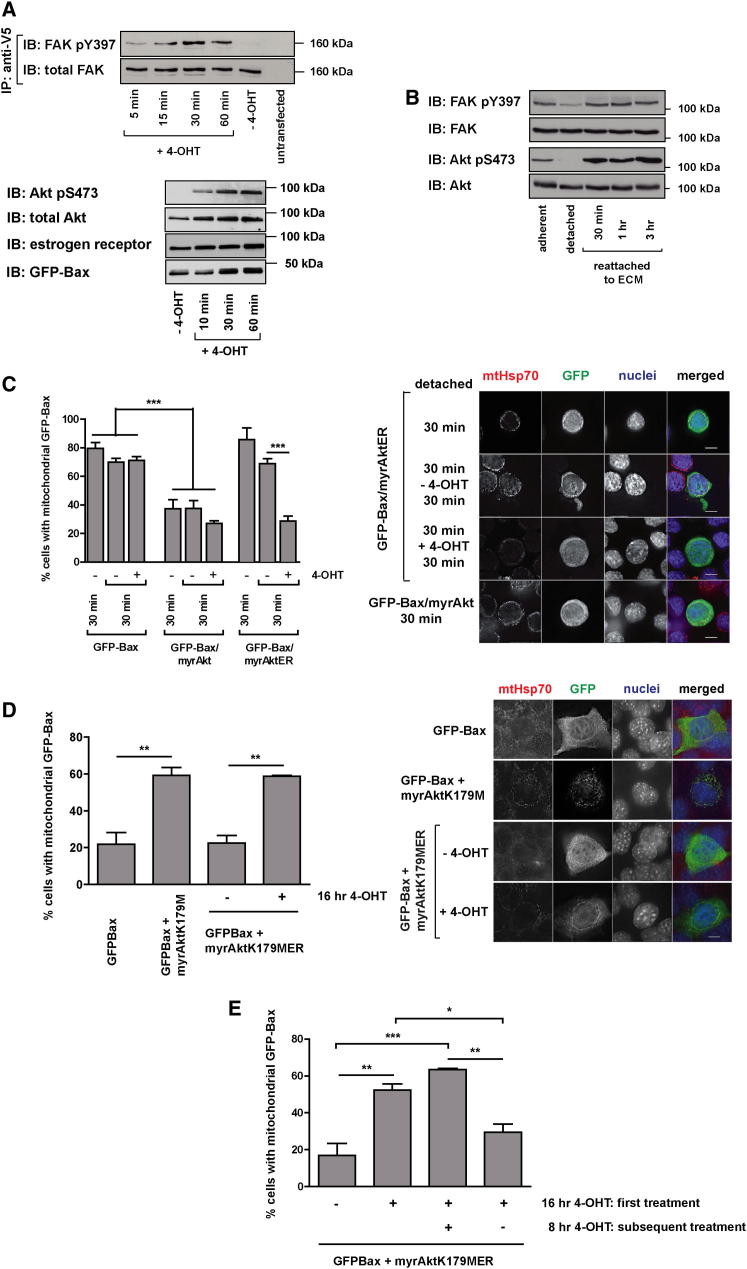
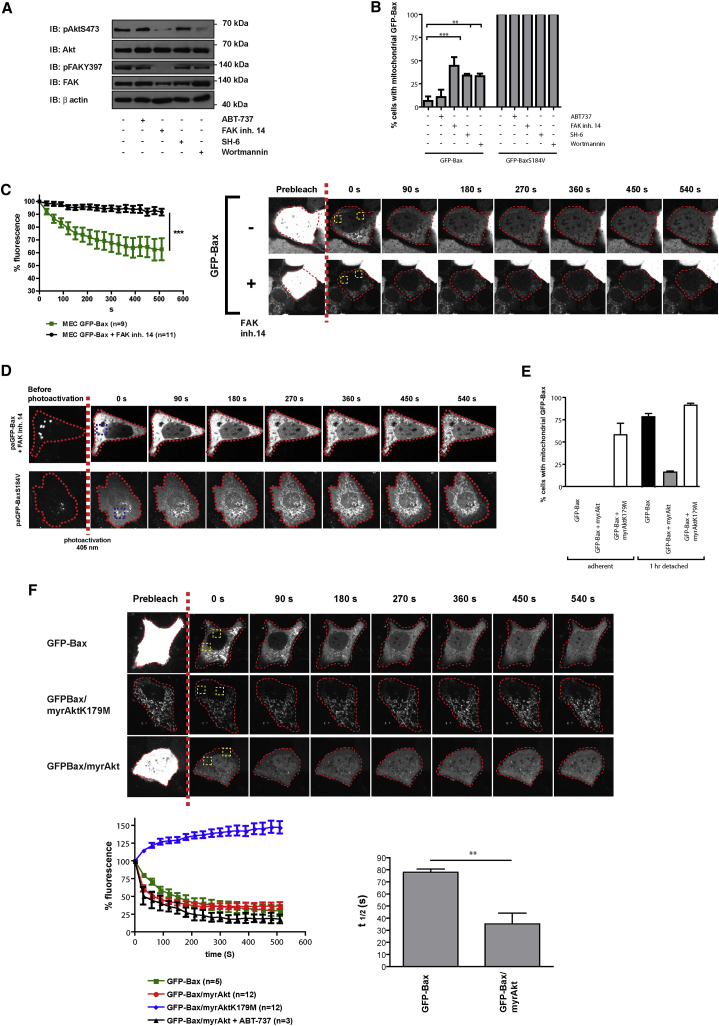
The proapoptotic Bcl-2 protein Bax is predominantly found in the cytosol of nonapoptotic cells and is commonly thought to translocate to mitochondria following an apoptotic stimulus. The current model for Bax activation is that BH3 proteins bind to cytosolic Bax, initiating mitochondrial targeting and outer-membrane permeabilization. Here, we challenge this and show that Bax is constitutively targeted to mitochondria but in nonapoptotic cells is constantly translocated back to the cytosol. Using live-cell spinning-disk confocal imaging with a combination of FLIP, FRAP, and photoactivatable GFP-Bax, we demonstrate that disrupting adhesion-dependent survival signals slows the rate of Bax's dissociation from mitochondria, leading to its accumulation on the outer mitochondrial membrane. The overall accumulation of mitochondrial Bax following loss of survival signaling sensitizes cells to proapoptotic BH3 proteins. Our findings show that Bax is normally in a dynamic equilibrium between cytosol and mitochondria, enabling fluctuations in survival signals to finely adjust apoptotic sensitivity.
促凋亡 Bcl-2 蛋白 Bax 主要存在于非凋亡细胞的细胞质中,通常被认为在外源凋亡刺激下会向线粒体转位。目前 Bax 激活的模型是 BH3 蛋白与细胞质中的 Bax 结合,启动线粒体靶向和外膜通透性。在这里,我们对这一观点提出了挑战,并表明 Bax 持续被靶向到线粒体,但在非凋亡细胞中,它不断被重新转运回细胞质。我们使用活细胞旋转盘共聚焦成像,结合 FLIP、FRAP 和光激活 GFP-Bax,证明破坏黏附依赖性存活信号会降低 Bax 从线粒体解离的速度,导致其在外膜上积累。在存活信号丢失后,线粒体 Bax 的总积累使细胞对促凋亡 BH3 蛋白更加敏感。我们的发现表明,Bax 通常处于细胞质和线粒体之间的动态平衡中,使存活信号的波动能够精细地调节细胞凋亡的敏感性。