Department of Surgery, David Geffen School of Medicine at University of California, Los Angeles (UCLA), Los Angeles, CA 90095-7054, USA.
Gene Ther. 2013 Aug;20(8):785-96. doi: 10.1038/gt.2012.99. Epub 2013 Feb 7.
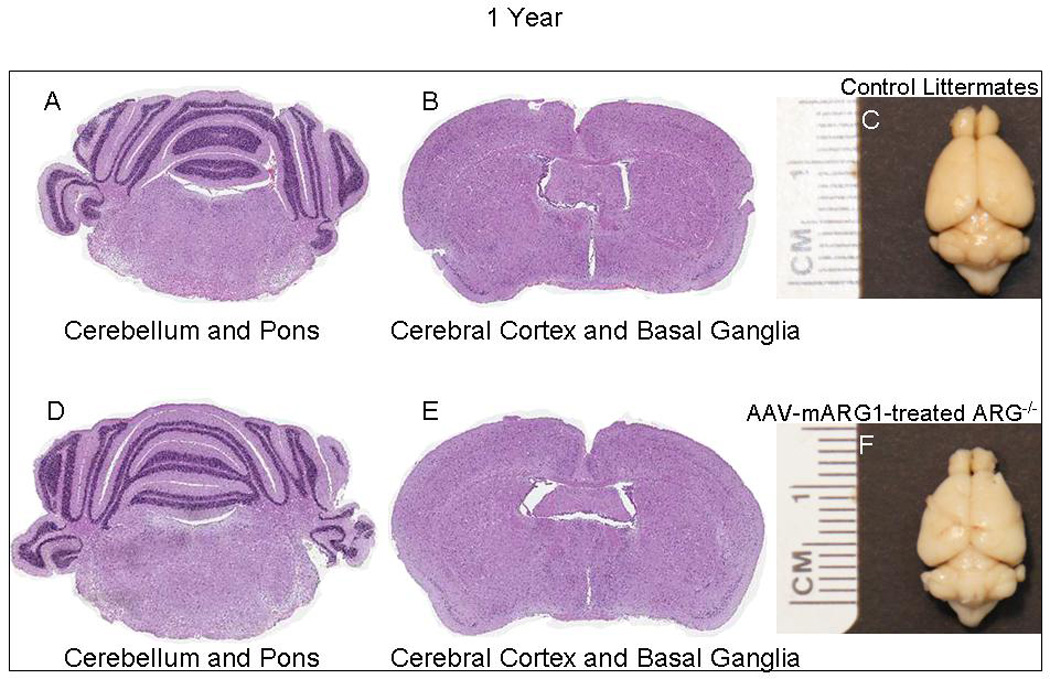
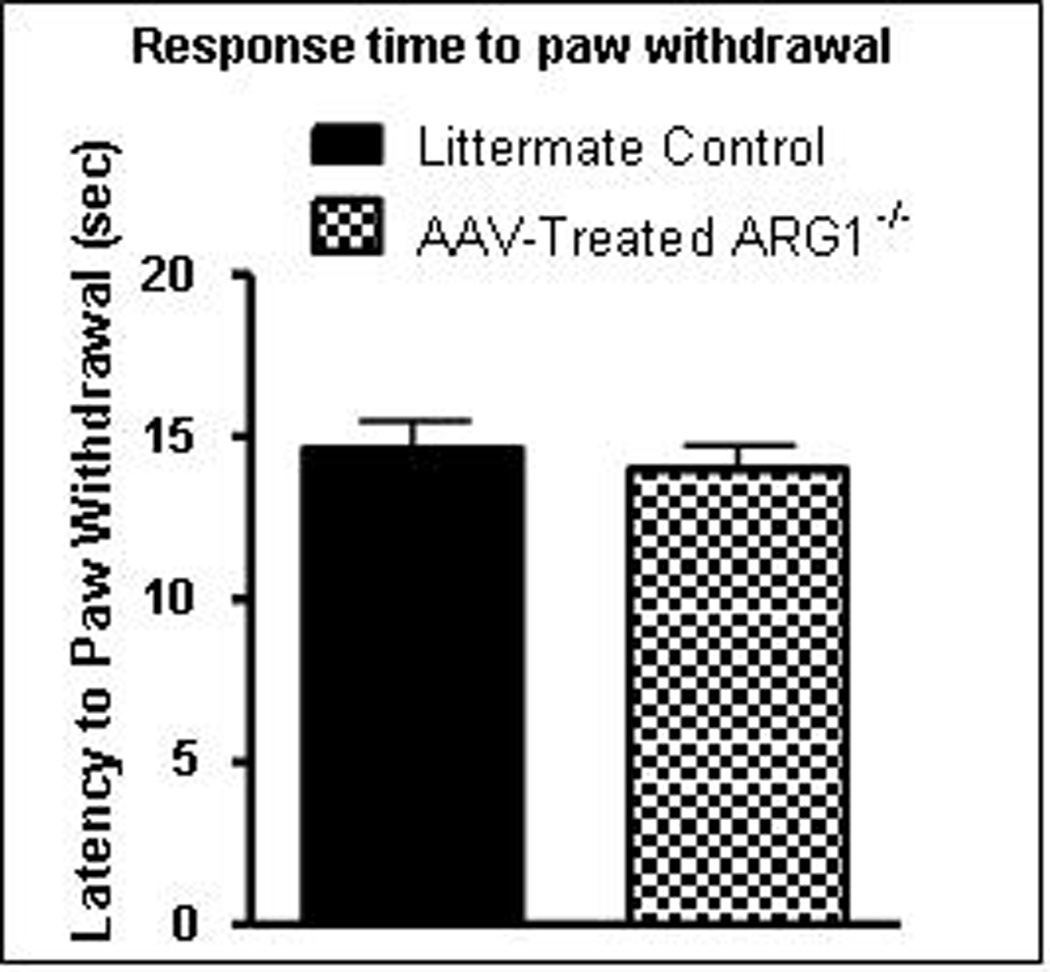
Complete arginase I deficiency is the least severe urea cycle disorder, characterized by hyperargininemia and infrequent episodes of hyperammonemia. Patients suffer from neurological impairment with cortical and pyramidal tract deterioration, spasticity, loss of ambulation and seizures, and is associated with intellectual disability. In mice, onset is heralded by weight loss beginning around day 15; gait instability follows progressing to inability to stand and development of tail tremor with seizure-like activity and death. Here we report that hyperargininemic mice treated neonatally with an adeno-associated virus (AAV)-expressing arginase and followed long-term lack any presentation consistent with brain dysfunction. Behavioral and histopathological evaluation demonstrated that treated mice are indistinguishable from littermates, and that putative compounds associated with neurotoxicity are diminished. In addition, treatment results in near complete resolution of metabolic abnormalities early in life; however, there is the development of some derangement later with decline in transgene expression. Ammonium challenging revealed that treated mice are affected by exogenous loading much greater than littermates. These results demonstrate that AAV-based therapy for hyperargininemia is effective and prevents development of neurological abnormalities and cognitive dysfunction in a mouse model of hyperargininemia; however, nitrogen challenging reveals that these mice remain impaired in the handling of waste nitrogen.
完全精氨酰琥珀酸酶 I 缺乏症是最轻微的尿素循环障碍,其特征是高精氨酸血症和频繁的高氨血症发作。患者患有神经功能损伤,表现为皮质和锥体束恶化、痉挛、丧失行动能力和癫痫发作,并伴有智力障碍。在小鼠中,发病的标志是大约第 15 天开始体重减轻;随后出现步态不稳定,进展为无法站立,发展为尾巴震颤和类似癫痫发作的活动,最终导致死亡。在这里,我们报告说,在新生期用表达精氨酸酶的腺相关病毒(AAV)治疗高精氨酸血症的小鼠,长期缺乏任何与脑功能障碍一致的表现。行为学和组织病理学评估表明,治疗后的小鼠与同窝仔鼠无法区分,且与神经毒性相关的假定化合物减少。此外,治疗可在早期几乎完全纠正代谢异常;然而,随着转基因表达的下降,后期会出现一些紊乱。铵负荷挑战表明,治疗后的小鼠对外源负荷的影响比同窝仔鼠大得多。这些结果表明,基于 AAV 的高精氨酸血症治疗是有效的,可以预防高精氨酸血症小鼠模型中神经异常和认知功能障碍的发展;然而,氮负荷挑战表明,这些小鼠在处理废物氮方面仍然存在障碍。