Université de Toulouse; ITAV-USR3505, Toulouse F-31106, France.
BMC Cancer. 2013 Feb 8;13:73. doi: 10.1186/1471-2407-13-73.
MultiCellular Tumor Spheroid (MCTS) mimics the organization of a tumor and is considered as an invaluable model to study cancer cell biology and to evaluate new antiproliferative drugs. Here we report how the characteristics of MCTS in association with new technological developments can be used to explore the regionalization and the activation of cell cycle checkpoints in 3D.
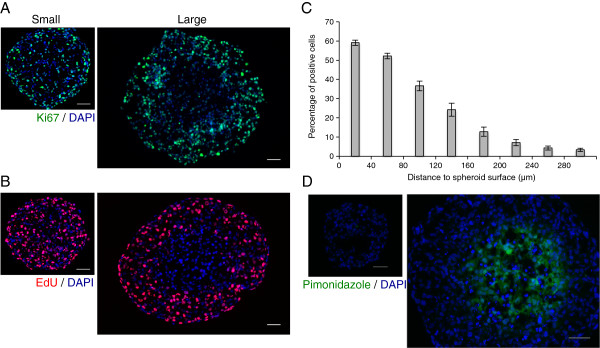
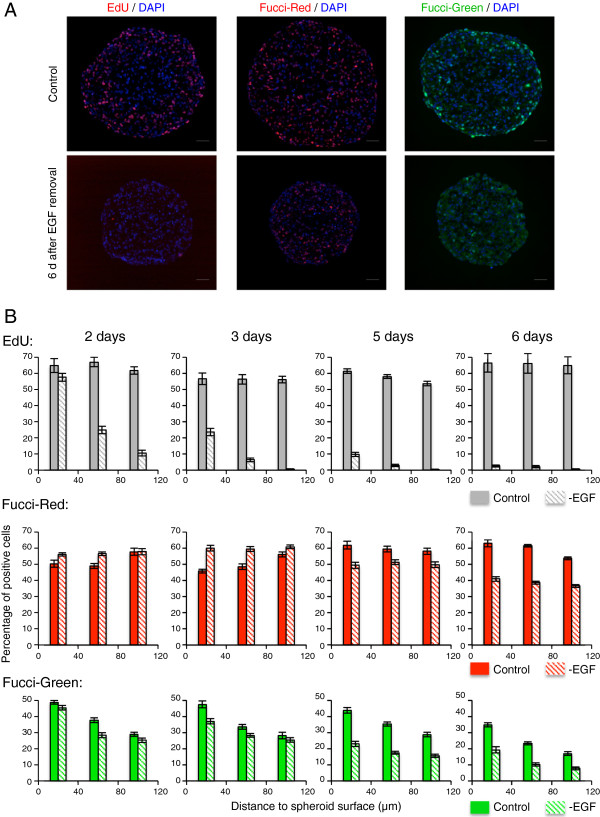
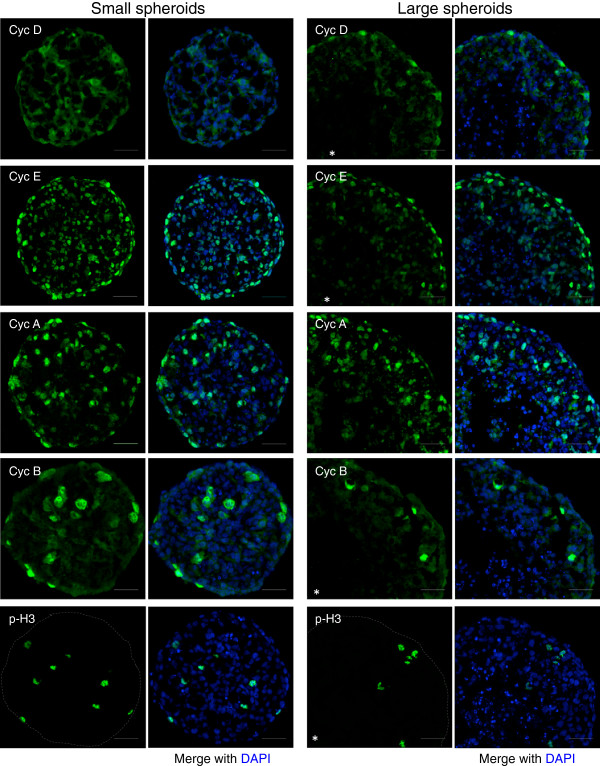
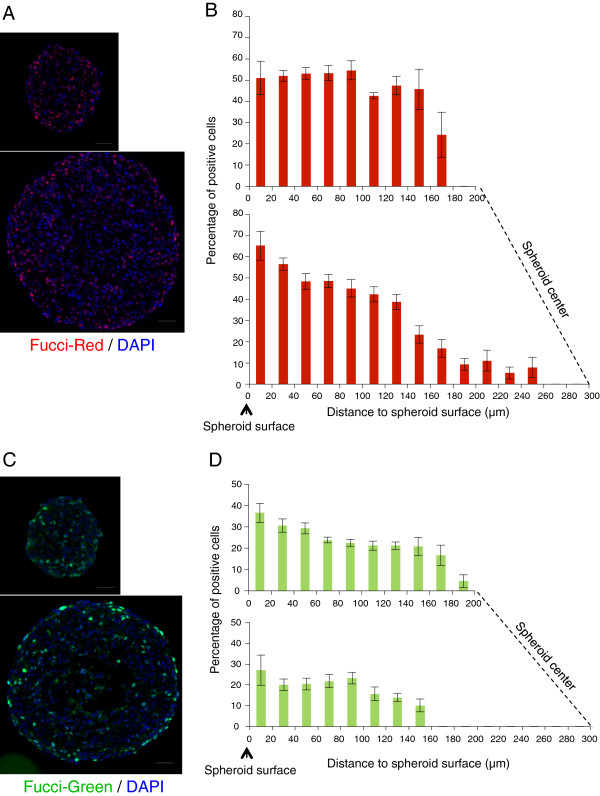
Cell cycle and proliferation parameters were investigated in Capan-2 spheroids by immunofluorescence staining, EdU incorporation and using cells engineered to express Fucci-red and -green reporters.
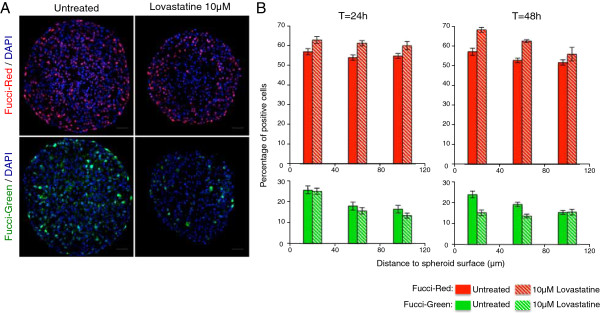
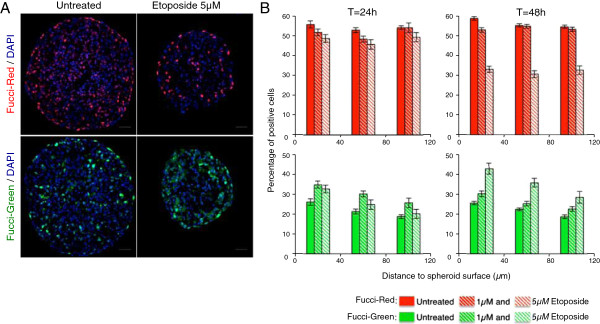
We describe in details the changes in proliferation and cell cycle parameters during spheroid growth and regionalization. We report the kinetics and regionalized aspects of cell cycle arrest in response to checkpoint activation induced by EGF starvation, lovastatin treatment and etoposide-induced DNA damage.
Our data present the power and the limitation of spheroids made of genetically modified cells to explore cell cycle checkpoints. This study paves the way for the investigation of molecular aspects and dynamic studies of the response to novel antiproliferative agents in 3D models.
多细胞肿瘤球体(MCTS)模拟肿瘤的组织,被认为是研究癌细胞生物学和评估新的抗增殖药物的宝贵模型。在这里,我们报告了 MCTS 的特征如何与新技术的发展相结合,用于探索三维空间中的细胞周期检查点的分区化和激活。
通过免疫荧光染色、EdU 掺入和表达 Fucci-red 和 -green 报告基因的细胞工程,研究 Capan-2 球体中的细胞周期和增殖参数。
我们详细描述了在球体生长和分区化过程中增殖和细胞周期参数的变化。我们报告了细胞周期阻滞的动力学和分区化方面,以响应 EGF 饥饿、洛伐他汀处理和依托泊苷诱导的 DNA 损伤引起的检查点激活。
我们的数据展示了由基因修饰细胞组成的球体在探索细胞周期检查点方面的优势和局限性。这项研究为在 3D 模型中研究分子方面和对新型抗增殖剂的反应的动态研究铺平了道路。