Division of Lower Gastroenterology, Department of Internal Medicine, Hyogo College of Medicine, 1-1 Mukogawa, Nishinomiya, 663-8501, Hyogo, Japan.
BMC Gastroenterol. 2013 Feb 12;13:27. doi: 10.1186/1471-230X-13-27.
Adsorptive granulocyte and monocyte apheresis (GMA) with an Adacolumn in patients with ulcerative colitis (UC) has been applied as a non-pharmacological treatment strategy, but the efficacy has been encouraging as well as discouraging, depending on patients' demography at entry. In this study, we looked for predictive factors for clinical response to GMA in patients with UC.
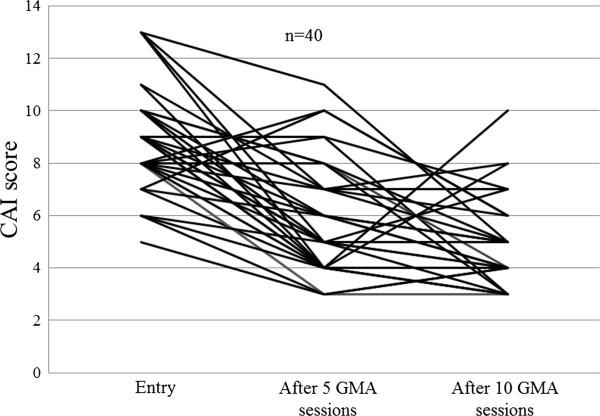
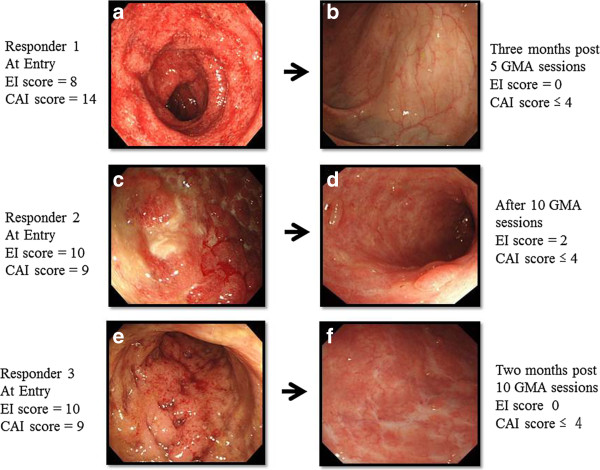
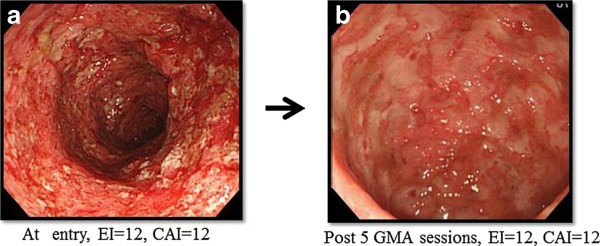
In a retrospective setting, 43 outpatients who had been treated with GMA for active UC were evaluated. Patients were divided into remission group and non-remission group based on Lichtiger's clinical activity index (CAI) before and after 10, once a week GMA sessions. The efficacy was analysed in relation to patients' demographic variables. To determine predictive factors that closely related to the response to GMA, receiver operating characteristic (ROC) curve, and multiple logistic regression analyses were applied.
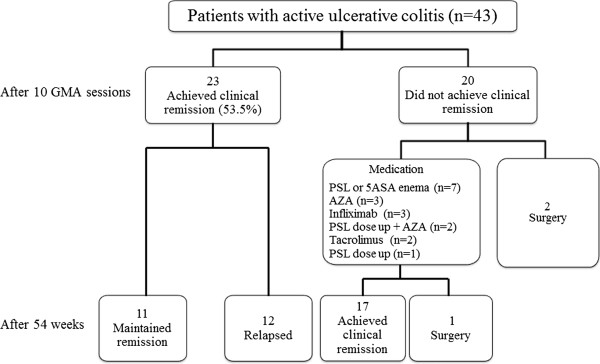
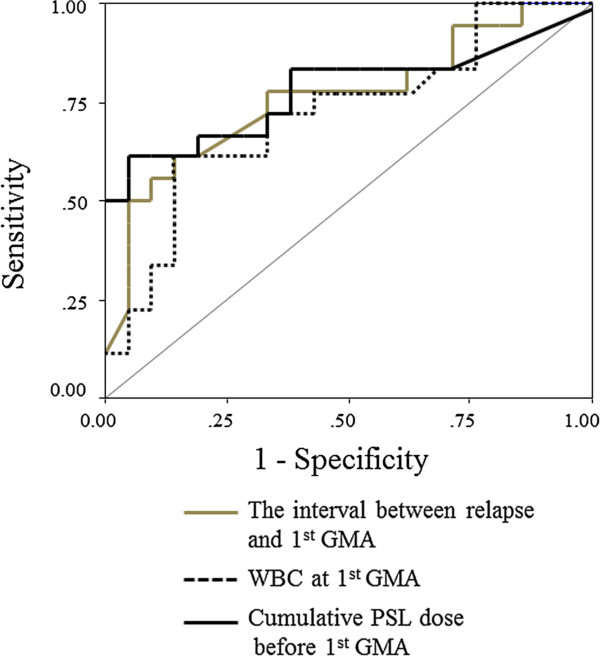
After 10 GMA sessions, the overall clinical remission rate (CAI < 4) was 53.5%. Multiple logistic regression and ROC analyses showed that the interval between relapse and the first GMA session was a significant and independent predictive factor for clinical response to GMA (P = 0.016); the clinical response was better in patients who received GMA immediately after a relapse and vice versa. Likewise, univariate analyses showed that, the duration of UC (P = 0.036) and the cumulative prednisolone (PSL) dose (P = 0.006) before the first GMA session were significantly greater in the GMA non-responder group as compared with the responder group. Additionally, a lower white blood cell (WBC) count at first GMA session was related to clinical response to GMA (P = 0.032).
In this study, patients with a short duration of UC and low cumulative PSL dose seemed to respond well to GMA. However, we found that the best responders were patients who received GMA immediately after a clinical relapse. Additionally, GMA was effective in patients with low WBC count at the first GMA session. The findings of this study should spare medical cost and reduce morbidity time for many patients, relevant for decision making in clinical settings.
在溃疡性结肠炎(UC)患者中,使用 Adacolumn 进行吸附性粒细胞和单核细胞清除术(GMA)已被用作非药物治疗策略,但疗效因患者入组时的人口统计学特征而喜忧参半。在这项研究中,我们寻找了预测溃疡性结肠炎患者 GMA 临床反应的因素。
在回顾性背景下,评估了 43 名接受 GMA 治疗活动期 UC 的门诊患者。根据 Lichtiger 的临床活动指数(CAI),患者在 10 次每周一次 GMA 治疗前后分为缓解组和未缓解组。分析疗效与患者人口统计学变量的关系。为了确定与 GMA 反应密切相关的预测因素,应用了接收者操作特征(ROC)曲线和多因素逻辑回归分析。
在 10 次 GMA 治疗后,总体临床缓解率(CAI<4)为 53.5%。多因素逻辑回归和 ROC 分析表明,复发与首次 GMA 治疗之间的间隔是 GMA 临床反应的一个显著和独立的预测因素(P=0.016);在复发后立即接受 GMA 的患者和反之亦然的患者中,临床反应更好。同样,单因素分析表明,与缓解组相比,首次 GMA 治疗前 UC 的持续时间(P=0.036)和累积泼尼松龙(PSL)剂量(P=0.006)明显更大。此外,首次 GMA 时白细胞计数(WBC)较低与 GMA 的临床反应相关(P=0.032)。
在这项研究中,UC 持续时间较短和累积 PSL 剂量较低的患者似乎对 GMA 反应良好。然而,我们发现,最佳反应者是在临床复发后立即接受 GMA 的患者。此外,在首次 GMA 时 WBC 计数较低的患者中,GMA 有效。本研究的结果应为许多患者节省医疗费用并减少发病时间,这对临床决策具有重要意义。