Food and Biobased Research, Wageningen University and Research Centre Wageningen, Netherlands.
Front Psychol. 2013 Feb 8;4:25. doi: 10.3389/fpsyg.2013.00025. eCollection 2013.
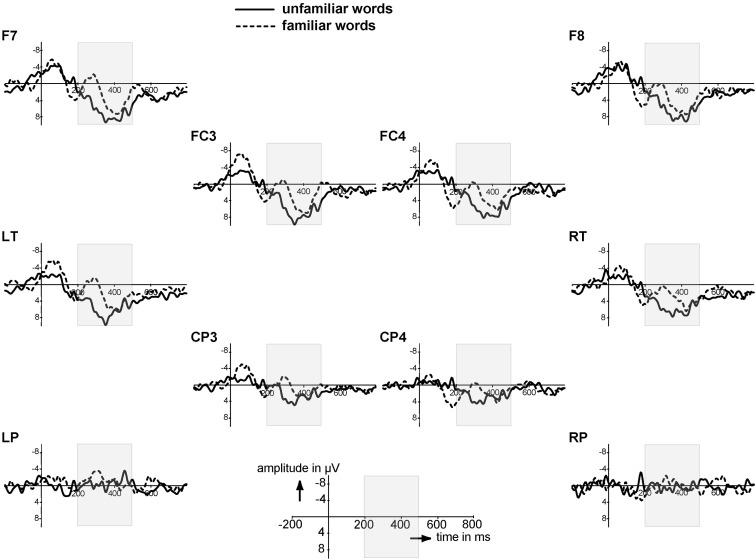
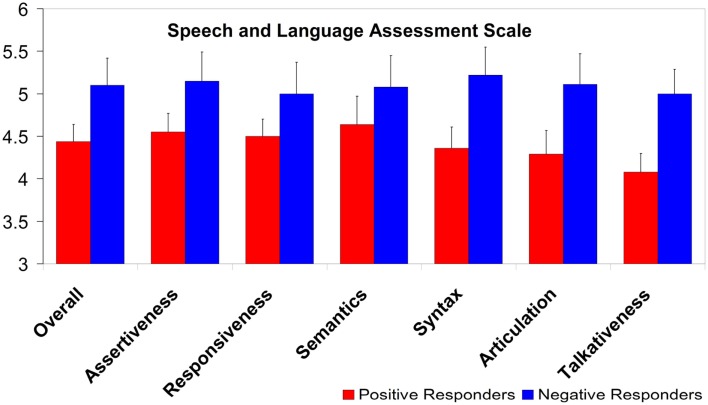
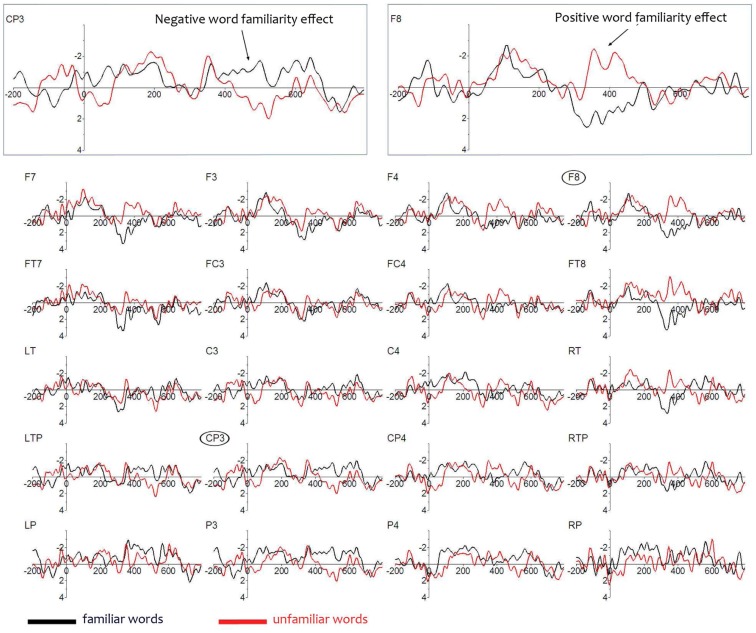
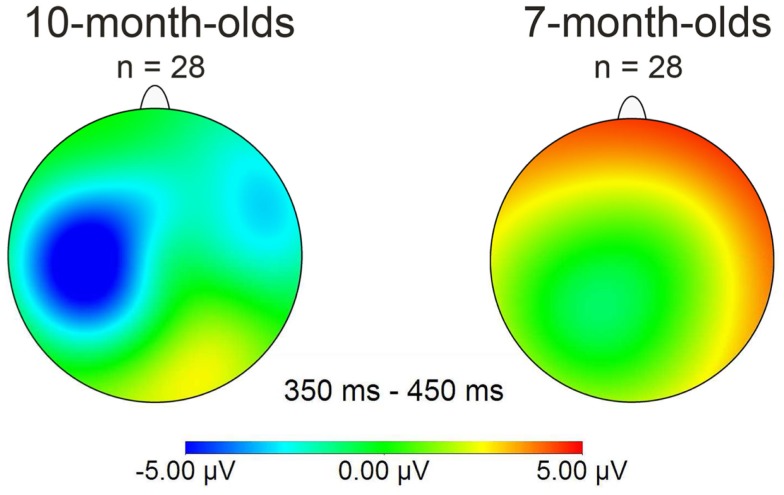
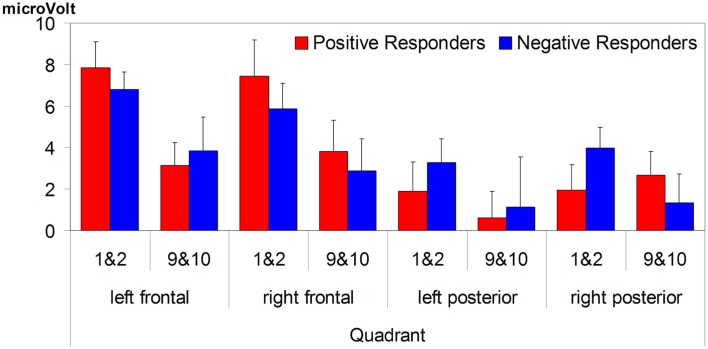
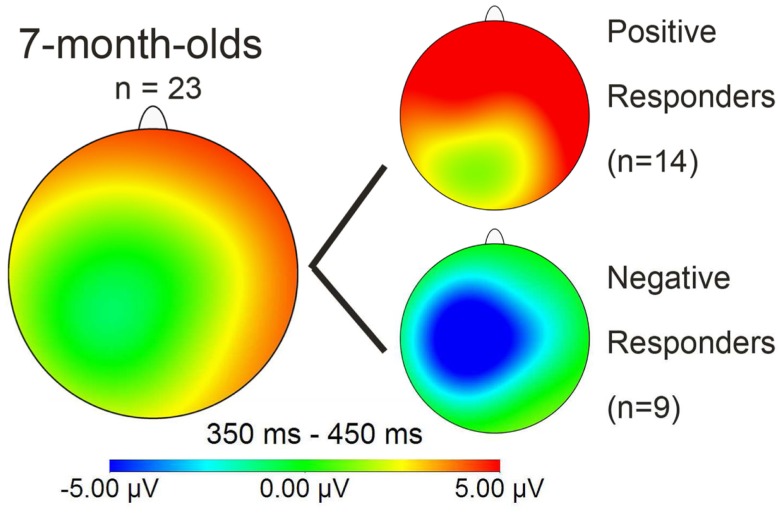
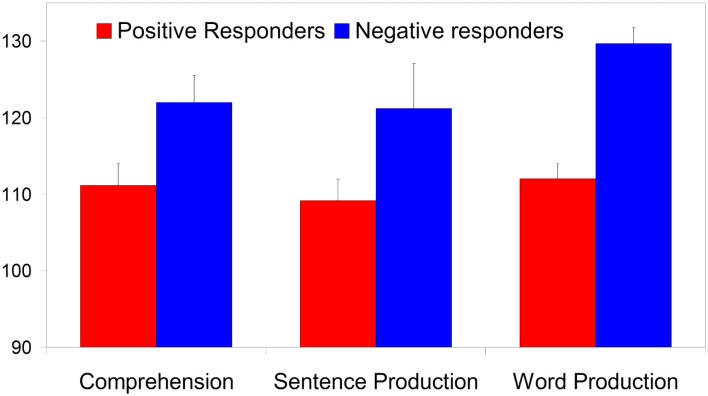
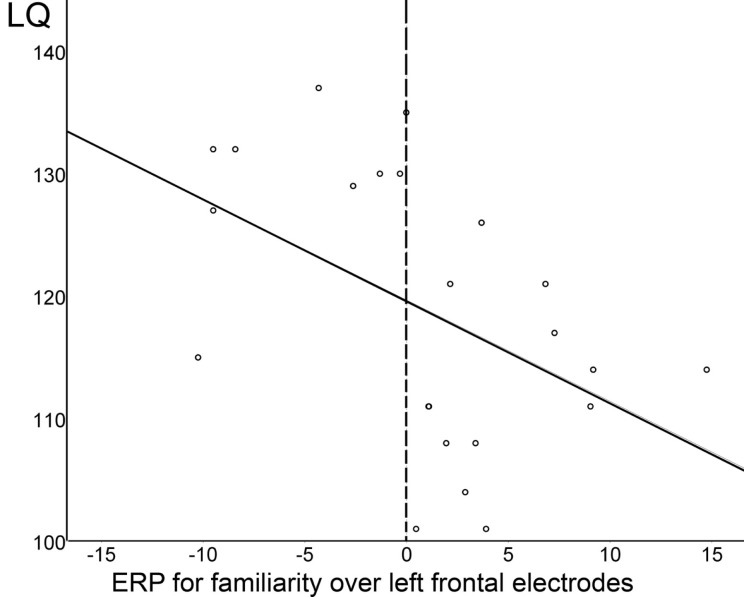
The ability to extract word forms from continuous speech is a prerequisite for constructing a vocabulary and emerges in the first year of life. Electrophysiological (ERP) studies of speech segmentation by 9- to 12-month-old listeners in several languages have found a left-localized negativity linked to word onset as a marker of word detection. We report an ERP study showing significant evidence of speech segmentation in Dutch-learning 7-month-olds. In contrast to the left-localized negative effect reported with older infants, the observed overall mean effect had a positive polarity. Inspection of individual results revealed two participant sub-groups: a majority showing a positive-going response, and a minority showing the left negativity observed in older age groups. We retested participants at age three, on vocabulary comprehension and word and sentence production. On every test, children who at 7 months had shown the negativity associated with segmentation of words from speech outperformed those who had produced positive-going brain responses to the same input. The earlier that infants show the left-localized brain responses typically indicating detection of words in speech, the better their early childhood language skills.
从连续语音中提取词形的能力是构建词汇的前提条件,并且在生命的第一年就会出现。通过对来自不同语言的 9 至 12 个月大的听众进行的言语分割的电生理学(ERP)研究发现,与单词起始相关的左局部负性是单词检测的标志。我们报告了一项关于荷兰语学习的 7 个月大婴儿的言语分割的 ERP 研究,有显著的证据表明。与报告的年龄较大的婴儿的左局部负效应相反,观察到的总体平均效应具有正极性。检查个体结果发现了两个参与者子组:大多数参与者表现出正向反应,少数参与者表现出与年龄较大的组中观察到的左侧负性反应。我们在三岁时对参与者进行了重新测试,测试包括词汇理解、单词和句子生成。在每个测试中,在 7 个月大时表现出与从言语中分割单词相关的负性的婴儿,其早期语言技能优于那些对相同输入产生正向脑反应的婴儿。婴儿越早表现出通常表明从言语中检测到单词的左局部脑反应,他们的早期语言技能就越好。