Segal Cancer Center, Lady Davis Institute for Medical Research, McGill University Montréal, QC, Canada.
Front Pharmacol. 2013 Feb 12;4:9. doi: 10.3389/fphar.2013.00009. eCollection 2013.
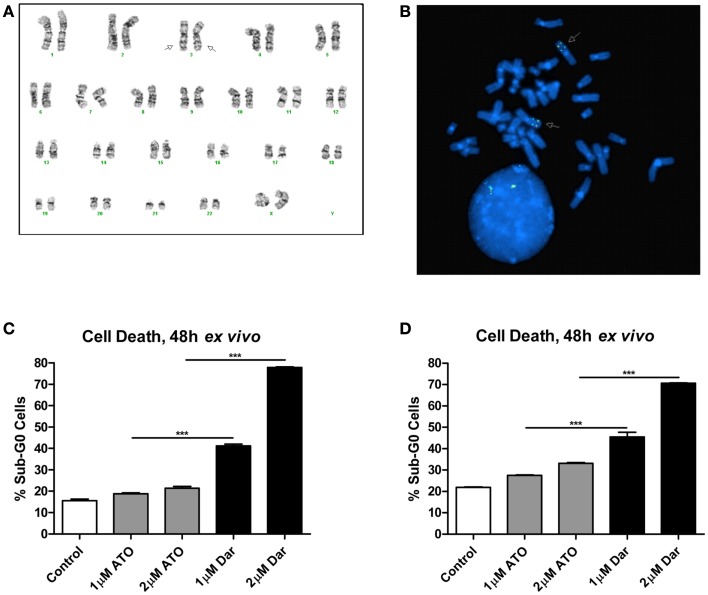
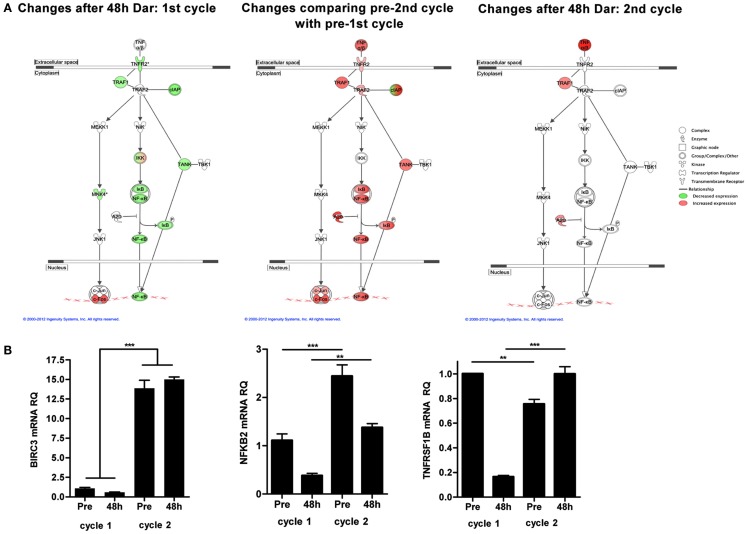
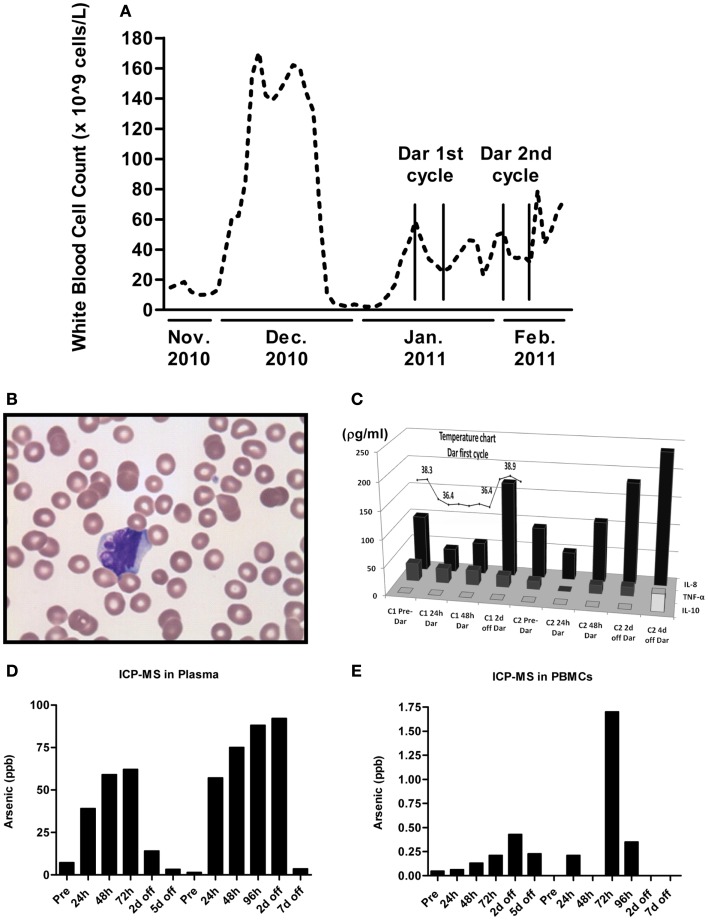
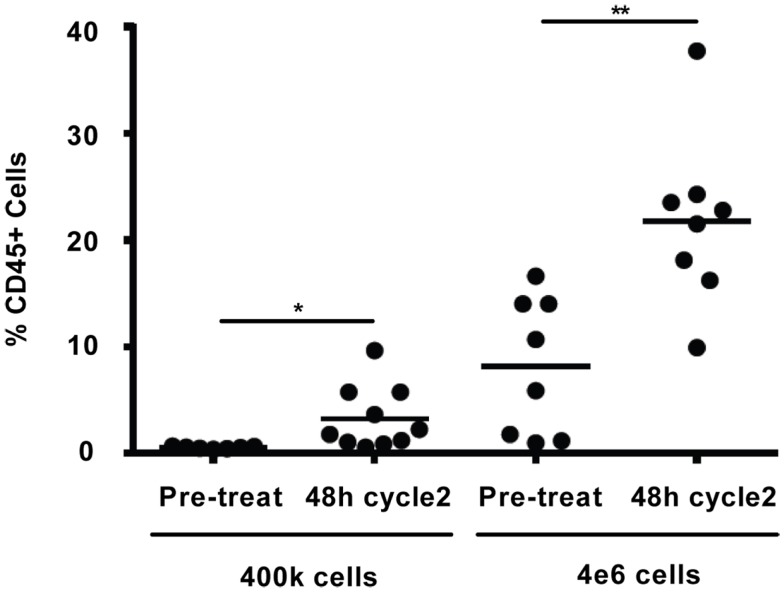
Acute myeloid leukemia (AML) with inversion of chromosome 3 is characterized by overexpression of EVI1 and carries a dismal prognosis. Arsenic-containing compounds have been described to be efficacious in malignancies overexpressing EVI1. Here, we describe a case of AML with inv(3)(q21q26.2) treated with the organic arsenical darinaparsin. Using a "personalized medicine approach," two different arsenicals were screened for anti-leukemic effect against the patient's cells ex vivo. The most promising compound, darinaparsin, was selected for in vivo treatment. Clinical effect was almost immediate, with a normalization of temperature, a stabilization of white blood cell (WBC) counts and an increased quality of life. Longitudinal monitoring of patient response and resistance incorporating significant correlative studies on patient-derived blood samples over the two cycles of darinaparsin given to this patient allowed us to evaluate potential mechanisms of response and resistance. The anti-leukemic effects of darinaparsin correlated with inhibition of the alternative NF-κB pathway and production of the inflammatory cytokine IL-8. Emergence of resistance was suspected during treatment cycle 2 and supported by xenograft studies in nude mice. Darinaparsin resistance correlated with an attenuation of the effect of treatment on the alternative NF-κB pathway. The results from this patient indicate that darinaparsin may be a good treatment option for inv(3) AML and that inhibition of the alternative NF-κB pathway may be predictive of response. Longitudinal monitoring of disease response as well as several correlative parameters allowed for the generation of novel correlations and predictors of response to experimental therapy in a heavily pretreated patient.
伴有 3 号染色体倒位的急性髓系白血病(AML)的特征是 EVI1 过表达,预后不良。含有砷的化合物已被描述为在过度表达 EVI1 的恶性肿瘤中有效。在这里,我们描述了一例用有机砷化合物地拉罗司治疗伴有 inv(3)(q21q26.2)的 AML 的病例。采用“个体化医学方法”,对两种不同的砷化合物进行了筛选,以确定其对患者细胞的体外抗白血病作用。最有前途的化合物地拉罗司被选择用于体内治疗。临床效果几乎是立竿见影的,体温正常化,白细胞(WBC)计数稳定,生活质量提高。对该患者给予地拉罗司的两个周期中,对患者反应和耐药性进行纵向监测,结合对患者来源血液样本的相关研究,使我们能够评估潜在的反应和耐药机制。地拉罗司的抗白血病作用与抑制替代 NF-κB 途径和炎性细胞因子 IL-8 的产生相关。在治疗周期 2 期间怀疑出现耐药,并通过裸鼠异种移植研究得到支持。地拉罗司耐药与治疗对替代 NF-κB 途径的作用减弱相关。该患者的结果表明,地拉罗司可能是 inv(3)AML 的一个很好的治疗选择,抑制替代 NF-κB 途径可能是反应的预测指标。对疾病反应以及几个相关参数进行纵向监测,可在一位预处理过的患者中生成针对实验性治疗的新相关性和预测指标。