• 文献检索
  • 文档翻译
  • 深度研究
  • 学术资讯
  • Suppr Zotero 插件Zotero 插件
  • 邀请有礼
  • 套餐&价格
  • 历史记录
应用&插件
Suppr Zotero 插件Zotero 插件浏览器插件Mac 客户端Windows 客户端微信小程序
定价
高级版会员购买积分包购买API积分包
服务
文献检索文档翻译深度研究API 文档MCP 服务
关于我们
关于 Suppr公司介绍联系我们用户协议隐私条款
关注我们

Suppr 超能文献

核心技术专利:CN118964589B侵权必究
粤ICP备2023148730 号-1Suppr @ 2026

文献检索

告别复杂PubMed语法,用中文像聊天一样搜索,搜遍4000万医学文献。AI智能推荐,让科研检索更轻松。

立即免费搜索

文件翻译

保留排版,准确专业,支持PDF/Word/PPT等文件格式,支持 12+语言互译。

免费翻译文档

深度研究

AI帮你快速写综述,25分钟生成高质量综述,智能提取关键信息,辅助科研写作。

立即免费体验

鉴定创伤性脑损伤细胞培养模型中的损伤特异性蛋白。

Identification of injury specific proteins in a cell culture model of traumatic brain injury.

机构信息

Department of Neuroscience, Uppsala University, Uppsala, Sweden.

出版信息

PLoS One. 2013;8(2):e55983. doi: 10.1371/journal.pone.0055983. Epub 2013 Feb 7.

DOI:10.1371/journal.pone.0055983
PMID:23409102
原文链接:https://pmc.ncbi.nlm.nih.gov/articles/PMC3567017/
Abstract

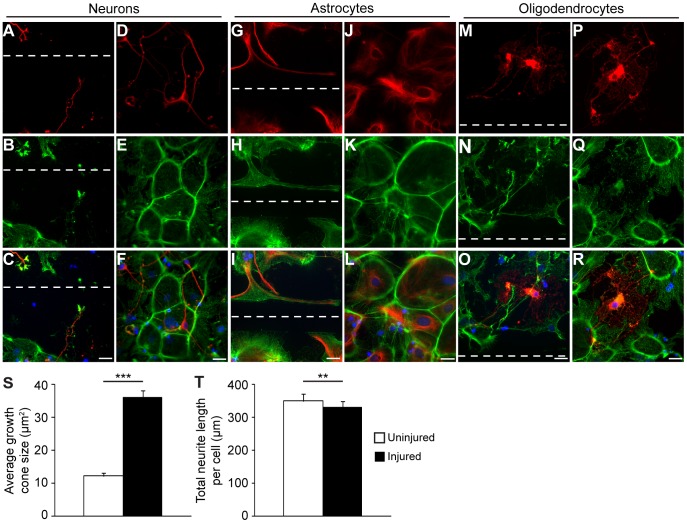
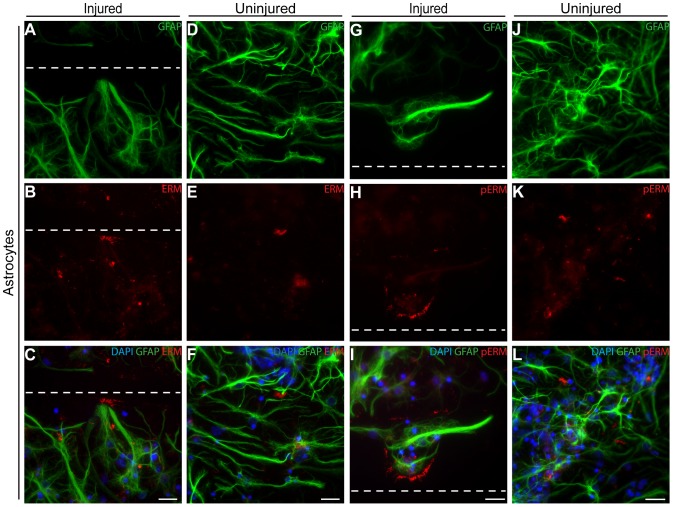
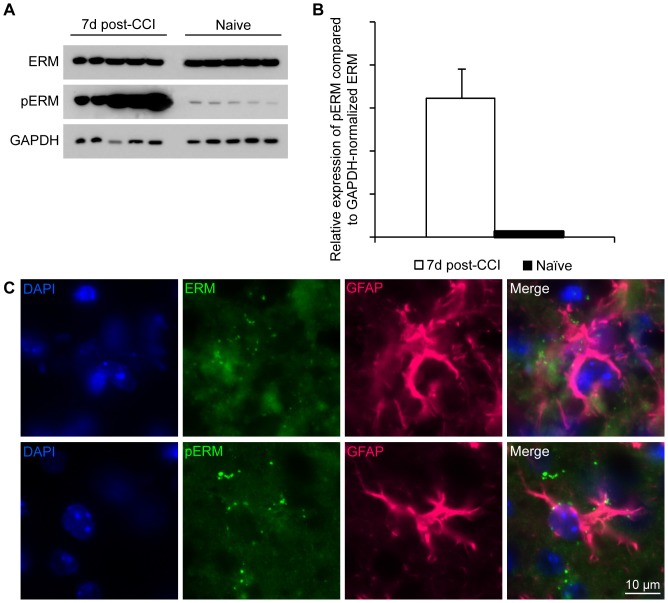
The complicated secondary molecular and cellular mechanisms following traumatic brain injury (TBI) are still not fully understood. In the present study, we have used mass spectrometry to identify injury specific proteins in an in vitro model of TBI. A standardized injury was induced by scalpel cuts through a mixed cell culture of astrocytes, oligodendrocytes and neurons. Twenty-four hours after the injury, cell culture medium and whole-cell fractions were collected for analysis. We found 53 medium proteins and 46 cell fraction proteins that were specifically expressed after injury and the known function of these proteins was elucidated by an extensive literature survey. By using time-lapse microscopy and immunostainings we could link a large proportion of the proteins to specific cellular processes that occur in response to trauma; including cell death, proliferation, lamellipodia formation, axonal regeneration, actin remodeling, migration and inflammation. A high percentage of the proteins uniquely expressed in the medium after injury were actin-related proteins, which normally are situated intracellularly. We show that two of these, ezrin and moesin, are expressed by astrocytes both in the cell culture model and in mouse brain subjected to experimental TBI. Interestingly, we found many inflammation-related proteins, despite the fact that cells were present in the culture. This study contributes with important knowledge about the cellular responses after trauma and identifies several potential cell-specific biomarkers.

摘要

颅脑损伤(TBI)后复杂的次级分子和细胞机制仍未完全阐明。在本研究中,我们使用质谱分析法在 TBI 的体外模型中鉴定了损伤特异性蛋白。通过手术刀切割培养的星形胶质细胞、少突胶质细胞和神经元混合物来诱导标准化损伤。损伤后 24 小时,收集细胞培养液和全细胞级分进行分析。我们发现 53 种培养基蛋白和 46 种细胞级分蛋白在损伤后特异性表达,通过广泛的文献调查阐明了这些蛋白的已知功能。通过使用延时显微镜和免疫染色,我们可以将很大一部分蛋白与创伤后发生的特定细胞过程联系起来,包括细胞死亡、增殖、片状伪足形成、轴突再生、肌动蛋白重塑、迁移和炎症。损伤后培养基中特异性表达的蛋白中有很大一部分与肌动蛋白有关,这些蛋白通常位于细胞内。我们发现其中两种蛋白,埃兹蛋白和膜突蛋白,在细胞培养模型和实验性 TBI 小鼠脑中的星形胶质细胞中均有表达。有趣的是,尽管细胞存在于培养物中,但我们发现了许多炎症相关蛋白。这项研究为创伤后的细胞反应提供了重要的知识,并确定了几个潜在的细胞特异性生物标志物。

https://cdn.ncbi.nlm.nih.gov/pmc/blobs/29a9/3567017/dcc145fdaae1/pone.0055983.g004.jpg
https://cdn.ncbi.nlm.nih.gov/pmc/blobs/29a9/3567017/5f76a3540be9/pone.0055983.g001.jpg
https://cdn.ncbi.nlm.nih.gov/pmc/blobs/29a9/3567017/0ca73ceedf47/pone.0055983.g002.jpg
https://cdn.ncbi.nlm.nih.gov/pmc/blobs/29a9/3567017/61c03e291294/pone.0055983.g003.jpg
https://cdn.ncbi.nlm.nih.gov/pmc/blobs/29a9/3567017/dcc145fdaae1/pone.0055983.g004.jpg
https://cdn.ncbi.nlm.nih.gov/pmc/blobs/29a9/3567017/5f76a3540be9/pone.0055983.g001.jpg
https://cdn.ncbi.nlm.nih.gov/pmc/blobs/29a9/3567017/0ca73ceedf47/pone.0055983.g002.jpg
https://cdn.ncbi.nlm.nih.gov/pmc/blobs/29a9/3567017/61c03e291294/pone.0055983.g003.jpg
https://cdn.ncbi.nlm.nih.gov/pmc/blobs/29a9/3567017/dcc145fdaae1/pone.0055983.g004.jpg

相似文献

1
Identification of injury specific proteins in a cell culture model of traumatic brain injury.鉴定创伤性脑损伤细胞培养模型中的损伤特异性蛋白。
PLoS One. 2013;8(2):e55983. doi: 10.1371/journal.pone.0055983. Epub 2013 Feb 7.
2
Function of ezrin-radixin-moesin proteins in migration of subventricular zone-derived neuroblasts following traumatic brain injury.Ezrin-radixin-moesin 蛋白在创伤性脑损伤后室下区源性神经前体细胞迁移中的作用。
Stem Cells. 2013 Aug;31(8):1696-705. doi: 10.1002/stem.1420.
3
Protein carbonylation after traumatic brain injury: cell specificity, regional susceptibility, and gender differences.创伤性脑损伤后的蛋白羰基化:细胞特异性、区域性易感性和性别差异。
Free Radic Biol Med. 2015 Jan;78:89-100. doi: 10.1016/j.freeradbiomed.2014.10.507. Epub 2014 Oct 23.
4
Extracellular ezrin: a novel biomarker for traumatic brain injury.细胞外埃兹蛋白:一种用于创伤性脑损伤的新型生物标志物。
J Neurotrauma. 2015 Feb 15;32(4):244-51. doi: 10.1089/neu.2014.3517. Epub 2014 Nov 24.
5
Induction of ezrin-radixin-moesin molecules after cryogenic traumatic brain injury of the mouse cortex.小鼠皮质低温创伤性脑损伤后埃兹蛋白-根蛋白-膜突蛋白分子的诱导
Neuroreport. 2011 Apr 20;22(6):304-8. doi: 10.1097/WNR.0b013e3283460265.
6
A novel in vitro injury model based on microcontact printing demonstrates negative effects of hydrogen peroxide on axonal regeneration both in absence and presence of glia.一种基于微接触印刷的新型体外损伤模型表明,过氧化氢在不存在和存在神经胶质的情况下对轴突再生均有负面影响。
J Neurotrauma. 2013 Mar 1;30(5):392-402. doi: 10.1089/neu.2012.2562. Epub 2013 Feb 12.
7
Expression of ezrin radixin moesin proteins in the adult subventricular zone and the rostral migratory stream.ezrin、radixin 和 moesin 蛋白在成年室下区和嗅球迁移流中的表达。
Neuroscience. 2010 May 5;167(2):312-22. doi: 10.1016/j.neuroscience.2010.01.035. Epub 2010 Jan 28.
8
Rod microglia: elongation, alignment, and coupling to form trains across the somatosensory cortex after experimental diffuse brain injury.杆状小胶质细胞:在实验性弥漫性脑损伤后,向体感皮层延伸、排列并连接形成列车。
J Neuroinflammation. 2012 Oct 30;9:247. doi: 10.1186/1742-2094-9-247.
9
Applications of Proteomics to Nerve Regeneration Research蛋白质组学在神经再生研究中的应用
10
Special lecture: glial reactivity after damage: implications for scar formation and neuronal recovery.专题讲座:损伤后的胶质细胞反应性:对瘢痕形成和神经元恢复的影响
Clin Neurosurg. 2005;52:29-44.

引用本文的文献

1
Antisecretory Factor 16 (AF16): A Promising Avenue for the Treatment of Traumatic Brain Injury-An In Vitro Model Approach.抗分泌因子 16(AF16):一种有前途的创伤性脑损伤治疗途径——体外模型方法。
J Mol Neurosci. 2024 Nov 7;74(4):106. doi: 10.1007/s12031-024-02268-6.
2
Mass Spectrometry as a Quantitative Proteomic Analysis Tool for the Search for Temporal Lobe Epilepsy Biomarkers: A Systematic Review.质谱分析作为一种定量蛋白质组学分析工具在颞叶癫痫生物标志物研究中的应用:系统综述。
Int J Mol Sci. 2023 Jul 5;24(13):11130. doi: 10.3390/ijms241311130.
3
Does the Blood-Brain Barrier Integrity Change in Regard to the Onset of Fetal Growth Restriction?

本文引用的文献

1
Engulfing astrocytes protect neurons from contact-induced apoptosis following injury.吞噬星形胶质细胞可保护神经元免受损伤后接触诱导的细胞凋亡。
PLoS One. 2012;7(3):e33090. doi: 10.1371/journal.pone.0033090. Epub 2012 Mar 26.
2
Comparison of extraction methods for the comprehensive analysis of mouse brain proteome using shotgun-based mass spectrometry.基于鸟枪法质谱的小鼠全脑蛋白质组综合分析的提取方法比较。
J Proteome Res. 2012 Apr 6;11(4):2441-51. doi: 10.1021/pr201169q. Epub 2012 Mar 7.
3
Distinct temporal and anatomical distributions of amyloid-β and tau abnormalities following controlled cortical impact in transgenic mice.
胎儿生长受限发生时血脑屏障完整性是否改变?
Int J Mol Sci. 2023 Jan 19;24(3):1965. doi: 10.3390/ijms24031965.
4
Molecular Indicators of Blood-Brain Barrier Breakdown and Neuronal Injury in Pregnancy Complicated by Fetal Growth Restriction.胎儿生长受限合并妊娠时血脑屏障破坏和神经元损伤的分子指标
Int J Mol Sci. 2022 Nov 9;23(22):13798. doi: 10.3390/ijms232213798.
5
Blood-Brain Barrier Disintegration in Growth-Restricted Fetuses with Brain Sparing Effect.生长受限胎儿血脑屏障破坏具有脑保护效应。
Int J Mol Sci. 2022 Oct 15;23(20):12349. doi: 10.3390/ijms232012349.
6
The Emergence of Model Systems to Investigate the Link Between Traumatic Brain Injury and Alzheimer's Disease.用于研究创伤性脑损伤与阿尔茨海默病之间联系的模型系统的出现。
Front Aging Neurosci. 2022 Feb 8;13:813544. doi: 10.3389/fnagi.2021.813544. eCollection 2021.
7
Traumatic brain injury in the presence of Aβ pathology affects neuronal survival, glial activation and autophagy.存在 Aβ 病理学的创伤性脑损伤会影响神经元存活、神经胶质细胞激活和自噬。
Sci Rep. 2021 Nov 26;11(1):22982. doi: 10.1038/s41598-021-02371-3.
8
NME1 Protects Against Neurotoxin-, α-Synuclein- and LRRK2-Induced Neurite Degeneration in Cell Models of Parkinson's Disease.NME1 可防止神经毒素、α-突触核蛋白和 LRRK2 诱导的帕金森病细胞模型中的轴突变性。
Mol Neurobiol. 2022 Jan;59(1):61-76. doi: 10.1007/s12035-021-02569-6. Epub 2021 Oct 8.
9
Agathisflavone modulates astrocytic responses and increases the population of neurons in an in vitro model of traumatic brain injury.贝壳杉黄酮调节星形胶质细胞反应,并增加创伤性脑损伤体外模型中的神经元数量。
Naunyn Schmiedebergs Arch Pharmacol. 2020 Oct;393(10):1921-1930. doi: 10.1007/s00210-020-01905-2. Epub 2020 May 22.
10
Neuroinflammation Mediated by Glia Maturation Factor Exacerbates Neuronal Injury in an Model of Traumatic Brain Injury.神经胶质细胞成熟因子介导的神经炎症加重创伤性脑损伤模型中的神经元损伤。
J Neurotrauma. 2020 Jul 15;37(14):1645-1655. doi: 10.1089/neu.2019.6932. Epub 2020 Apr 17.
在转基因小鼠中,经皮质撞击后淀粉样β和tau 异常具有不同的时间和解剖分布。
PLoS One. 2011;6(9):e25475. doi: 10.1371/journal.pone.0025475. Epub 2011 Sep 29.
4
Cytokines and innate inflammation in the pathogenesis of human traumatic brain injury.细胞因子与固有炎症在人类创伤性脑损伤发病机制中的作用。
Prog Neurobiol. 2011 Nov;95(3):352-72. doi: 10.1016/j.pneurobio.2011.09.003. Epub 2011 Sep 16.
5
Mechanisms of dendritic spine remodeling in a rat model of traumatic brain injury.创伤性脑损伤大鼠模型中海马树突棘重塑的机制。
J Neurotrauma. 2012 Jan 20;29(2):218-34. doi: 10.1089/neu.2011.1762. Epub 2011 Sep 29.
6
In vitro models of traumatic brain injury.创伤性脑损伤的体外模型。
Annu Rev Biomed Eng. 2011 Aug 15;13:91-126. doi: 10.1146/annurev-bioeng-071910-124706.
7
Induction of ezrin-radixin-moesin molecules after cryogenic traumatic brain injury of the mouse cortex.小鼠皮质低温创伤性脑损伤后埃兹蛋白-根蛋白-膜突蛋白分子的诱导
Neuroreport. 2011 Apr 20;22(6):304-8. doi: 10.1097/WNR.0b013e3283460265.
8
A role for UDP-glucose glycoprotein glucosyltransferase in expression and quality control of MHC class I molecules.UDP-葡萄糖糖蛋白糖基转移酶在 MHC I 类分子的表达和质量控制中的作用。
Proc Natl Acad Sci U S A. 2011 Mar 22;108(12):4956-61. doi: 10.1073/pnas.1102527108. Epub 2011 Mar 7.
9
Ezrin promotes actin assembly at the phagosome membrane and regulates phago-lysosomal fusion.埃兹蛋白促进吞噬体膜上的肌动蛋白组装,并调节吞噬溶酶体融合。
Traffic. 2011 Apr;12(4):421-37. doi: 10.1111/j.1600-0854.2011.01158.x. Epub 2011 Feb 8.
10
Animal modelling of traumatic brain injury in preclinical drug development: where do we go from here?创伤性脑损伤的动物模型在临床前药物研发中的应用:我们从何处着手?
Br J Pharmacol. 2011 Oct;164(4):1207-29. doi: 10.1111/j.1476-5381.2010.01163.x.